


Table of Contents
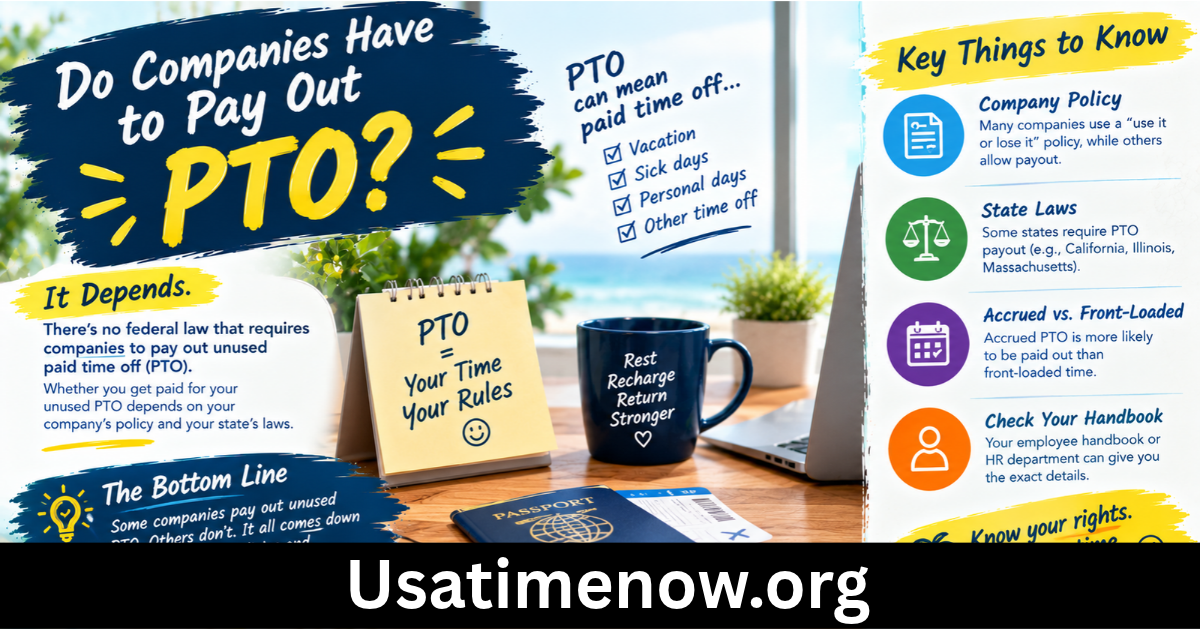
Paid time off (PTO) is an important workplace benefit that allows employees to take paid vacations, recover from illness, or handle personal responsibilities. do companies have to pay out pto However, when an employee resigns, retires, or is terminated, an important question arises: do companies have to pay out PTO? The answer depends on the applicable employment laws, the employer’s written policy, and sometimes the terms of an employment contract or collective bargaining agreement.
In the United States, there is no single federal rule requiring every private employer to pay employees for unused PTO when they leave a job. do companies have to pay out pto State laws can make a significant difference, so understanding the rules that apply to your workplace is essential.
What Does PTO Payout Mean?
A PTO payout is money an employer pays an employee for eligible paid time off that remains unused when employment ends. Depending on company policy and local law, this may include accrued vacation days, personal days, or a combined PTO balance.
For example, imagine an employee leaves a company with 40 hours of eligible unused PTO and earns $25 per hour. If the employer must pay out the entire balance, the gross payment would generally be:
40 hours × $25 = $1,000
The actual payment may differ if special rules apply to the employee’s pay rate, eligible hours, or PTO balance.
Do Companies Have to Pay Out PTO Under Federal Law?
Federal Rules for Private-Sector Employers
Under the Fair Labor Standards Act (FLSA), federal law generally does not require private employers to provide paid vacation or pay employees for unused vacation time when employment ends. do companies have to pay out pto Instead, PTO payout requirements are often determined by state law and employer policies.
This means a company may be required to pay unused PTO in one state but have different obligations in another. Employees should not assume that a company can automatically keep their unused PTO simply because federal law does not require vacation benefits.
Federal Employees Have Different Rules
Federal government employees may be covered by separate rules governing annual leave and leave payments. do companies have to pay out pto Eligible federal employees generally receive a lump-sum payment for accumulated and accrued annual leave when they separate from federal service, subject to applicable requirements.
Private-sector employees should not assume these federal employee rules apply to them.
How State Laws Affect Unused PTO Payouts
State law is often the most important factor when determining whether a company must pay out unused PTO. States take different approaches to vacation and paid leave.
States That Require Payment in Certain Situations
Some states treat earned vacation as wages or require employers to pay eligible accrued vacation when employment ends. In these locations, employers may be unable to use a company policy to take away vacation pay that employees have already earned.
The details vary. A state may require payment of accrued vacation, allow certain lawful conditions, or distinguish between vacation and other types of leave.
States That Allow Employer Policies to Matter
In other states, the employer’s written policy or employment agreement may have a greater role in determining whether unused PTO is paid out. do companies have to pay out pto A policy might specify whether employees receive payment upon resignation, termination, or retirement.
However, a written policy cannot override applicable laws. If state law requires payment, an employer generally cannot avoid that obligation by adding a conflicting provision to its handbook.
Why Your Work Location Matters
Employees who work remotely, travel between states, or live in a different state from their employer may need to determine which jurisdiction’s laws apply. The answer can depend on the work arrangement and relevant legal rules.
For an accurate answer, check the labor agency in the state where you work or consult an employment attorney.
Does Company PTO Policy Determine Whether You Get Paid?
Company PTO policies can explain how leave accrues, when it can be used, and what happens to unused hours when an employee leaves.
Before resigning or accepting a final paycheck, review the employee handbook, PTO policy, employment agreement, and any relevant union agreement.
Accrued PTO Versus Unlimited PTO
Traditional PTO plans usually provide a defined number of hours or days that employees earn over time. Because the balance can be tracked, applicable laws or policies may require an employer to pay out eligible unused hours.
Unlimited PTO works differently. Employees generally do not earn a fixed bank of vacation hours under a genuine unlimited leave policy. do companies have to pay out pto As a result, there may be no accrued vacation balance to pay out. The legal outcome still depends on the policy’s actual structure and applicable law; simply labeling a plan “unlimited” does not necessarily settle every question.
Use-It-or-Lose-It Policies
A use-it-or-lose-it policy requires employees to use eligible PTO by a deadline or risk losing some of their balance. Whether such a policy is lawful depends on the jurisdiction and the type of leave involved.
Where accrued vacation is legally protected, an employer may be restricted from taking away earned benefits. Employees should verify local rules before assuming that unused PTO has automatically expired.
Do Companies Have to Pay Out PTO When You Quit or Get Fired?
The reason employment ends does not always determine whether PTO must be paid out. State law and the employer’s policy usually matter more.
If You Resign
Employees who resign may qualify for a payout of eligible accrued PTO. Some employers require advance notice or impose conditions, do companies have to pay out pto but those conditions must comply with applicable law. If you are planning to resign, review the policy before choosing your final workday.
If You Are Fired or Laid Off
A termination does not automatically eliminate the right to unused PTO. In some jurisdictions, eligible accrued vacation must be paid regardless of whether the employee resigned or was dismissed. Elsewhere, the employer’s lawful policy may affect the outcome.
If You Retire
Retirement may trigger a PTO payout under the same rules that apply to other separations. Government employees and employees covered by particular retirement or employment agreements may have additional provisions to consider.
How Is a PTO Payout Calculated?
The calculation generally depends on the number of eligible unused hours and the employee’s applicable pay rate.
For example, if an employee has 32 eligible PTO hours and earns $30 per hour, the estimated gross payout is:
32 × $30 = $960
This is an illustrative calculation, not a guarantee of the amount an employer owes. The applicable law or policy may define which hours qualify and which rate must be used. do companies have to pay out pto Taxes and other lawful payroll deductions may also affect the amount received.
Employees paid by salary, commission, or variable rates may need to review the employer’s calculation method and applicable legal requirements.
What Should You Do If Your Employer Refuses to Pay Unused PTO?
If you believe your company owes you a PTO payout, take these steps:
- Check your PTO balance. Save a copy of your final leave balance and relevant pay statements.
- Review the written policy. Look for the section covering unused leave when employment ends.
- Check your state’s law. Consult the official state labor department for rules on vacation pay and final wages.
- Contact payroll or HR. Request a written explanation of the payout calculation or the reason payment was denied.
- Keep relevant records. Save emails, time records, policy documents, and your final paycheck.
- Seek assistance if necessary. Contact the appropriate labor agency or an employment attorney if you believe the company violated the law.
Deadlines for wage claims can apply, so avoid waiting too long to address a disputed payment.
FAQs About PTO Payouts
1. Do all companies have to pay out unused PTO?
No. There is no universal federal requirement for private employers to pay unused PTO. State law, employer policy, and employment agreements determine whether payment is required.
2. Can a company refuse to pay PTO when I quit?
It depends on the applicable law and the company’s lawful policy. Some states require payment of eligible accrued vacation when an employee resigns, while other states give employers more flexibility.
3. Does an employer have to pay PTO if I am fired?
In some states, employers must pay eligible accrued vacation regardless of the reason employment ends. In other locations, the policy and circumstances may affect the outcome.
4. Is unused PTO considered wages?
In some jurisdictions, accrued vacation is treated as earned wages. The legal classification and payout requirements vary by state and by the type of leave.
5. Does unlimited PTO have to be paid out?
A genuine unlimited PTO plan typically does not create a fixed bank of accrued vacation hours. However, the actual plan terms and applicable law determine whether any payment obligation exists.
6. When should I receive my PTO payout?
The timing may depend on state final-paycheck laws, company policy, and the circumstances of separation. In some locations, unused vacation must be included in the final paycheck or paid within a specified period.
7. Can my employer take away my accrued PTO?
That depends on local law and the type of leave. Some jurisdictions restrict employers from forfeiting earned vacation, while others permit certain policies if they comply with legal requirements.
Conclusion
Whether companies have to pay out PTO depends largely on state law, the employer’s written policy, and the employee’s circumstances. Federal law generally does not require private employers to provide vacation benefits or pay unused vacation when employment ends, but state rules may create specific payout obligations. do companies have to pay out pto To protect your rights, review your PTO balance and employee handbook, check the laws that apply to your work location, and request a written explanation if your final paycheck does not include an expected payout. Understanding these rules can help employees plan their departure and help employers manage final pay accurately.