






Table of Contents
Productivity success is about using your time, energy, and resources effectively to achieve meaningful goals. Whether you are a student, employee, entrepreneur, or business owner, developing productive habits can help you accomplish important tasks, improve performance, productivity success and maintain a healthy work-life balance. Success does not always come from working longer hours. Often, it comes from planning carefully, staying focused, and making consistent progress.
In today’s busy world, distractions and competing responsibilities can make it difficult to stay organized. By understanding the principles of productivity success, you can build better routines, manage your workload efficiently, and create lasting improvements in your personal and professional life.
What Is Productivity Success?
Productivity success means achieving valuable results through effective planning, focused effort, and consistent action. It involves identifying priorities, organizing tasks, managing time, and evaluating progress.
Being productive does not mean staying busy every minute of the day. Instead, it means spending your time on activities that contribute to your goals. For example, completing an important project may be more valuable than answering dozens of nonessential emails.
Productivity success also depends on sustainability. A routine that produces good results for a few days but leads to exhaustion is unlikely to support long-term achievement. The best approach combines efficiency, flexibility, and adequate rest.
Why Is Productivity Important for Success?
Productivity plays an important role in personal development, education, and business performance. When you manage your time effectively, you can complete responsibilities more reliably and create opportunities to pursue new goals.
For professionals, improved productivity can support better decision-making, stronger teamwork, and higher-quality results. Students can use productive study habits to understand challenging subjects and prepare for examinations more effectively. Entrepreneurs can prioritize business development, customer relationships, and strategic planning.
Productivity can also reduce stress. A clear plan makes it easier to understand what needs attention and prevents important tasks from being forgotten.
10 Effective Strategies for Productivity Success
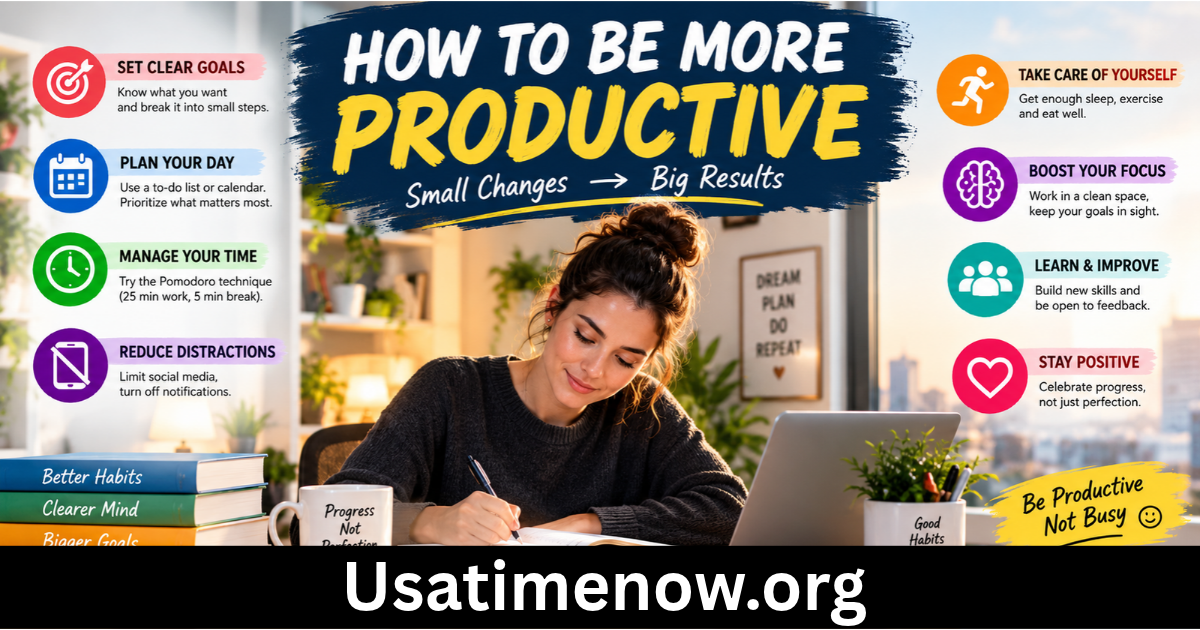
1. Set Clear and Meaningful Goals
Clear goals provide direction and help you understand what success looks like. Without specific objectives, you may spend time on activities that do not contribute to your priorities.
Start by identifying what you want to accomplish over the next day, week, month, or year. Break large objectives into smaller actions that you can complete and measure.
For example, if your goal is to improve professional skills, you might schedule three learning sessions each week and complete one practical exercise after each session.
The SMART framework can help you establish goals that are specific, measurable, achievable, relevant, and time-bound. Review your goals regularly to ensure they remain realistic and aligned with your needs.
2. Prioritize High-Value Tasks
One of the most important productivity success habits is learning to distinguish between urgent activities and genuinely important work.
Create a daily task list and identify the two or three activities that will make the greatest difference. Complete these tasks before spending too much time on minor responsibilities.
The Eisenhower Matrix is a useful prioritization method. It separates tasks into four groups: urgent and important, important but not urgent, urgent but less important, and neither urgent nor important.
This approach encourages you to address deadlines while protecting time for long-term goals. It can also help you recognize tasks that should be delegated, postponed, or removed from your schedule.
3. Develop a Consistent Daily Routine
A consistent routine reduces the effort required to decide what to do next. It creates structure and makes productive behavior easier to repeat.
Start your day by reviewing your priorities, checking your schedule, and preparing the resources needed for important tasks. Establish regular periods for focused work, communication, meals, and breaks.
Your routine does not need to follow a strict timetable. The goal is to create a dependable structure that fits your responsibilities and energy levels.
Experiment with different schedules to discover when you concentrate best. Some people prefer demanding work in the morning, while others perform better later in the day.
4. Improve Time Management Skills
Effective time management helps you use available hours more intentionally. Instead of reacting to every request, you can allocate time according to the importance and complexity of each task.
Time blocking is one practical technique. Assign specific periods to activities such as studying, project work, meetings, or administrative tasks.
Another option is the Pomodoro Technique, which commonly involves 25 minutes of focused work followed by a five-minute break. You can adjust the intervals to suit your attention span and the demands of your work.
Remember to include transition time and leave room for unexpected responsibilities. A realistic schedule is more useful than one that assumes every task will go perfectly.
5. Eliminate Distractions and Stay Focused
Distractions can interrupt concentration and make complex work take longer. Common examples include social media, frequent notifications, unnecessary meetings, and unrelated browser tabs.
Create an environment that supports focused work. Silence nonessential notifications, keep your workspace organized, and place your phone out of reach when appropriate.
You can also establish specific times for checking emails and messages rather than responding immediately to every alert.
If a distracting thought or unrelated task appears, write it down and return to your current activity. This simple habit can help you preserve concentration without worrying that you will forget something important.
6. Break Large Projects Into Smaller Steps
Large projects often feel overwhelming because they involve multiple responsibilities and uncertain deadlines. Dividing them into smaller tasks makes progress easier to manage.
For example, completing a report might involve research, outlining, drafting, editing, and final review. Each stage becomes a clear action with its own deadline.
Smaller steps also make it easier to identify obstacles before they become serious problems. You can monitor progress, adjust your plan, and celebrate completed milestones.
This strategy is particularly valuable for students, freelancers, managers, and entrepreneurs who regularly handle complex projects.
7. Use Productivity Tools Effectively
Digital tools can support productivity success by simplifying task management, scheduling, note-taking, and teamwork.
Applications such as Google Calendar can organize appointments, while task managers like Todoist help track deadlines and responsibilities. Notion can organize notes and project information, and Trello can provide a visual overview of ongoing work.
However, more tools do not automatically create better results. Using several overlapping applications can make your workflow unnecessarily complicated.
Choose tools that solve specific problems and keep your system simple. Review your setup occasionally to ensure that it saves time rather than creating additional work.
8. Maintain Your Physical and Mental Energy
Productivity depends on more than planning. Your energy, health, and ability to concentrate also affect how effectively you work.
Getting sufficient sleep, eating balanced meals, staying hydrated, and engaging in regular physical activity can support general well-being and concentration.
Regular breaks are equally important. Stepping away from your desk, stretching, or taking a short walk can provide a useful pause between demanding activities.
Avoid measuring success only by the number of hours you work. Sustainable productivity requires a balance between focused effort and recovery.
9. Learn From Mistakes and Track Progress
Productivity success improves when you evaluate your performance and identify opportunities for change.
At the end of each day, review what you completed, what remains unfinished, and which obstacles affected your progress. Ask yourself whether your priorities were appropriate and whether your schedule was realistic.
You can track simple measurements such as completed tasks, project milestones, study sessions, or time spent on important activities.
Use this information to improve your approach instead of criticizing yourself for every missed target. Occasional setbacks are a normal part of learning and development.
10. Build Consistency Through Small Habits
Long-term success often comes from repeating small, useful actions rather than making dramatic changes that are difficult to maintain.
Start with one habit, such as planning tomorrow’s priorities before finishing work today. Once that habit becomes manageable, introduce another, such as scheduling focused work sessions or reviewing weekly goals.
Attach new habits to routines you already follow. For example, review your task list after your morning coffee or organize your workspace before leaving for the day.
Consistency creates a reliable foundation for progress. Even modest improvements can produce meaningful results when practiced regularly.
Common Productivity Mistakes That Limit Success
Several common mistakes can prevent people from achieving productivity success.
Trying to do everything: Taking on too many responsibilities can reduce the quality of your work. Focus on realistic priorities and learn to say no when necessary.
Multitasking excessively: Switching between unrelated activities can interrupt concentration. Complete one important task at a time whenever possible.
Ignoring rest: Skipping breaks and sacrificing sleep can make sustained performance more difficult.
Chasing perfection: Spending too much time refining minor details can delay completion. Set clear quality standards and recognize when a task is finished.
Avoiding progress reviews: Without reviewing results, you may continue using ineffective methods. Regularly assess your habits and make adjustments.
Recognizing these mistakes allows you to develop a more balanced and effective productivity system.
Frequently Asked Questions (FAQs)
1. What does productivity success mean?
Productivity success means achieving meaningful results through effective time management, clear goals, focused work, and consistent habits. It emphasizes the value of completed work rather than simply measuring how busy someone appears.
2. How can I become more productive every day?
Begin by setting three important daily priorities, creating a realistic schedule, reducing distractions, and taking regular breaks. Review your progress at the end of the day and adjust your plan when necessary.
3. What are the most important habits for productivity success?
Important habits include planning ahead, prioritizing tasks, protecting focused work time, maintaining healthy routines, and evaluating progress. Consistency is essential for turning these habits into lasting improvements.
4. Can productivity tools help me achieve success?
Yes. Productivity tools can help organize schedules, track deadlines, store information, and coordinate teamwork. Their value depends on choosing appropriate tools and using them consistently.
5. How does time management improve productivity?
Time management helps you allocate your hours to important tasks, reduce unnecessary delays, and meet deadlines more reliably. It also creates space for learning, personal responsibilities, and rest.
6. How can I stay productive without feeling overwhelmed?
Break large projects into smaller steps, set realistic expectations, schedule breaks, and avoid taking on too many responsibilities. Focus on making steady progress instead of trying to complete everything at once.
7. How long does it take to develop productive habits?
The time required varies depending on the habit, your circumstances, and how consistently you practice. Some routines may become easier within a few weeks, while more complex changes can take longer.
Conclusion
Productivity success is built through clear goals, effective time management, focused effort, and consistent habits. productivity success By prioritizing important tasks, reducing distractions, using helpful tools, protecting your energy, and reviewing your progress, you can improve the way you work and achieve more meaningful results.