




Table of Contents
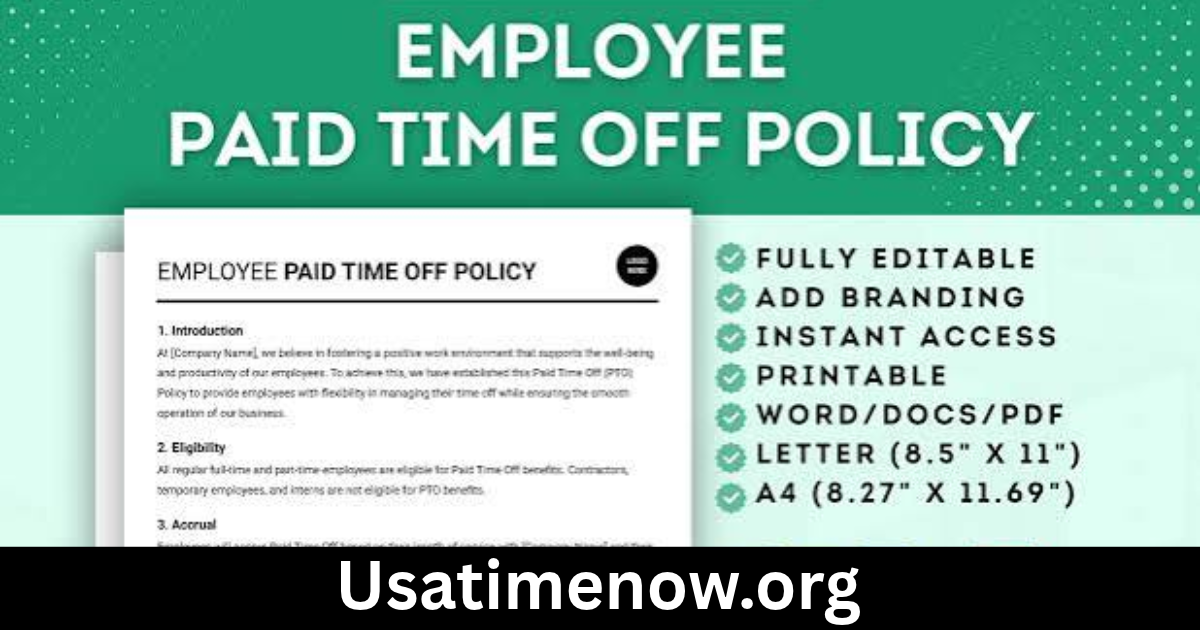
A paid time off (PTO) policy explains how employees can take paid leave from work for vacations, personal matters, illness, and other approved reasons. paid time off policy A clear paid time off policy helps businesses manage employee absences, maintain productivity, and provide employees with a better work-life balance.
Whether you operate a small business or manage a large organization, establishing a written PTO policy can make leave management more organized and transparent. It also helps employees understand how paid leave is earned, requested, approved, and recorded.
This guide explains what a PTO policy includes, why it matters, and how to create one using a practical, customizable template.
What Is a Paid Time Off Policy?
A paid time off policy is a set of company rules that explains how employees receive and use paid leave while remaining compensated for approved time away from work.
Depending on the organization, PTO may combine vacation days, personal days, and sick leave into one leave balance. Other employers maintain separate leave categories for different purposes.
A typical PTO policy covers:
- Employee eligibility
- PTO accrual or annual allocation
- Leave request procedures
- Approval requirements
- Carryover rules
- Public holidays
- Unused PTO treatment
- Leave records and balances
- Rules for employees leaving the company
The exact structure depends on company operations, employment agreements, and applicable labor laws.
Why Is a Paid Time Off Policy Important?
A well-designed PTO policy benefits employees and employers by creating clear expectations for paid leave.
1. Supports Employee Well-Being
Paid time off allows employees to rest, manage personal responsibilities, and recover when they are unwell. Taking appropriate breaks can help reduce stress and support long-term employee well-being.
2. Improves Employee Satisfaction
Employees often value workplaces that provide clear and reasonable leave benefits. A transparent PTO policy can contribute to employee satisfaction and retention.
3. Makes Workforce Planning Easier
When employees follow a consistent leave request process, managers can plan schedules, arrange coverage, and reduce unexpected staffing problems.
4. Creates Consistent Leave Procedures
A written policy helps HR teams apply the same general procedures across departments while accounting for legitimate exceptions and legal requirements.
5. Reduces Confusion
Employees can check their available leave balances, understand approval procedures, and learn what happens to unused PTO.
What Should a PTO Policy Include?
An effective paid time off policy should explain the organization’s leave arrangements in simple language.
Employee Eligibility
Specify which employees qualify for PTO. Eligibility may depend on employment status, length of service, working hours, or employment agreements.
For example, full-time and part-time employees may have different leave arrangements.
PTO Accrual or Allocation
Explain how employees receive paid leave. Common approaches include:
- Annual allocation: Employees receive a set amount of PTO each year.
- Monthly accrual: Employees earn a portion of their annual entitlement each month.
- Per-pay-period accrual: PTO accumulates with each payroll cycle.
- Front-loaded PTO: Employees receive their annual allowance at the beginning of a designated period.
PTO Request Procedures
Explain how employees submit leave requests, how much advance notice is expected for planned leave, and who approves requests.
Also describe the process for unexpected illness or emergencies.
Carryover Rules
State whether unused PTO can be transferred into the next leave year. If carryover is allowed, explain any limits or deadlines.
Carryover restrictions must comply with applicable employment laws.
Public Holidays and Other Leave
Clarify whether public holidays, statutory leave, parental leave, or other legally protected absences are separate from the company’s PTO balance.
Unused PTO and Separation
Explain how unused PTO is handled when an employee resigns, retires, or otherwise leaves the organization. Payment requirements depend on local law, employment contracts, and company policy.
Paid Time Off Policy Template
The following sample PTO policy can be customized to match your organization’s benefits and operational requirements.
[Company Name]
Paid Time Off (PTO) Policy
Effective Date: __________________
Policy Owner: Human Resources Department
1. Purpose
The purpose of this policy is to explain how eligible employees receive, request, and use paid time off. The company aims to support employee well-being while maintaining effective business operations.
2. Scope and Eligibility
This policy applies to eligible employees of [Company Name], subject to their employment agreements and applicable employment laws.
Eligibility requirements: __________________________
3. PTO Entitlement
Eligible employees receive the following annual PTO allowance:
- Full-time employees: ______ days per year
- Part-time employees: __________________
- Other eligible employees: ______________
The company’s PTO year begins on: __________________
4. PTO Accrual
PTO is earned according to the following method:
- Annual allocation
- Monthly accrual
- Per-pay-period accrual
- Other: __________________
Employees can review their available PTO balance through: __________________.
5. Requesting Paid Time Off
Employees should submit planned PTO requests through the company’s approved leave management system or HR department.
Employees are encouraged to provide at least ______ days’ notice for planned leave.
Requests should be approved before employees make arrangements that depend on leave approval.
6. Unexpected Absences
Employees who cannot attend work because of illness or an emergency should notify their supervisor as soon as reasonably possible.
Any documentation requirements must follow applicable law and company procedures.
7. PTO Approval
Managers review requests based on available staffing, operational requirements, scheduling conflicts, and applicable employee rights.
The company will communicate approval or denial through its established process.
8. Carryover of Unused PTO
Unused PTO may be carried into the next leave year according to the following rules:
9. Public Holidays and Other Leave
Public holidays and legally protected leave are handled according to applicable laws and the company’s separate leave policies. They will not automatically be deducted from PTO unless permitted by law and clearly established policy.
10. Unused PTO Upon Separation
The treatment of unused PTO when employment ends will follow applicable employment laws, employment agreements, and company procedures.
11. Policy Administration
The HR department is responsible for maintaining PTO records, communicating policy updates, and answering employee questions.
Employee Acknowledgment
Employee Name: __________________________
Employee Signature: ______________________
Date: ___________________________________
Note: This is a general template. Employers should adapt it to local labor laws, employment contracts, and statutory leave requirements before implementation.
Common Types of Paid Time Off
Companies may offer several types of paid leave depending on their benefits structure.
Vacation PTO
Vacation leave allows employees to take time away from work for holidays, travel, relaxation, or personal activities.
Sick Leave
Sick leave provides paid time away from work when employees are ill, injured, or need qualifying medical care. Specific entitlements and documentation rules vary by jurisdiction.
Personal Days
Personal days can be used for individual responsibilities, appointments, family matters, or other situations permitted by company policy.
Family and Caregiving Leave
Some organizations provide paid leave for qualifying family responsibilities, caregiving, or important life events. Certain forms of leave may also be protected by law.
Floating Holidays
Floating holidays allow employees to select certain days off according to personal preferences or cultural and religious observances, subject to company rules and applicable law.
How to Create an Effective PTO Policy
Creating a practical PTO policy requires balancing employee benefits with business requirements.
- Review legal requirements: Understand statutory vacation, sick leave, public holiday, and other leave obligations in the relevant jurisdiction.
- Define eligibility: Identify which employee groups qualify and whether different arrangements apply.
- Choose an accrual method: Decide whether PTO is allocated annually, accrued monthly, or earned each pay period.
- Set request procedures: Establish clear submission, notice, and approval processes.
- Define carryover rules: Explain whether unused leave can be transferred and under what conditions.
- Clarify separation rules: State how unused PTO is handled when employment ends, consistent with legal requirements.
- Communicate the policy: Include it in the employee handbook and make it accessible to staff.
- Review regularly: Update the policy when business needs or employment regulations change.
Best Practices for Managing PTO
HR professionals can improve leave management by following a few practical steps:
- Use an HR information system to track leave balances and requests.
- Encourage employees to request planned leave early.
- Apply approval procedures consistently and fairly.
- Maintain accurate and confidential leave records.
- Monitor overlapping requests to ensure adequate staffing.
- Train managers on leave procedures and employee entitlements.
- Make sure employees understand how to check their PTO balances.
- Avoid policies that discourage employees from using legally entitled leave.
Frequently Asked Questions (FAQs)
1. What does PTO stand for?
PTO stands for paid time off. It refers to approved time away from work during which an eligible employee continues to receive pay.
2. What is included in a paid time off policy?
A PTO policy usually covers eligibility, leave allowances, accrual methods, request procedures, approval requirements, carryover rules, and the treatment of unused leave.
3. Is PTO the same as vacation time?
Not always. Vacation time generally refers to leave for rest or personal travel. PTO may combine vacation, sick leave, and personal days into one available balance.
4. How is paid time off calculated?
PTO can be calculated through annual allocations, monthly accrual, or accrual during each payroll period. The calculation depends on the employer’s policy and applicable legal requirements.
5. Can unused PTO carry over to the next year?
That depends on company policy and local employment law. Some organizations allow limited carryover, while others use different arrangements. Employers must follow applicable legal requirements.
6. Can an employer deny a PTO request?
Employers may be able to deny or reschedule certain discretionary leave requests because of staffing or operational needs. However, they must respect statutory leave rights and other legal protections.
7. Is an employer required to pay unused PTO when an employee leaves?
The answer depends on the jurisdiction, employment agreement, and applicable law. Employers should review local requirements before deciding how unused leave will be treated.
Conclusion
A paid time off policy helps organizations manage employee leave while supporting a healthier and more productive workplace. paid time off policy By clearly explaining eligibility, accrual, leave requests, carryover, and unused PTO rules, businesses can reduce confusion and create consistent procedures. Use the PTO policy template as a starting point, customize it to your company’s needs, and ensure it complies with applicable employment laws. A transparent and well-managed PTO policy can strengthen employee trust, improve workforce planning, and support long-term organizational success.