


Table of Contents
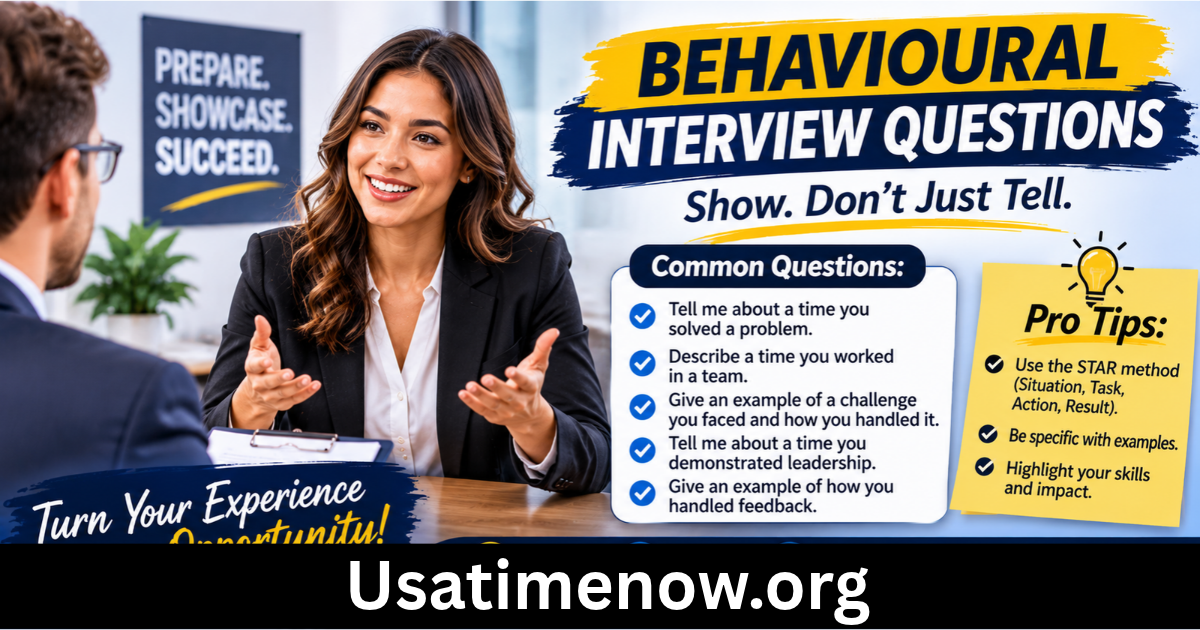
Behavioural interview questions are a common part of modern recruitment. Employers use them to understand how candidates have handled real workplace situations, solved problems, managed responsibilities, and worked with other people. behavioural interview questions Instead of focusing only on qualifications or technical knowledge, these questions explore your past experiences to assess how you might perform in a new role.
Preparing thoughtful answers can help you feel more confident and demonstrate your professional strengths. In this guide, you will discover common behavioural interview questions, practical answer examples, and useful strategies for making a positive impression.
What Are Behavioural Interview Questions?
Behavioural interview questions ask candidates to describe specific situations they have experienced in previous jobs, education, internships, or other relevant activities. These questions are based on the idea that past behaviour can provide useful insight into how someone may approach similar situations in the future.
For example, an interviewer might ask, “Tell me about a time you handled a difficult customer.” Rather than giving a general explanation of your customer service skills, you should describe a real situation, explain what you did, and share the result.
Employers commonly use behavioural questions to evaluate skills such as:
- Communication and teamwork
- Leadership and decision-making
- Problem-solving and critical thinking
- Time management and organisation
- Adaptability and flexibility
- Conflict resolution
- Accountability and initiative
25 Common Behavioural Interview Questions
Preparing answers to frequently asked behavioural interview questions can make your interview experience easier. Consider the following examples and think about situations from your own experience that demonstrate your abilities.
Questions About Teamwork
- Tell me about a time you worked successfully as part of a team.
- Describe a situation where you disagreed with a colleague.
- How have you helped a team member overcome a challenge?
- Tell me about a time you had to collaborate with someone whose working style was different from yours.
These questions help employers understand how you communicate, cooperate, and contribute to shared goals.
Questions About Problem-Solving
- Describe a difficult problem you faced at work and how you solved it.
- Tell me about a time you had to make an important decision quickly.
- Have you ever identified a problem before it became serious?
- Describe a situation where your first solution did not work. What did you do next?
When answering, explain how you identified the issue, considered possible solutions, and selected an appropriate approach.
Questions About Leadership
- Tell me about a time you took the lead on a project.
- Describe how you motivated others to achieve a goal.
- Have you ever had to manage a disagreement between team members?
- Tell me about a time you took responsibility for a difficult task.
Leadership does not always require a management position. Candidates can demonstrate leadership through initiative, accountability, and support for others.
Questions About Time Management
- Describe a time you had to manage several deadlines.
- Tell me about a situation where you had to prioritise competing responsibilities.
- How have you handled an unexpected change to your schedule?
- Give an example of how you completed an important task under pressure.
These questions allow employers to evaluate your organisation, planning, and ability to remain focused when responsibilities increase.
Questions About Challenges and Mistakes
- Tell me about a professional mistake you made and what you learned.
- Describe a time you received constructive criticism.
- Have you ever failed to meet an important goal? How did you respond?
- Tell me about a challenging situation that tested your patience.
Choose an honest example and focus on what you learned and how you improved. Employers generally want to see self-awareness rather than perfection.
Questions About Adaptability and Communication
- Tell me about a time you had to learn a new skill quickly.
- Describe a situation where you had to explain a complicated idea.
- How have you responded to a major change at work?
- Tell me about a time you handled an unhappy customer or stakeholder.
- Describe a situation where you had to work with limited information.
These questions reveal how effectively you communicate, respond to change, and approach unfamiliar responsibilities.
How to Answer Behavioural Interview Questions Using the STAR Method
One of the most effective ways to organise your responses is the STAR method. It helps you deliver clear, structured answers without including unnecessary details.
STAR stands for:
Situation
Describe the background of the experience. Explain where you were working, what was happening, and why the situation mattered.
Task
Explain your responsibility or the challenge you needed to address. Make it clear what was expected of you.
Action
Describe the specific steps you personally took. Highlight the decisions, skills, and strategies you used.
Result
Share the outcome of your actions. Whenever possible, include measurable results, positive feedback, or a lesson you learned.
Example question: Tell me about a time you managed multiple deadlines.
Situation: In my previous role, our team had several important assignments due during the same week.
Task: I needed to complete my responsibilities while helping the team maintain its overall schedule.
Action: I reviewed each task, identified the most urgent deadlines, created a daily priority list, and communicated regularly with my manager about progress.
Result: I completed my assignments on time and helped the team avoid unnecessary delays.
This approach makes your answer easier to follow and gives the interviewer a clear understanding of your contribution.
How to Prepare for a Behavioural Interview
Preparation is essential if you want to answer behavioural interview questions confidently. You do not need to memorise dozens of complete responses. Instead, develop a collection of real examples that demonstrate different professional skills.
Review the Job Description
Read the job advertisement carefully and identify the main skills and responsibilities. If the position requires teamwork, customer service, or leadership, prepare examples that demonstrate those abilities.
Prepare Real-Life Examples
Think about situations from your previous employment, education, volunteering, or personal projects. Choose examples that show how you handled challenges, worked with others, and achieved results.
Practise Speaking Clearly
Practise answering questions aloud. Keep your responses focused and organised. Most answers can be delivered in approximately one to two minutes, depending on the complexity of the example.
Be Honest and Specific
Avoid inventing achievements or exaggerating your responsibilities. Interviewers may ask follow-up questions, so your examples should reflect experiences you can explain accurately.
Prepare for Follow-Up Questions
An interviewer may ask what you learned, what you would change, or how your actions affected the team. Be ready to explain your decisions and reflect on the outcome.
Common Mistakes to Avoid
Even qualified candidates can weaken their interview performance by making avoidable mistakes. Watch out for these common problems:
- Giving vague answers: General statements do not demonstrate how you handled a real situation.
- Taking too long: Unnecessary background information can distract from your main point.
- Blaming others: Focus on your own decisions and responsibilities instead of criticising colleagues.
- Ignoring the result: Explain what happened because of your actions.
- Memorising every word: Over-rehearsed answers may sound unnatural. Prepare key points instead.
- Using only team achievements: Make your individual contribution clear while recognising the efforts of others.
Frequently Asked Questions
1. What are the most common behavioural interview questions?
Common questions cover teamwork, leadership, communication, problem-solving, time management, workplace challenges, and adaptability. Employers often ask candidates to describe specific examples from their past experiences.
2. How should I structure my answers?
The STAR method is a useful structure. Explain the Situation, Task, Action, and Result to make your response organised and relevant.
3. How long should a behavioural interview answer be?
Most answers should take around one to two minutes. More complex examples may require additional explanation, but your response should remain focused on the question.
4. Can I use examples from school or university?
Yes. If you have limited professional experience, you can use examples from academic projects, internships, volunteering, extracurricular activities, or other relevant responsibilities.
5. What if I have never experienced the situation mentioned?
Choose a related experience that demonstrates the same skill. Be honest about the circumstances and explain how you approached the challenge.
6. Should I memorise behavioural interview answers?
It is better to prepare examples and key points rather than memorising complete scripts. This helps your responses sound natural and makes it easier to handle follow-up questions.
7. What do employers want to learn from behavioural questions?
Employers want to understand how you make decisions, communicate, solve problems, manage responsibilities, and respond to challenges. They also look for accountability, self-awareness, and the ability to learn from experience.
Conclusion
Behavioural interview questions give employers an opportunity to understand how candidates approach real workplace situations. Preparing examples related to teamwork, leadership, problem-solving, communication, behavioural interview questions and time management can help you demonstrate your strengths more effectively. Use the STAR method to organise your answers, focus on genuine experiences, and explain the results of your actions. With thoughtful preparation and regular practice, you can approach behavioural interviews with greater confidence and show employers why your skills and experience make you a strong candidate.