


Table of Contents
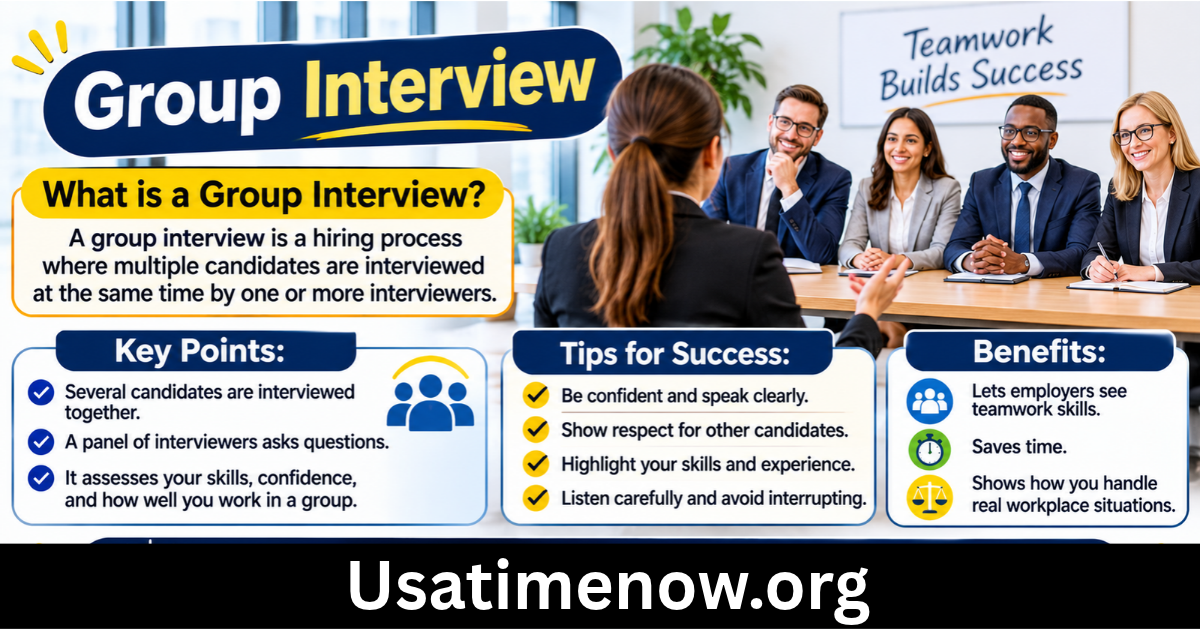
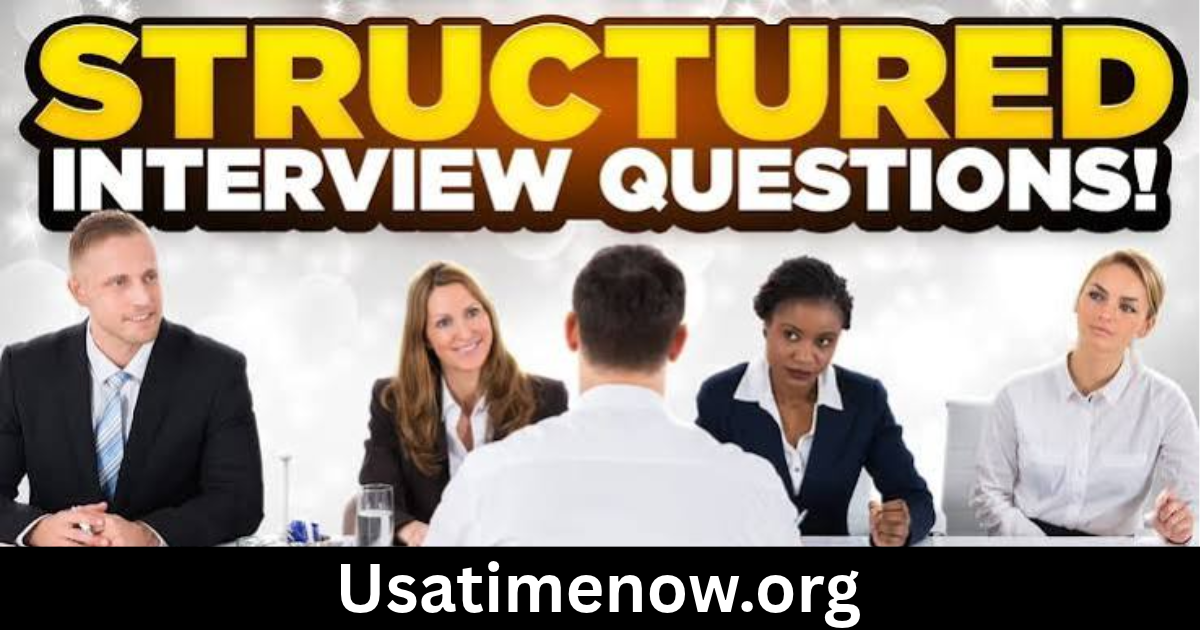
Structured interview questions help employers evaluate job candidates using a consistent and organized approach. structured interview questions Instead of asking every applicant different questions, interviewers use a predetermined set of questions designed to measure specific skills, experience, and job-related competencies.
This approach makes recruitment more objective, improves candidate comparisons, and helps organizations make informed hiring decisions. Whether a company is recruiting entry-level employees, experienced professionals, or managers, structured interview questions can make the selection process more reliable and efficient.
What Are Structured Interview Questions?
Structured interview questions are standardized questions that employers prepare before conducting interviews. Candidates applying for the same position are generally asked the same core questions in the same order and evaluated using consistent scoring criteria.
These questions are based on the responsibilities and qualifications required for a particular job.
For example, if an organization is hiring a customer service representative, interviewers may ask every applicant how they would handle an upset customer. Their responses are then assessed using a predefined evaluation framework.
Why Are Structured Interview Questions Important?
A structured interview process offers several advantages for employers and candidates.
1. Promotes Fairness
Asking candidates the same core questions gives applicants comparable opportunities to demonstrate their abilities. It also reduces the influence of unrelated personal impressions.
2. Reduces Interviewer Bias
Standardized questions and scoring guidelines encourage interviewers to focus on job-related evidence rather than assumptions or personal preferences.
3. Improves Candidate Comparisons
When applicants answer similar questions, recruiters can compare their skills, experience, and problem-solving abilities more consistently.
4. Saves Recruitment Time
Preparing questions in advance helps interviews stay organized and focused. Interviewers spend less time deciding what to ask and more time evaluating relevant answers.
5. Supports Better Hiring Decisions
A consistent evaluation framework helps employers identify candidates whose demonstrated competencies best match the requirements of the position.
Main Types of Structured Interview Questions
Employers can use different question types to assess candidate qualifications and workplace behavior.
Behavioral Interview Questions
Behavioral questions ask candidates to describe how they handled situations in the past. They are based on the idea that previous workplace behavior can provide useful evidence of relevant competencies.
Examples include:
- Tell me about a time you handled a difficult workplace situation.
- Describe a project you completed under a tight deadline.
- Give an example of when you resolved a disagreement with a colleague.
- Tell me about a time you received constructive feedback.
Candidates can organize their answers using the STAR method: Situation, Task, Action, and Result.
Situational Interview Questions
Situational questions present hypothetical workplace scenarios and ask candidates how they would respond.
Examples include:
- What would you do if you had several urgent tasks to complete?
- How would you handle a disagreement between two team members?
- What would you do if a customer complained about a service?
- How would you respond if you noticed a mistake in an important report?
These questions help employers assess judgment, decision-making, and problem-solving skills.
Technical Interview Questions
Technical questions evaluate the specialized knowledge required for a particular position.
Examples include:
- Which programming languages have you used professionally?
- How do you analyze financial data?
- What steps do you follow to troubleshoot a technical issue?
- Which tools do you use to manage project timelines?
The questions should reflect the actual technical responsibilities of the role.
Competency-Based Interview Questions
Competency-based questions assess specific capabilities such as leadership, communication, teamwork, adaptability, and organization.
Examples include:
- Describe a time you demonstrated leadership.
- How have you handled competing priorities?
- Tell me about a situation where you had to learn a new skill quickly.
- Give an example of how you contributed to a team’s success.
20 Structured Interview Questions for Employers
The following examples can be adapted to different job roles and industries.
| No. | Interview question | Skill being assessed |
|---|---|---|
| 1 | Tell me about your professional background. | Communication |
| 2 | Why are you interested in this position? | Motivation |
| 3 | What are your greatest professional strengths? | Self-awareness |
| 4 | Describe a challenging project you completed. | Problem-solving |
| 5 | Tell me about a time you worked under pressure. | Stress management |
| 6 | How do you organize your daily tasks? | Time management |
| 7 | Describe a disagreement with a coworker and how you handled it. | Conflict resolution |
| 8 | Give an example of a mistake you made at work. | Accountability |
| 9 | How do you respond to constructive criticism? | Adaptability |
| 10 | Describe a time you worked successfully in a team. | Teamwork |
| 11 | How would you handle an unhappy customer? | Customer service |
| 12 | Tell me about a time you solved a difficult problem. | Critical thinking |
| 13 | How do you approach learning a new system? | Learning ability |
| 14 | Describe a time you took initiative. | Proactiveness |
| 15 | What would you do if you disagreed with your manager? | Professional judgment |
| 16 | How do you manage multiple deadlines? | Organization |
| 17 | Give an example of a goal you achieved. | Goal orientation |
| 18 | How do you ensure accuracy in your work? | Attention to detail |
| 19 | What motivates you professionally? | Motivation |
| 20 | What skills would you bring to this role? | Role suitability |
Employers should select questions that match the position rather than asking all 20 questions in every interview.
Structured Interview Questions by Job Role
Different positions require different competencies. Tailoring questions to the job helps employers evaluate candidates more accurately.
Questions for Managers
- How do you motivate employees who are struggling with performance?
- Describe a difficult management decision you have made.
- How do you delegate responsibilities across a team?
- What steps do you take to resolve workplace conflict?
Questions for Customer Service Representatives
- How would you respond to an angry customer?
- Tell me about a time you provided excellent customer service.
- How do you manage a high volume of customer inquiries?
- What would you do if you could not immediately resolve a customer’s issue?
Questions for HR Professionals
- How would you handle a sensitive employee complaint?
- What steps do you follow when managing recruitment?
- How do you maintain confidentiality in HR matters?
- Describe your approach to resolving workplace disagreements.
Questions for Entry-Level Candidates
- What have you learned from your education or previous experience?
- How do you organize assignments with competing deadlines?
- Tell me about a time you worked successfully with others.
- How do you respond when learning something unfamiliar?
How to Conduct a Structured Interview
A successful structured interview requires preparation, consistency, and a clear evaluation process.
Step 1: Identify Job Requirements
Review the job description and determine the essential skills, qualifications, and competencies required for successful performance.
Step 2: Prepare Standardized Questions
Create a consistent set of questions that directly relates to the role. Include behavioral, situational, and technical questions where appropriate.
Step 3: Establish Scoring Criteria
Develop a rating scale before interviews begin. A five-point scale is a practical option:
| Score | Evaluation |
|---|---|
| 1 | Poor – Does not demonstrate the required competency |
| 2 | Below expectations – Provides limited evidence |
| 3 | Meets expectations – Provides adequate evidence |
| 4 | Above expectations – Provides strong evidence |
| 5 | Excellent – Provides detailed and relevant evidence |
Interviewers should use clear examples to understand what each score represents.
Step 4: Ask Questions Consistently
Ask candidates the same core questions in the same order. Reasonable follow-up questions can be used to clarify responses without changing the essential assessment standards.
Step 5: Record Candidate Responses
Take factual notes about the examples, skills, and knowledge demonstrated by each applicant. Avoid recording personal assumptions or unrelated observations.
Step 6: Evaluate Candidates Independently
Interviewers should score candidates against the agreed criteria. If several interviewers participate, independent scoring before group discussion can help reduce group influence.
Step 7: Compare Results and Make a Decision
Review scores alongside the evidence in interview notes, relevant qualifications, and other job-related assessments. The final decision should reflect the overall requirements of the position rather than a numerical score alone.
Best Practices for Creating Effective Structured Interview Questions
Employers can improve interview quality by following these recommendations:
- Keep questions job-related: Focus on responsibilities and competencies required for the role.
- Use clear language: Avoid confusing or unnecessarily complicated questions.
- Ask open-ended questions: Encourage candidates to explain their experiences and reasoning.
- Avoid leading questions: Do not suggest the answer you want candidates to provide.
- Use consistent scoring: Apply the same evaluation framework to all applicants.
- Train interviewers: Help hiring teams understand question delivery, scoring, and potential bias.
- Allow reasonable accommodations: Make the process accessible to candidates who need adjustments.
- Review interview results: Evaluate whether the questions help identify successful employees.
Common Mistakes to Avoid
Even structured interviews can become ineffective when employers do not follow their evaluation standards.
- Asking unrelated questions that do not measure job requirements.
- Changing the difficulty of questions between candidates without a valid reason.
- Judging applicants based mainly on confidence or personality.
- Using vague scoring criteria.
- Ignoring evidence that contradicts an initial impression.
- Asking inappropriate questions about protected personal characteristics.
- Failing to document interview feedback.
Avoiding these mistakes helps organizations maintain a professional and consistent recruitment process.
FAQs About Structured Interview Questions
1. What is the main purpose of structured interview questions?
Their main purpose is to evaluate candidates consistently using standardized questions and predefined criteria related to the job.
2. How many questions should a structured interview include?
There is no fixed number. Many interviews use approximately 8 to 15 core questions, depending on the role, interview duration, and competencies being assessed.
3. What is the difference between structured and unstructured interviews?
Structured interviews use predetermined questions and consistent scoring criteria. Unstructured interviews are more flexible and allow interviewers to ask different questions based on the conversation.
4. Are structured interviews better than unstructured interviews?
Structured interviews generally provide more consistent and comparable assessments. However, interviewers can still use appropriate follow-up questions to clarify a candidate’s answers.
5. What is the STAR method in structured interviews?
STAR stands for Situation, Task, Action, and Result. It is a framework candidates can use to explain past experiences clearly and demonstrate their skills.
6. Can structured interview questions be used for remote hiring?
Yes. They work well in video and phone interviews because standardized questions and scoring criteria can be applied regardless of interview location.
7. Who should prepare structured interview questions?
HR professionals and hiring managers usually work together to develop questions based on the job description, essential competencies, and expected responsibilities.
Conclusion
Structured interview questions help organizations make more consistent, fair, and informed hiring decisions. structured interview questions By preparing relevant questions, defining scoring standards, and evaluating candidates against the same job-related competencies, employers can improve the quality of their recruitment process. Whether hiring managers, technical professionals, HR specialists, or entry-level employees, a structured interview approach provides a reliable framework for identifying qualified candidates. Regularly reviewing interview questions and evaluation methods can further strengthen hiring outcomes and create a better experience for applicants.