



Table of Contents
An employment verification letter is an official document that confirms a person’s current or previous employment with an organization. employment verification letter It is commonly requested by banks, landlords, financial institutions, government agencies, and other organizations to verify employment details such as job title, employment dates, and salary.
Whether you are an HR professional, employer, or employee, understanding how to write an employment verification letter can make the process faster and easier. A well-written letter provides accurate information, maintains professionalism, and helps the recipient complete their verification process.
This guide explains what an employment verification letter is, what information it should include, and how to create one using practical templates and examples.
What Is an Employment Verification Letter?
An employment verification letter is a formal document issued by an employer or authorized HR representative to confirm an individual’s employment status or work history.
It provides basic information about the employee and their relationship with the organization. Depending on the purpose, the letter may confirm:
- Employee’s full name
- Job title or position
- Department
- Employment start date
- Current employment status
- Previous employment dates
- Salary or compensation, when authorized
- Employment type, such as full-time or part-time
Employment verification letters are sometimes called proof of employment letters, employment confirmation letters, or work verification letters.
Why Is an Important?
Employment verification letters help individuals and organizations confirm professional information for various purposes.
1. Applying for a Loan
Banks and financial institutions may request proof of employment to assess an applicant’s income stability and ability to repay a loan.
2. Renting a Property
Landlords or property management companies may ask for employment confirmation to understand whether a prospective tenant has a reliable source of income.
3. Applying for a Visa
Some visa applications require employment information to help establish an applicant’s professional background and current work situation. Requirements vary by destination and visa category.
4. Confirming Previous Employment
A new employer may request employment verification to confirm a candidate’s previous work history.
5. Completing Administrative Requirements
Government agencies, educational institutions, and other organizations may request employment confirmation as part of an application or documentation process.
What Should an Include?
A professional employment verification letter should contain the information needed for its intended purpose. Avoid including unnecessary personal or confidential details.
1. Company Information
Start with the company’s official letterhead, business name, address, email address, and contact number.
2. Date of Issuance
Include the date the letter is prepared. This helps the recipient understand when the employment information was verified.
3. Employee Information
Provide the employee’s full legal name and any other identifying information required by the recipient and authorized by the employee.
4. Job Title and Department
Mention the employee’s official position and department. Use the organization’s formal job title rather than an informal description.
5. Employment Dates
Clearly state the employee’s joining date. If the person is a former employee, include their final working date.
6. Employment Status
Confirm whether the employee currently works for the organization or previously worked there.
7. Salary Information
Include salary details only when requested and permitted by company policy and applicable privacy requirements. Specify whether the amount represents monthly or annual compensation and whether it is gross or net.
8. Authorized Signature
The letter should be signed by an authorized HR representative, manager, or employer. Include their name, job title, and official contact details.
How to Write
Follow these steps to prepare a clear and accurate employment verification letter.
Step 1: Confirm the Request
Ask what information the employee or requesting organization needs. Some requests require only employment dates, while others may require salary or job responsibilities.
Step 2: Verify Employee Records
Check HR records, payroll information, and employment documents to ensure that all details are correct.
Step 3: Use Official Company Letterhead
Prepare the letter using the organization’s official letterhead to establish its authenticity.
Step 4: Keep the Language Professional
Use simple, factual wording. Avoid personal opinions or unnecessary descriptions of the employee’s performance.
Step 5: Include Only Relevant Information
Share only the information needed for the stated purpose. Follow company policy, privacy obligations, and any required employee authorization.
Step 6: Review and Sign the Letter
Check names, dates, job titles, and salary details before obtaining an authorized signature.
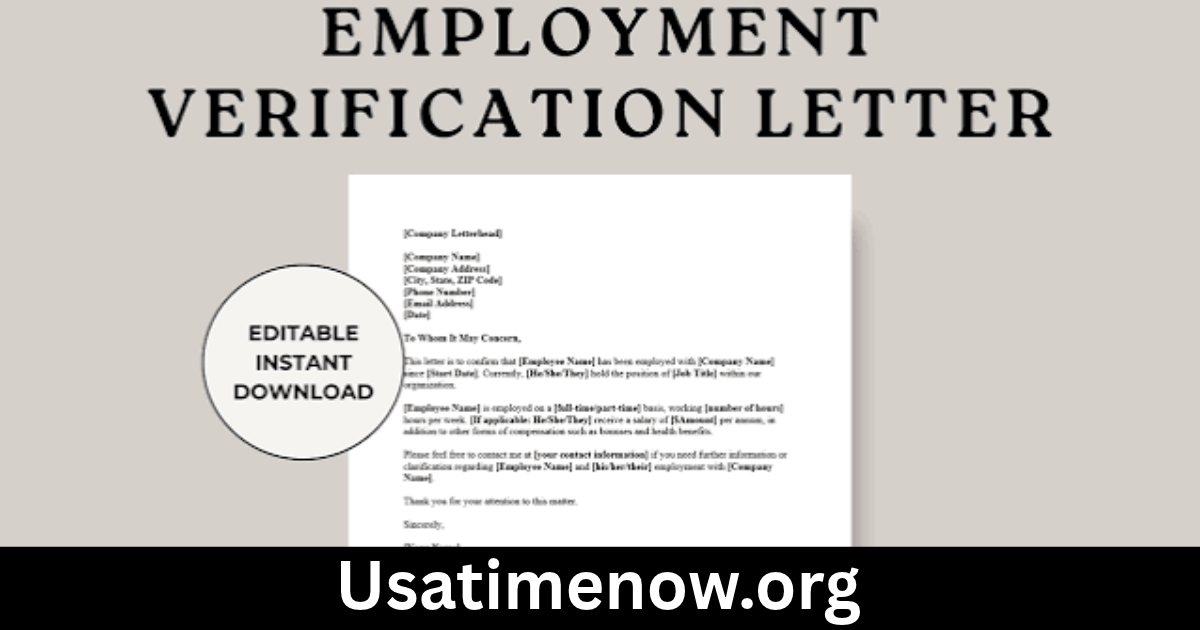
Template
The following employment verification letter template can be customized for different workplace situations.
[Company Name]
[Company Address]
[Email Address]
[Phone Number]
Date: [Date]
Subject: Employment Verification Letter
To Whom It May Concern,
This letter is to confirm that [Employee Full Name] is currently employed with [Company Name] as a [Job Title] in the [Department Name] department.
[Employee Name] joined our organization on [Start Date] and currently works on a [full-time/part-time/contract] basis.
[Optional: The employee’s current gross monthly salary is [Amount], if requested and authorized.]
This letter has been issued at the employee’s request for [Purpose, if appropriate]. Please contact our HR department using the details above if additional verification is required and permitted.
Sincerely,
[Authorized Representative’s Name]
[Job Title]
[Company Name]
[Signature]
Examples
Different situations may require different employment verification formats. Here are three examples.
1. Employment Verification Letter for a Current Employee
Subject: Employment Confirmation
To Whom It May Concern,
This letter confirms that [Employee Name] is currently employed at [Company Name] as a [Job Title].
The employee joined our organization on [Start Date] and is currently working in the [Department] department on a full-time basis.
This confirmation is provided at the employee’s request. Please contact our HR department if further employment information is required and authorized.
Sincerely,
[HR Representative]
[Company Name]
2. Employment Verification Letter for a Former Employee
Subject: Previous Employment Verification
To Whom It May Concern,
This letter confirms that [Employee Name] was employed by [Company Name] as a [Job Title] from [Start Date] to [End Date].
During this period, the employee worked in the [Department Name] department.
This letter is issued upon request to confirm the individual’s previous employment with our organization.
Sincerely,
[Authorized Representative]
[Company Name]
3. Employment Verification Letter With Salary Information
Subject: Employment and Salary Verification
To Whom It May Concern,
This letter confirms that [Employee Name] is employed with [Company Name] as a [Job Title]. The employee has been working with our organization since [Start Date].
As of the date of this letter, the employee’s gross monthly salary is [Amount].
This information is provided at the employee’s request for verification purposes, subject to applicable company policies and authorization.
For additional confirmation, please contact [HR Contact Information].
Sincerely,
[Authorized Representative]
[Company Name]
Best Practices for Employment Verification Letters
HR departments should follow a consistent process to ensure that employment verification letters are accurate and secure.
- Verify all information: Check employee records before preparing the document.
- Use official letterhead: Include the company’s correct contact details.
- Protect employee privacy: Share only necessary information.
- Obtain authorization when required: Follow applicable privacy rules and company policies.
- Avoid unnecessary opinions: Keep the letter factual and neutral.
- Respond promptly: Process legitimate requests within a reasonable timeframe.
- Maintain a copy: Keep an appropriate record of issued verification letters.
Common Mistakes to Avoid
Small errors can cause delays or create confusion during employment verification. Avoid these common mistakes:
- Incorrect employment dates: Always confirm joining and leaving dates using official records.
- Wrong job title: Use the employee’s official designation.
- Unverified salary information: Check payroll records before including compensation details.
- Missing contact information: Provide a way for the recipient to verify the document.
- Unauthorized disclosure: Do not share confidential employee information without a valid basis.
- Unprofessional formatting: Use a clean, readable business letter format.
- Missing signature: Ensure the letter is approved by an authorized representative.
Frequently Asked Questions (FAQs)
1. What is an employment verification letter used for?
An employment verification letter confirms a person’s employment history or current job status. It is commonly used for loan applications, rental agreements, visa applications, and background checks.
2. Who can issue an employment verification letter?
An authorized HR representative, employer, manager, or business owner can issue an employment verification letter, depending on the organization’s policies.
3. Can an employee request an employment verification letter?
Yes. Current and former employees can generally request employment confirmation from their employer or previous organization. The employer may have a specific process for handling these requests.
4. Does an employment verification letter include salary?
It can include salary information when requested and authorized. However, many employment verification letters confirm only job title, employment dates, and employment status.
5. Is an employment verification letter the same as an experience letter?
No. An employment verification letter confirms employment details, while an experience letter typically describes the employee’s position, employment period, and sometimes responsibilities or professional contributions.
6. How long does it take to get an employment verification letter?
The timeframe depends on the employer’s HR procedures. Some organizations issue letters within a few business days, while others may require additional verification or approval.
7. Can an employment verification letter be sent by email?
Yes, many organizations send employment verification letters electronically. The recipient should check whether a signed PDF, official email, or original printed document is required.
Conclusion
An employment verification letter is a valuable HR document that confirms an individual’s current or previous employment. It helps employees complete financial, rental, visa, employment verification letter and professional requirements while giving recipients reliable information about their work history. By using an official format, verifying employment details, protecting employee privacy, and obtaining an authorized signature, organizations can create accurate and professional verification letters. A consistent process also makes employment verification easier for HR teams, employers, and employees.