




Table of Contents
A disciplinary action form is an essential human resources document used to record employee misconduct, workplace policy violations, performance concerns, disciplinary action form and corrective actions. It helps employers communicate expectations, maintain accurate employee records, and ensure disciplinary decisions are handled consistently and professionally.
Whether an organization is addressing repeated lateness, inappropriate workplace behavior, attendance issues, or failure to follow company policies, a well-designed disciplinary action form provides a clear record of the incident and the steps taken to resolve it.
What Is a Disciplinary Action Form?
A disciplinary action form is an official document that records a workplace disciplinary matter involving an employee. It outlines the behavior or incident that led to disciplinary action, identifies the relevant company policy, and explains what corrective steps are required.
Human resources departments and managers use this form to document discussions, warnings, improvement expectations, and follow-up actions.
The form also gives employees an opportunity to review the concerns, provide their explanation, and acknowledge that the matter has been discussed.
Why Is a Disciplinary Action Form Important?
Using a standardized disciplinary action form helps organizations manage employee conduct fairly and maintain consistent workplace procedures.
1. Maintains Accurate Employee Records
A completed form provides written documentation of workplace incidents and the actions taken by management. These records can help HR professionals review an employee’s disciplinary history when necessary.
2. Promotes Fair and Consistent Treatment
A standard form encourages managers to follow the same documentation process for similar situations. This can reduce misunderstandings and help prevent inconsistent disciplinary decisions.
3. Communicates Expectations Clearly
The form explains what behavior needs to change, which workplace policies apply, and what improvement is expected from the employee.
4. Supports Better Performance Management
Disciplinary documentation can help identify recurring issues and establish measurable improvement goals. It can also provide a foundation for follow-up meetings and performance discussions.
5. Creates a Written Record of Communication
A disciplinary action form records when the issue was discussed, who participated, and what corrective steps were agreed upon.
What Should a Disciplinary Action Form Include?
An effective employee disciplinary form should contain enough information to explain the situation without unnecessary or emotional language.
Important sections include:
Employee Information
- Employee’s full name
- Job title or position
- Department
- Employee identification number, if applicable
- Manager or supervisor’s name
- Date the form is completed
Details of the Incident
Include the date, time, and location of the incident. Describe what happened using objective, specific language. Avoid assumptions, personal opinions, or unsupported accusations.
Policy or Rule Violated
Identify the relevant company policy, workplace rule, attendance requirement, or code of conduct. Explain how the reported behavior relates to that requirement.
Type of Disciplinary Action
Specify the action being taken. Common options include:
- Verbal warning
- Written warning
- Final written warning
- Suspension, where permitted by applicable policy and law
- Other corrective action
Corrective Action Plan
Explain what the employee must do to address the concern. Include measurable expectations and a reasonable improvement period where appropriate.
Employee Comments
Provide space for the employee to explain their perspective, respond to the allegations, or add relevant information.
Acknowledgment and Signatures
Include signature fields for the employee, manager, and HR representative where applicable. An employee’s signature should generally confirm receipt or discussion of the document, not necessarily agreement with its contents.
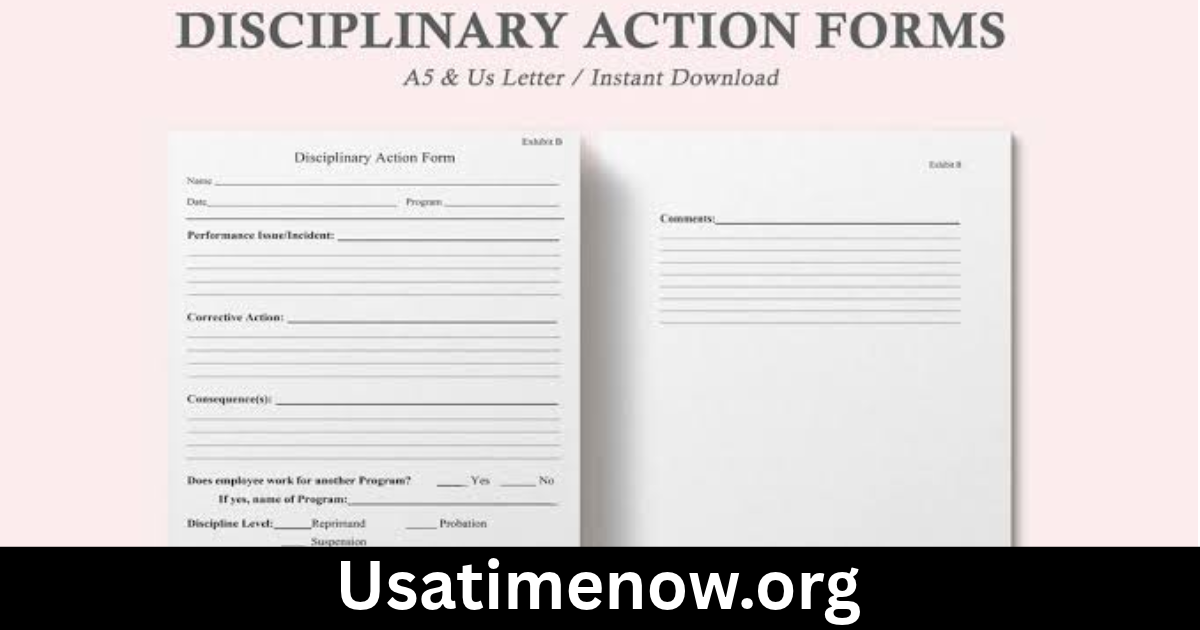
Free Disciplinary Action Form Template
The following disciplinary action form template can be adapted to suit different workplaces and employee management procedures.
Employee Disciplinary Action Form
Employee Details
- Employee Name: __________________________
- Job Title: _______________________________
- Department: ______________________________
- Supervisor Name: _________________________
- Date of Form: ____________________________
Incident Details
- Date of Incident: _________________________
- Time of Incident: _________________________
- Location: ________________________________
- Description of Incident:
Policy or Rule Involved
Previous Warnings or Related Discussions
Disciplinary Action Issued
- Verbal Warning
- Written Warning
- Final Written Warning
- Suspension
- Other: _________________________________
Required Corrective Action
Improvement Period or Follow-Up Date: __________________
Employee Comments
Acknowledgment
Employee Signature: __________________ Date: __________
Manager Signature: ___________________ Date: __________
HR Representative: __________________ Date: __________
Note: Adapt this template to your organization’s policies and applicable employment laws.
Types of Employee Disciplinary Actions
Organizations may use different levels of disciplinary action depending on the seriousness, circumstances, and history of an incident.
Verbal Warning
A verbal warning is often used for a relatively minor or first-time issue. The manager discusses the concern with the employee and explains the expected improvement. HR may document the conversation for recordkeeping.
Written Warning
A written warning formally records the concern and explains what the employee must change. It may include a deadline for improvement and the consequences of continued violations.
Final Written Warning
A final written warning communicates that the employee must correct the issue and that further misconduct may lead to more serious consequences, subject to company policy and applicable law.
Suspension
A suspension temporarily removes an employee from work. Employers should follow established procedures and applicable legal requirements before imposing this action.
Other Corrective Measures
Depending on the circumstances, an organization may use additional training, coaching, counseling, or a performance improvement plan instead of, or alongside, formal disciplinary action.
How to Fill Out a Disciplinary Action Form
Completing a disciplinary action form correctly helps ensure that the documentation is clear, professional, and useful.
- Verify the facts: Review the incident details and gather relevant information before completing the form.
- Describe the behavior: Explain what happened using specific, factual language.
- Reference company policies: Identify the rule or standard involved.
- Select an appropriate action: Consider the seriousness of the issue, previous incidents, and established disciplinary procedures.
- Explain improvement expectations: Clearly state what the employee needs to do differently.
- Allow an employee response: Give the employee a reasonable opportunity to share their perspective.
- Obtain acknowledgment: Request the necessary signatures and clarify what they mean.
- Store the document securely: Keep the completed form in the appropriate confidential employee record.
Best Practices for Using Disciplinary Forms
HR professionals and managers should follow consistent practices when documenting employee discipline.
- Use objective language: Record observable facts instead of emotional descriptions.
- Be specific: Include dates, relevant events, and applicable policies.
- Maintain confidentiality: Share disciplinary records only with authorized individuals.
- Follow company procedures: Apply established policies consistently.
- Allow employees to respond: Document relevant explanations and supporting information.
- Avoid unnecessary delays: Address concerns promptly while allowing sufficient time for a fair review.
- Keep records secure: Follow organizational retention and data-protection requirements.
Employers should also ensure that disciplinary procedures comply with local employment laws. Requirements concerning warnings, investigations, suspensions, and termination can differ by jurisdiction.
Common Mistakes to Avoid
A disciplinary action form is only useful when it accurately reflects the situation. Avoid these common mistakes:
- Recording vague statements without explaining the actual incident.
- Including personal opinions or insulting language.
- Issuing disciplinary action without reviewing relevant facts.
- Applying different standards to employees in similar situations without a valid reason.
- Failing to explain what improvement is required.
- Treating an employee’s signature as proof that they agree with every statement.
- Sharing confidential disciplinary information with unauthorized people.
Avoiding these errors helps organizations maintain professional employee relations and reliable HR documentation.
Frequently Asked Questions (FAQs)
1. What is the purpose of a disciplinary action form?
Its purpose is to document employee misconduct, policy violations, warnings, and corrective actions. It creates a written record and helps communicate workplace expectations.
2. Is a disciplinary action form the same as a written warning?
Not necessarily. A disciplinary action form is a general document used to record different types of disciplinary measures. A written warning is one specific type of disciplinary action that may be documented using the form.
3. Does an employee have to sign a disciplinary action form?
Requirements vary by organization and jurisdiction. Employers commonly request a signature to acknowledge receipt or discussion. If an employee declines to sign, the manager can document that the form was presented and the employee declined acknowledgment, following company procedures.
4. Can a disciplinary action form be used for poor performance?
Yes. It can document performance concerns, missed targets, failure to follow procedures, or repeated work-related problems. A performance improvement plan may be more appropriate when the primary goal is structured performance support.
5. Who should complete a disciplinary action form?
Usually, the employee’s direct manager or supervisor completes the form, with HR guidance or review when required by company policy.
6. Should disciplinary action forms be kept confidential?
Yes. These forms contain sensitive employee information and should be accessible only to authorized personnel who need the information for legitimate business purposes.
7. How long should a disciplinary action form be kept?
The retention period depends on applicable employment laws, privacy requirements, and the organization’s record-retention policy. Employers should establish a consistent retention procedure.
Conclusion
A disciplinary action form is a valuable HR tool for documenting employee conduct concerns, communicating workplace expectations, and recording corrective measures. By including accurate incident details, relevant policies, employee comments, and clear improvement goals, organizations can make disciplinary processes more consistent and professional. disciplinary action form Employers should use a standardized disciplinary action form, maintain confidentiality, and follow applicable employment laws. When handled fairly, disciplinary documentation can help resolve workplace issues, support employee improvement, and contribute to a more productive working environment.