




Table of Contents
The candidate screening process is an essential part of successful recruitment. It helps employers identify qualified applicants, evaluate their skills, candidate screening process and determine who should move forward in the hiring process. With a structured screening approach, organizations can save time, reduce hiring costs, and improve the quality of their recruitment decisions.
Whether a company is hiring for an entry-level position or a senior leadership role, an effective candidate screening process ensures that recruiters focus on applicants who best match the job requirements.
What Is the Candidate Screening Process?
The candidate screening process is the method employers use to review job applications and assess applicants before inviting them to interviews or making hiring decisions.
During screening, recruiters examine resumes, qualifications, work experience, skills, and other job-related information. Depending on the role, the process may also include phone interviews, skills assessments, employment verification, and background checks.
The main goal is to narrow a large applicant pool into a shortlist of candidates who meet the position’s essential requirements.
Why Is Candidate Screening Important?
A well-organized screening process benefits both employers and job seekers.
1. Saves Recruitment Time
Recruiters may receive hundreds of applications for a single vacancy. Screening helps them identify suitable applicants early, reducing the time spent interviewing people who do not meet the basic requirements.
2. Improves Hiring Quality
Reviewing candidates against consistent job-related criteria helps employers identify people with the right experience, qualifications, and capabilities.
3. Reduces Hiring Costs
A poor hiring decision can lead to additional recruitment, training, and onboarding expenses. Effective screening reduces the likelihood of advancing unsuitable candidates.
4. Supports Fair Hiring Decisions
Using standardized screening criteria helps reduce inconsistent judgments. It also encourages employers to focus on relevant qualifications rather than personal assumptions.
5. Improves the Candidate Experience
Clear communication and timely decisions help applicants understand where they stand. A professional process can strengthen an employer’s reputation, even among candidates who are not selected.
Key Steps in the Candidate Screening Process
A structured screening process makes recruitment easier to manage and evaluate.
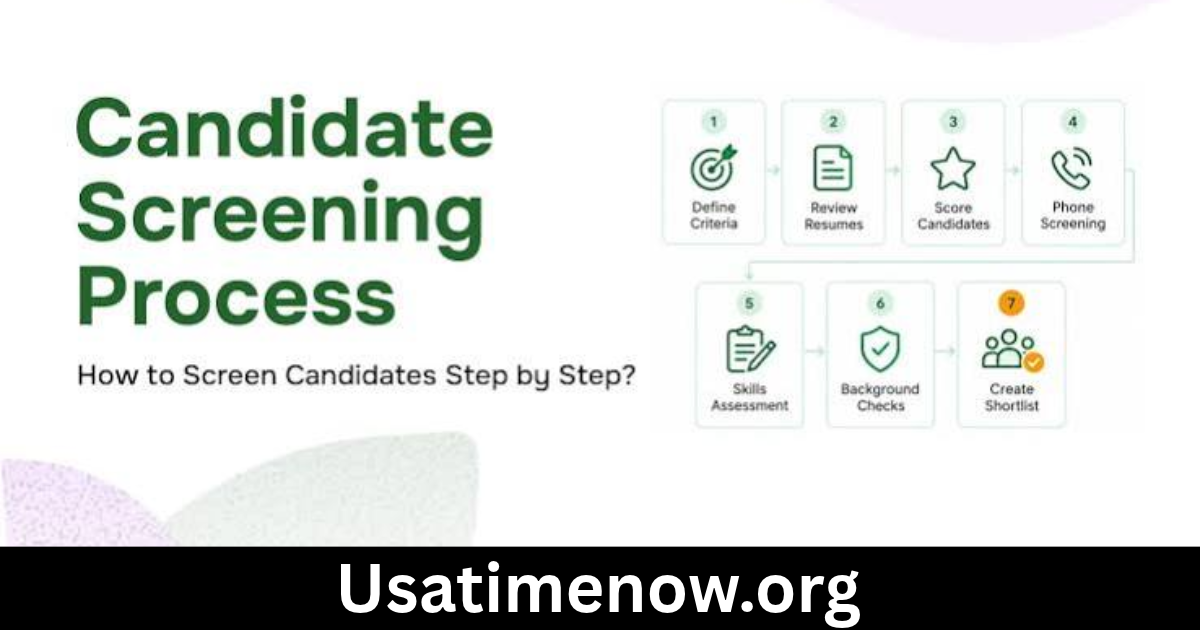
Step 1: Review the Job Description
Before reviewing applications, recruiters should understand the role’s responsibilities and requirements.
Identify essential qualifications, required technical skills, relevant experience, and desirable additional capabilities. Separate mandatory requirements from preferred qualifications to avoid rejecting potentially strong applicants unnecessarily.
Step 2: Review Resumes and Applications
The next step is to examine submitted resumes and application forms.
Recruiters should look for:
- Relevant work experience
- Educational qualifications
- Technical and professional skills
- Career achievements
- Industry knowledge
- Evidence of responsibilities related to the position
Resume screening should focus on job-related information rather than formatting preferences or unrelated personal details.
Step 3: Check Minimum Qualifications
Compare each application with the essential requirements established for the position.
For example, a financial analyst role may require accounting knowledge, spreadsheet proficiency, and relevant professional experience. Applicants who meet these requirements can move to the next screening stage.
Employers should apply the same standards consistently to all candidates.
Step 4: Conduct an Initial Phone or Video Screening
A short screening call helps recruiters confirm information and understand a candidate’s interest in the opportunity.
Common questions include:
- Can you briefly describe your relevant experience?
- What interests you about this position?
- Which skills make you suitable for this role?
- What are your salary expectations?
- When would you be available to start?
Recruiters should explain the role, working arrangements, and next steps clearly.
Step 5: Assess Skills and Competencies
Depending on the position, employers may use practical assessments to evaluate candidates.
Examples include:
- Writing exercises for content and communication roles
- Coding tests for software developers
- Excel assignments for finance positions
- Presentation exercises for management roles
- Customer-service scenarios for support positions
Assessments should reflect actual job responsibilities, use consistent scoring criteria, and provide reasonable accommodations where required.
Step 6: Conduct Structured Interviews
Candidates who pass the initial screening may be invited to a structured interview.
Recruiters ask each candidate a consistent set of job-related questions and evaluate responses using an agreed scoring framework. This makes comparisons more reliable and reduces the influence of personal preferences.
Step 7: Verify Relevant Information
Before making a final decision, employers may verify qualifications, employment history, professional references, or other relevant information.
Background checks should be appropriate to the position and conducted in accordance with applicable laws, privacy requirements, and consent rules.
Step 8: Create a Shortlist
After completing the screening stages, recruiters compare candidate results and prepare a shortlist for the hiring manager.
The shortlist should include applicants who demonstrate the strongest match with the role’s essential requirements.
Candidate Screening Methods
Organizations can use several methods depending on the job, number of applicants, and available resources.
| Screening method | Main purpose |
|---|---|
| Resume screening | Reviews qualifications and experience |
| Application form review | Checks required information |
| Phone screening | Confirms basic suitability and interest |
| Skills assessment | Evaluates practical abilities |
| Structured interview | Measures competencies consistently |
| Reference checks | Confirms relevant professional information |
| Background checks | Verifies appropriate job-related details |
Combining multiple methods can provide a more complete picture of a candidate’s suitability.
How Technology Improves Candidate Screening
Recruitment technology can help organizations handle applications more efficiently.
Applicant Tracking Systems
An applicant tracking system (ATS) helps recruiters organize applications, track candidate progress, and manage communication. Some systems also support resume searches and screening workflows.
Artificial Intelligence in Recruitment
AI-powered recruitment tools can assist with tasks such as organizing applications, identifying relevant skills, and summarizing candidate information.
However, automated tools should be monitored for accuracy and potential bias. Employers should not rely on automated rankings as the sole basis for hiring decisions. Human oversight and clear evaluation standards remain important.
Online Assessment Platforms
Digital assessment tools allow employers to evaluate job-related skills remotely. They can be useful for hiring across different cities or countries, provided assessments are accessible and relevant to the position.
Best Practices for an Effective Candidate Screening Process
Recruiters can improve screening outcomes by following these practical recommendations:
- Define clear criteria: Establish essential qualifications before reviewing applications.
- Use consistent evaluation standards: Apply the same job-related criteria to every applicant.
- Avoid unnecessary requirements: Do not exclude capable candidates based on preferences unrelated to job performance.
- Keep candidates informed: Provide updates about timelines and recruitment stages.
- Use relevant assessments: Test skills that candidates will actually need in the role.
- Document decisions: Record objective reasons for advancing or rejecting applicants.
- Protect candidate information: Limit access to personal data and follow applicable privacy rules.
- Review the process regularly: Monitor hiring outcomes and improve ineffective screening stages.
Common Candidate Screening Mistakes to Avoid
Even experienced recruiters can make mistakes that weaken hiring decisions.
- Relying only on resumes: A resume may not fully demonstrate practical skills or potential.
- Using unclear criteria: Vague requirements can lead to inconsistent candidate evaluations.
- Overusing automated filters: Strict keyword filters may overlook qualified applicants who describe their experience differently.
- Asking inappropriate questions: Screening questions should relate to the job and comply with employment laws.
- Delaying communication: Long periods without updates can damage the candidate experience.
- Ignoring transferable skills: Candidates from different industries may have relevant abilities that are not immediately obvious.
- Skipping documentation: Without clear records, it becomes difficult to explain or review hiring decisions.
How Long Does the Candidate Screening Process Take?
The time required depends on the number of applications, job complexity, assessment requirements, and employer resources.
An initial resume review may take only a few days, while a complete screening process involving interviews, assessments, and verification may take several weeks.
Employers can reduce delays by setting realistic deadlines, assigning screening responsibilities, using organized recruitment systems, and communicating regularly with candidates.
FAQs About the Candidate Screening Process
1. What is the main purpose of candidate screening?
The main purpose is to identify applicants who meet a position’s essential requirements and are suitable to progress to the next recruitment stage.
2. What happens during candidate screening?
Recruiters review resumes, check qualifications, conduct initial calls, assess relevant skills, and compare applicants against established job criteria.
3. What is the difference between candidate screening and interviewing?
Screening is the broader process of assessing applicants before selection. An interview is one specific method used during screening to explore a candidate’s experience, skills, and suitability.
4. Who is responsible for candidate screening?
Recruiters and HR professionals usually manage the initial screening process. Hiring managers may participate in technical assessments, interviews, and final candidate evaluations.
5. Can AI be used for candidate screening?
Yes. AI tools can help organize applications and identify relevant information. However, employers should monitor these tools for bias and maintain human oversight of important hiring decisions.
6. What are the most important candidate screening criteria?
Common criteria include relevant experience, essential qualifications, technical skills, communication abilities, and demonstrated competencies required for the position.
7. How can employers make candidate screening fairer?
Employers can use clear job-related criteria, standardized questions, consistent scoring methods, accessible assessments, and documented decisions.
Conclusion
The candidate screening process plays a major role in building a qualified and productive workforce. By reviewing applications carefully, checking essential qualifications, assessing relevant skills, and conducting structured interviews, employers can make better-informed hiring decisions. A successful screening strategy combines clear recruitment standards, appropriate technology, consistent communication, and human judgment. candidate screening process When organizations continuously review and improve their screening methods, they can reduce recruitment delays, improve candidate experiences, and select employees who are well suited to their business needs.