





Table of Contents
A 223 schedule is a work scheduling pattern that can help organizations manage staffing, maintain consistent coverage, and improve productivity time. It is often discussed in workplaces that operate across multiple shifts, including healthcare, manufacturing, security, logistics, and other industries that require reliable employee coverage. However, the exact meaning of a 223 schedule can vary by employer, so understanding the specific rotation is essential before adopting it.
A well-planned work schedule helps employees understand their responsibilities, balance working hours with personal commitments, and coordinate with colleagues. By exploring how a 223 schedule works and how to manage it effectively, businesses can make more informed decisions about workforce planning.
What Is a 223 Schedule?
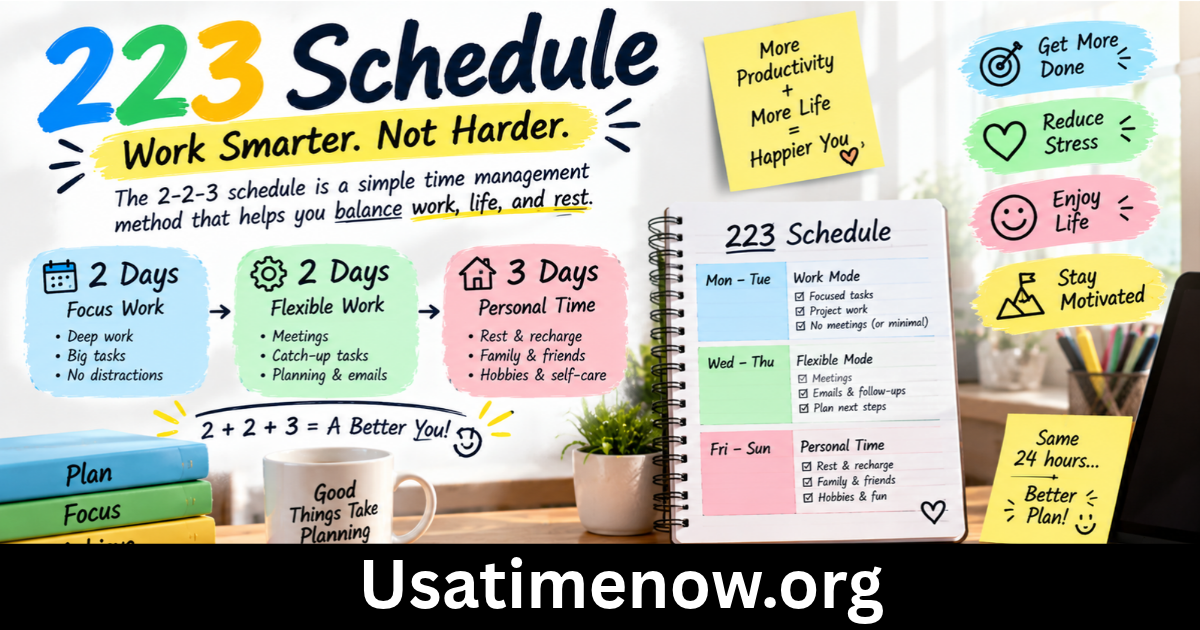
A 223 schedule generally refers to a repeating work rotation organized around a pattern of working days and days off. The exact structure is not universally standardized. In some workplaces, the term may describe a rotation involving two days on, two days off, and three days on, with the sequence repeating or alternating with another pattern.
Because employers may use different definitions, it is important to confirm the actual schedule, shift length, and rotation period with the organization. A schedule described as “223” should not automatically be assumed to follow the same pattern everywhere.
When properly designed, a rotating schedule can help businesses distribute staffing requirements across different days and shifts. Employees benefit from knowing when they are expected to work, while managers can plan coverage and monitor workloads more consistently.
7 Benefits of a 223 Schedule for Productivity Time
1. Creates a Predictable Work Routine
A clearly defined schedule gives employees a better understanding of when they will work and when they will have time off. This predictability can make it easier to plan appointments, family responsibilities, personal projects, and rest.
For managers, a consistent rotation makes it easier to organize staffing requirements in advance. Employees can prepare for upcoming shifts instead of relying on frequent last-minute changes.
Predictability supports productivity time because workers can plan their responsibilities around their working hours. The benefit is strongest when schedule changes are communicated early and employees have access to an accurate calendar.
2. Supports Continuous Business Operations
Some organizations need employees available beyond traditional weekday business hours. Hospitals, factories, distribution centers, and security services may require coverage during evenings, nights, weekends, or holidays.
A rotating schedule can help distribute these responsibilities among teams. Managers can plan overlapping shifts, assign coverage, and reduce gaps in essential operations.
However, a 223 schedule alone does not guarantee complete coverage. Organizations must calculate staffing needs, shift lengths, handover periods, and employee availability to determine whether the rotation meets operational requirements.
3. Helps Employees Plan Their Time Off
Depending on its exact structure, a 223 schedule may provide regular blocks of time away from work. Employees can use these periods for rest, personal errands, learning, exercise, or spending time with family.
Planning personal activities around a published work calendar can reduce scheduling conflicts and help employees manage their energy more effectively.
Time off is most useful when employees receive adequate recovery between shifts. Employers should avoid treating days off as an opportunity to add unnecessary overtime, especially when workers have demanding or overnight duties.
4. Improves Workforce Planning
Workforce planning becomes easier when managers have a defined rotation to follow. They can identify which employees are assigned to particular shifts, determine where additional coverage is needed, and coordinate training or leave requests.
A documented schedule also helps supervisors recognize recurring staffing shortages. If a particular shift frequently lacks coverage, managers can adjust assignments or recruit additional staff rather than repeatedly relying on emergency changes.
Better workforce planning reduces administrative confusion and gives employees a clearer picture of their responsibilities.
5. Encourages Better Team Coordination
Employees working in rotating shifts often need to transfer responsibilities between colleagues. A structured schedule helps teams understand who is working, who is finishing a shift, and who will take over the next assignment.
Clear handover procedures are especially important in healthcare, manufacturing, customer support, and other environments where incomplete information can affect service quality or safety.
Shared calendars, shift notes, and digital scheduling tools can make these transitions smoother. Employees should document important updates and confirm that incoming colleagues understand outstanding tasks.
6. Makes Productivity Tracking More Consistent
A defined schedule provides a useful framework for tracking attendance, overtime, task completion, and staffing costs. Managers can compare planned hours with actual hours worked and identify patterns that affect performance.
For example, repeated overtime may indicate that a team is understaffed or that shift lengths are not aligned with demand. Frequent absences on particular days may also reveal a need for better coverage planning.
Productivity data should be interpreted carefully. Employees should be evaluated using appropriate measures of work quality, output, and responsibilities rather than attendance figures alone.
7. Can Support Work-Life Balance
A rotating schedule may offer flexibility when employees know their working days well in advance. Some people appreciate having weekdays available for appointments or personal tasks that are difficult to arrange around a standard Monday-to-Friday job.
Nevertheless, the effect on work-life balance depends on the rotation, shift length, commute, and amount of recovery time. Overnight work and rapidly changing shift times can disrupt sleep and personal routines.
Employers should ask for feedback, consider employee preferences where practical, and review whether the rotation is sustainable over time.
How to Organize a 223 Schedule Effectively
Define the Exact Rotation
Start by documenting what the 223 pattern means within your organization. Specify the number of consecutive working days, days off, shift start and end times, and the length of the repeating cycle.
If the schedule alternates between different patterns, write out the entire rotation rather than relying on a short label. This prevents confusion when employees exchange shifts or join the team.
Match Staffing Levels to Business Demand
Review customer demand, production targets, service requirements, and expected workloads before assigning shifts. Each shift should have enough qualified employees to handle its responsibilities.
Managers should also plan for holidays, sickness, training, and approved leave. Backup arrangements reduce the risk of unexpected staffing gaps.
Use Scheduling Software
Digital scheduling tools can help managers publish calendars, notify employees of changes, track availability, and manage shift swaps. Some systems also support timesheets, overtime reporting, and payroll integration.
When selecting software, consider the size of the team, ease of use, mobile access, reporting features, and compatibility with existing systems. A shared spreadsheet may be sufficient for a small team, while larger operations may benefit from dedicated workforce management software.
Monitor Fatigue and Rest Periods
A schedule should be assessed for its effect on sleep, concentration, and recovery. Long shifts, night work, and insufficient time between duties can increase fatigue and affect safety.
Employers should review applicable labor laws, rest-period requirements, overtime rules, and industry-specific regulations. They should also establish a process for employees to report fatigue or scheduling concerns.
Review and Improve the Rotation
A schedule should not remain unchanged simply because it has been used for a long time. Regular reviews can identify staffing gaps, recurring overtime, attendance problems, and employee dissatisfaction.
Gather feedback from workers and supervisors, then compare the results with operational needs. Small adjustments to shift handovers, staffing levels, or advance notice may improve the effectiveness of the schedule.
Common Challenges of a 223 Schedule
Although a structured rotation can support workforce management, it may create challenges if it is poorly designed.
- Confusion about the rotation: Different interpretations of the term can lead to missed shifts. Publish the full calendar and explain the pattern clearly.
- Fatigue from demanding shifts: Long or overnight shifts may reduce alertness. Review rest periods and distribute difficult shifts fairly.
- Unexpected staffing shortages: Absences can disrupt coverage. Maintain backup plans and establish clear procedures for replacements.
- Scheduling conflicts: Employees may struggle to coordinate personal responsibilities with rotating shifts. Provide schedules in advance whenever possible.
- Unequal workloads: Some employees may consistently receive less desirable shifts. Review assignments regularly and use transparent scheduling rules.
Addressing these issues early can help maintain employee satisfaction while protecting service quality and productivity.
FAQs About the 223 Schedule
1. What does a 223 schedule mean?
A 223 schedule generally refers to a repeating work rotation involving a pattern of working days and days off. Its precise meaning varies by employer, so employees should confirm the specific rotation and shift lengths.
2. Is a 223 schedule the same as a 2-2-3 schedule?
Not necessarily. The terms may be used interchangeably in some workplaces, but naming conventions are not universal. A commonly described 2-2-3 rotation involves working two days, taking two days off, and then working three days, followed by an alternating pattern. Always check the actual calendar.
3. How many hours do employees work on a 223 schedule?
The number of hours depends on the shift length and the full rotation. Employees may work different weekly averages depending on whether shifts last eight, ten, or twelve hours and whether overtime is included.
4. Which industries use rotating work schedules?
Rotating schedules are used in industries that need coverage outside standard office hours, including healthcare, manufacturing, transportation, logistics, security, and customer support.
5. Can a 223 schedule improve productivity time?
It can help by clarifying responsibilities, improving staffing coverage, and making time management easier. Results depend on appropriate staffing levels, reasonable shift lengths, effective communication, and adequate rest.
6. What are the disadvantages of a 223 schedule?
Potential disadvantages include fatigue, difficulty planning personal activities, shift handover problems, and confusion about the rotation. These issues can often be reduced through clear communication and careful workforce planning.
7. What is the best way to track a 223 schedule?
A shared digital calendar, workforce scheduling platform, or clearly maintained spreadsheet can help track shifts and days off. Larger organizations may need tools that also manage attendance, overtime, leave, and payroll records.
Conclusion
A 223 schedule can be a useful approach to workforce planning when its rotation is clearly defined and aligned with business needs. It can support predictable routines, continuous operations, improved team coordination, and better productivity time. 223 schedule The key is to look beyond the schedule’s name. Employers should document the complete rotation, provide adequate staffing, monitor employee fatigue, and review performance regularly. With transparent communication and appropriate scheduling tools, organizations can build a work pattern that supports operational efficiency while respecting employees’ time and well-being.