






Table of Contents
Introduction
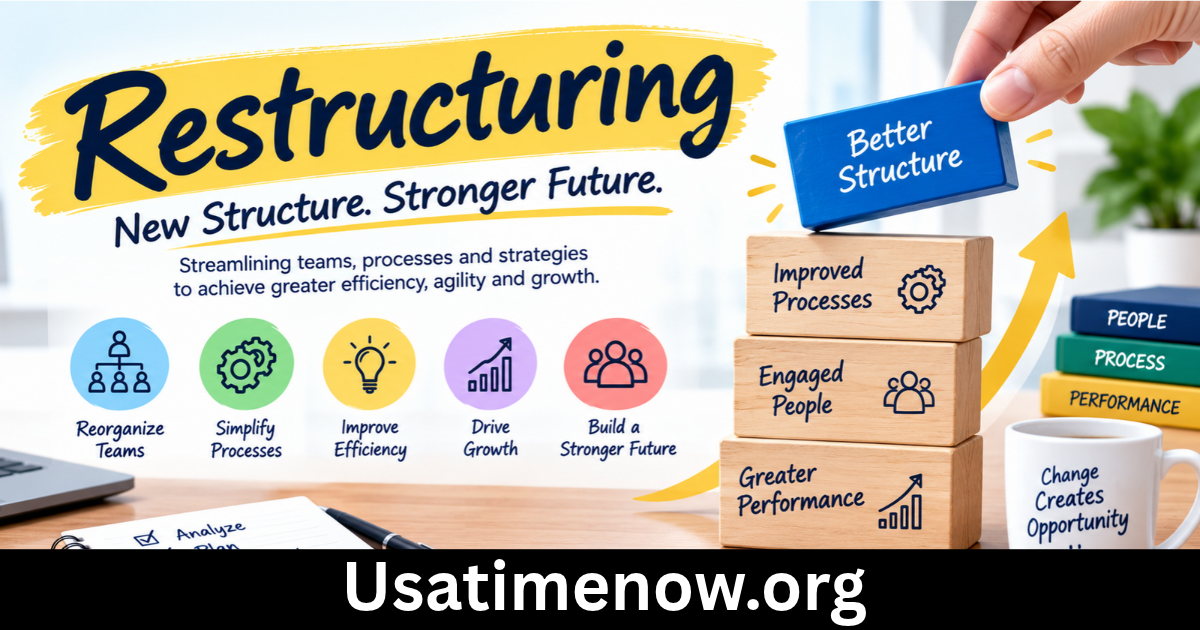
Business restructuring is an important strategy that organizations use to improve efficiency, reduce costs, respond to market changes, and achieve long-term growth. Whether a company is facing financial difficulties, expanding into new markets, or adapting to new technology, restructuring can help it align its resources with its business goals.
Understanding what means can help business owners, managers, HR professionals, and employees navigate organizational changes more effectively. In this guide, we explore the meaning, its main types, benefits, challenges, and the steps businesses can follow to implement a successful plan.
What Is Restructuring?
Restructuring is the process of making significant changes to a company’s organizational structure, operations, finances, workforce, or business strategy. The purpose is generally to improve performance, address challenges, or prepare the organization for future opportunities.
Business may involve merging departments, changing management responsibilities, reducing operating expenses, reorganizing teams, selling business units, or adjusting debt arrangements.
For example, a company experiencing declining profits may combine two departments to eliminate duplicated work and improve coordination. Similarly, a growing business may restructure its management hierarchy to support expansion and clarify responsibilities.
Restructuring does not always mean job cuts or financial distress. Many organizations restructure proactively to remain competitive, improve productivity, and adapt to changing customer expectations.
Types
Businesses can restructure in several ways depending on their objectives and current circumstances.
1. Organizational Restructuring
Organizational restructuring involves changing a company’s internal structure, reporting relationships, departments, or management responsibilities.
For example, a business may combine its marketing and communications teams under one director to improve collaboration. Another company may create new departments to support international expansion.
The primary goal is to establish a structure that supports efficient decision-making, clear accountability, and better coordination.
2. Financial
Financial focuses on changing a company’s financial arrangements to improve stability and manage financial pressure.
This may involve renegotiating debt, refinancing loans, selling nonessential assets, changing the capital structure, or adjusting payment obligations with creditors.
Financial can help businesses manage cash flow and meet their financial commitments. However, the appropriate approach depends on the company’s financial position and applicable legal requirements.
3. Operational
Operational restructuring aims to improve the way a business performs its daily activities. Companies may redesign workflows, automate repetitive tasks, improve supply chains, or eliminate unnecessary processes.
For example, a manufacturing company might introduce automated inventory management to reduce errors and minimize delays.
Operational restructuring can improve productivity, reduce waste, and help businesses deliver products or services more efficiently.
4. Workforce
Workforce involves changing staffing levels, job responsibilities, reporting relationships, or employee skills to meet business needs.
It may include redeploying employees, retraining staff, combining roles, creating new positions, or, in some circumstances, reducing the workforce.
Because workforce changes directly affect employees, businesses should communicate clearly, follow employment laws, and consider alternatives to redundancies where practical.
5. Strategic
Strategic occurs when a business changes its overall direction to respond to new opportunities, customer needs, or competitive pressures.
A company may discontinue an underperforming product line, enter a new market, invest in digital services, or focus on its most profitable business activities.
This type of restructuring helps organizations align their resources with long-term strategic priorities.
Why Do Companies Restructure?
Organizations restructure for several reasons, depending on their industry, financial position, and growth objectives.
To Reduce Costs
Rising expenses, declining revenue, or economic uncertainty may encourage companies to review their operating costs, can identify duplicated tasks, inefficient processes, and unnecessary spending.
Cost reduction should be balanced against the need to maintain service quality, employee performance, and future growth.
To Improve Productivity
Unclear responsibilities and complicated reporting structures can slow down business operations. Restructuring can simplify workflows, improve coordination, and help employees focus on important tasks.
To Support Business Growth
A company expanding into new regions or introducing new products may need additional departments, new leadership roles, or different operating procedures.
Restructuring helps businesses develop the organizational capacity needed to manage expansion.
To Respond to Market Changes
Changes in customer preferences, technology, regulations, and competition can make existing business models less effective. Allows companies to adapt their operations and priorities to changing market conditions.
To Address Financial Difficulties
Businesses facing excessive debt, declining sales, or cash flow problems may restructure to improve financial stability and protect essential operations.
In some cases, professional financial advice or formal insolvency procedures may be necessary.
Benefits
When carefully planned and implemented, can provide several advantages.
- Improved efficiency: Removing unnecessary processes can help teams complete work more effectively.
- Clearer responsibilities: Updated reporting structures can reduce confusion and improve accountability.
- Better financial management: Reviewing expenses and financial arrangements can support improved cash flow.
- Greater adaptability: A suitable structure can help businesses respond to changing customer and market demands.
- Stronger strategic focus: Organizations can redirect resources toward activities that support their long-term goals.
- Improved competitiveness: More efficient operations and clearer priorities can help companies compete more effectively.
However, these benefits are not automatic. The results depend on the quality of planning, leadership, communication, and implementation.
Challenges
Despite its potential advantages, can create significant challenges for businesses and employees.
Employee Uncertainty and Resistance
Employees may worry about job security, changing responsibilities, new managers, or unfamiliar working arrangements. Uncertainty can affect morale and productivity if leaders do not communicate openly.
Providing timely information and opportunities for employees to ask questions can help reduce unnecessary anxiety.
Implementation Costs
Restructuring may require new technology, training, external consultants, legal advice, or changes to facilities and systems. These costs should be included in the budget.
Disruption to Daily Operations
Changing teams, processes, and reporting relationships can temporarily disrupt normal business activities. A phased implementation plan can help maintain essential services while changes take place.
Risk of Poor Decisions
Restructuring based on incomplete information may remove important capabilities or create new inefficiencies. Businesses should analyze reliable data, consult relevant stakeholders, and evaluate the potential consequences before making major decisions.
How to Implement a Successful Plan
A structured approach helps organizations manage change while minimizing unnecessary disruption.
Step 1: Assess the Current Situation
Review financial performance, operating costs, employee responsibilities, productivity, customer feedback, and organizational challenges. Identify the problems is intended to solve.
Step 2: Set Clear Objectives
Define measurable goals, such as reducing process delays, improving customer service, simplifying reporting lines, or strengthening cash flow.
Clear objectives help management evaluate whether is delivering the intended results.
Step 3: Develop a Strategy
Identify the changes required, estimate costs, assign responsibilities, and establish a realistic timeline. Consider the impact on employees, customers, suppliers, and business operations.
Step 4: Communicate With Employees
Explain why is necessary, what changes are being considered, and how the process will work. Communication should be timely, accurate, and appropriate to the stage of decision-making.
Where required, consult employee representatives and comply with applicable employment laws.
Step 5: Implement Changes Carefully
Introduce the changes according to the agreed plan. Provide training, update internal procedures, clarify reporting relationships, and support employees who are taking on new responsibilities.
For major organizational changes, a phased rollout may help reduce disruption.
Step 6: Measure and Review Results
Monitor performance indicators such as operating costs, productivity, employee retention, customer satisfaction, and revenue. Compare the results with the original objectives and adjust the strategy when necessary.
Restructuring vs. Downsizing: What Is the Difference?
Restructuring and downsizing are related but different concepts.
| Factor | Restructuring | Downsizing |
|---|---|---|
| Meaning | Broad changes to business structure or operations | Reducing the size of the workforce or organization |
| Main objective | Improve alignment, efficiency, stability, or performance | Reduce costs or organizational capacity |
| Job losses | May or may not occur | Often involves workforce reductions |
| Other changes | May include new teams, technology, or financial arrangements | Primarily focuses on reducing staffing or scale |
| Example | Combining departments and redesigning workflows | Eliminating several positions to reduce expenses |
Downsizing can be one part of a restructuring strategy, but restructuring does not necessarily involve job cuts.
Frequently Asked Questions (FAQs)
1. What is restructuring in simple words?
Restructuring means making significant changes to how a business is organized, financed, or operated to improve performance or respond to changing circumstances.
2. What are the main types of restructuring?
The main types include organizational, financial, operational, workforce, and strategic restructuring.
3. Why do companies restructure?
Companies may restructure to reduce costs, improve productivity, manage financial difficulties, support growth, adopt new technology, or respond to market changes.
4. Does restructuring always mean job losses?
No. Restructuring can involve changes to departments, workflows, management responsibilities, or financial arrangements without eliminating jobs. Workforce reductions may occur in some cases, but they are not a necessary part of every restructuring plan.
5. How does restructuring affect employees?
Employees may experience changes in responsibilities, reporting relationships, working processes, or job security. Clear communication, appropriate training, and fair treatment can help reduce disruption.
6. How long does business take?
The timeline depends on the scale and complexity of the changes. A small departmental reorganization may take weeks, while a major financial or company-wide restructuring can take months or longer.
7. What is the difference between restructuring and reorganization?
Reorganization generally refers to changing internal arrangements, such as departments or reporting lines. Restructuring is a broader term that can also include financial, operational, workforce, and strategic changes.
8. How can a company measure success?
Businesses can track results using indicators such as operating costs, productivity, profitability, customer satisfaction, employee retention, and progress toward strategic objectives.
Conclusion
Business restructuring is a valuable management strategy that helps organizations adapt to changing conditions, improve efficiency, and align resources with business goals. It can involve organizational changes, financial adjustments, operational improvements, workforce planning, or a new strategic direction. Although restructuring offers important opportunities, it also requires careful planning, transparent communication, and effective implementation. Businesses should assess their needs, set measurable objectives, support affected employees, and monitor results throughout the process.