






Table of Contents
Introduction
Knowing how to write an employee contract is essential for employers who want to establish clear expectations, protect business interests, and build positive working relationships. how to write an employee contract An employee contract outlines the terms and conditions of employment, including job responsibilities, salary, working hours, benefits, and termination procedures.
A well-written employment contract helps prevent misunderstandings and gives both employers and employees a clear understanding of their rights and obligations. Whether you are hiring your first employee or managing a growing workforce, how to write an employee contract this guide explains the key elements of an employee contract and how to create one effectively.
What Is an Employee Contract?
An employee contract, also called an employment agreement, is a document that sets out the terms under which an employee works for an employer. It may be written, electronic, or, where permitted by law, partly agreed verbally. However, a written contract is generally preferable because it creates a clear record of the agreed terms.
An employment contract typically explains the employee’s position, compensation, work schedule, benefits, workplace policies, and the conditions under which employment may end.
For example, when a company hires a marketing executive, the employment contract can specify the employee’s duties, monthly salary, reporting manager, working hours, leave entitlement, how to write an employee contract and notice period.
The exact requirements vary by jurisdiction, so employers should ensure their contracts comply with applicable employment laws.
Why Is an Employee Contract Important?
An employee contract provides a foundation for a professional employment relationship.
Clarifies Roles and Responsibilities
A contract defines the employee’s job title, duties, reporting structure, and expected standards of performance. This helps employees understand what their role involves and allows employers to communicate expectations from the beginning.
Establishes Salary and Benefits
Documenting salary, payment frequency, bonuses, allowances, and other benefits helps prevent disagreements about compensation. how to write an employee contract It also allows employees to understand the financial terms of their employment.
Helps Prevent Workplace Disputes
When employment terms are documented clearly, both parties can refer to the agreement if questions arise about working hours, leave, responsibilities, or termination.
Supports Legal Compliance
Employment contracts can help employers document legally required terms and workplace arrangements. how to write an employee contract However, a contract cannot override mandatory employment protections, and employers must ensure that its provisions comply with local law.
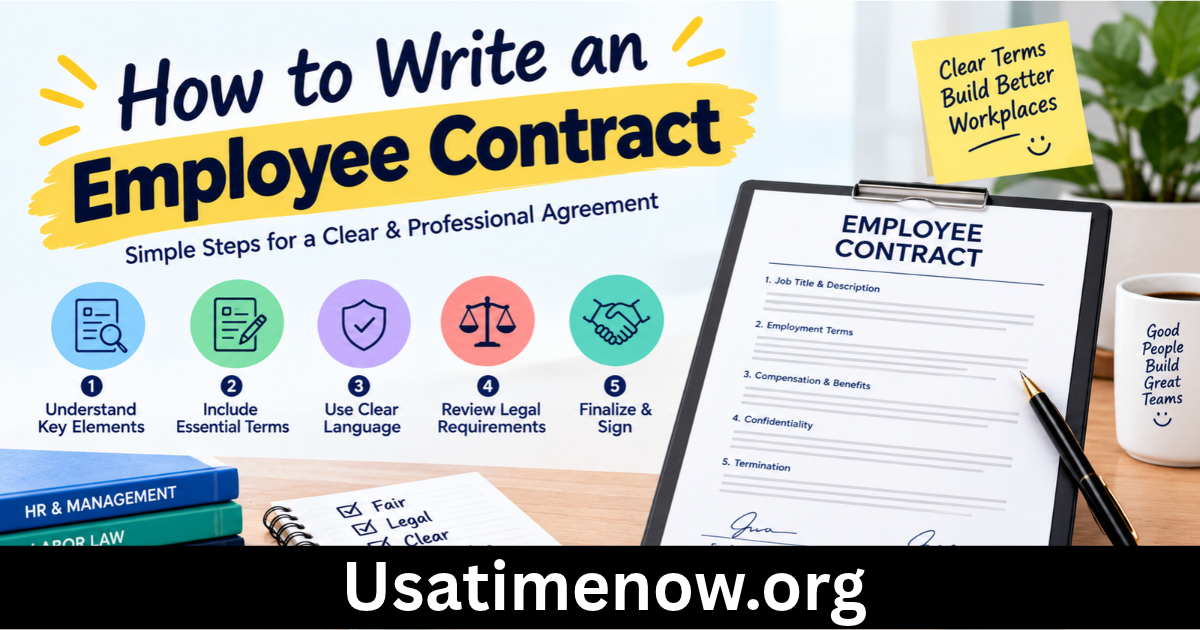
Essential Elements of an Employee Contract
Before drafting an employment agreement, employers should understand which details need to be included.
1. Employer and Employee Information
Start with the full legal name of the employer and employee. Include the employer’s business address and other identifying information required by local law.
This section establishes who is entering into the agreement.
2. Job Title and Description
Specify the employee’s job title, department, reporting manager, and main responsibilities. The description should be detailed enough to explain the role without being unnecessarily restrictive.
For example, a human resources officer’s responsibilities may include recruitment coordination, employee record management, onboarding, and HR administration.
3. Employment Start Date and Contract Type
Include the employment start date and identify whether the role is permanent, fixed-term, part-time, or full-time.
For a fixed-term contract, specify the agreed end date or the event that brings the agreement to an end, subject to applicable law.
4. Salary and Payment Terms
Clearly state the employee’s salary or wage, currency, payment frequency, and payment method. Include any agreed allowances, commissions, bonuses, how to write an employee contract or other compensation arrangements.
The contract should also address overtime eligibility and payment where relevant. Compensation terms must comply with applicable minimum wage and wage-payment requirements.
5. Working Hours and Location
Explain the normal working schedule, break arrangements, workplace location, and any remote or hybrid working expectations.
If overtime, shift work, or flexible hours may apply, describe the relevant arrangements and how they will be managed.
6. Leave and Employee Benefits
Include the applicable annual leave, sick leave, public holidays, and other leave entitlements. Explain benefits such as health coverage, retirement contributions, transport allowances, how to write an employee contract or other employment-related benefits where offered.
Statutory entitlements should be distinguished from additional benefits provided voluntarily by the employer.
7. Probation Period
If the role includes a probationary period, state its duration, assessment criteria, and any applicable notice arrangements.
Probation provisions must comply with local employment laws. Employers should avoid assuming that employees have fewer legal rights simply because they are on probation.
8. Confidentiality and Intellectual Property
Depending on the position, the agreement may include reasonable confidentiality obligations to protect business information, customer records, trade secrets, how to write an employee contract and other sensitive material.
If intellectual property ownership is relevant, explain how work created during employment will be handled. These clauses should be drafted carefully to comply with applicable laws.
9. Termination and Notice Period
Explain how either party may end the employment relationship, including notice requirements and any applicable procedures.
The contract should address final payments, return of company property, and other relevant exit arrangements. how to write an employee contract Termination provisions must respect mandatory legal protections and cannot remove rights that employees have under applicable law.
How to Write an Employee Contract Step by Step
Following a structured process can help employers prepare a clear and practical employment agreement.
Step 1: Identify the Employment Requirements
Determine the role, responsibilities, salary, work schedule, location, and contract type before drafting the document. Confirm the business’s needs and the employee’s agreed terms.
Step 2: Research Applicable Employment Laws
Check the laws governing the employment relationship. Requirements may cover minimum wages, working hours, leave, social security, written employment particulars, probation, and termination.
If you are hiring in Pakistan, for example, requirements may vary according to the province or territory, the type of establishment, how to write an employee contract and the employee’s classification. Review the applicable legislation before finalizing the contract.
Step 3: Use a Suitable Contract Template
An employment contract template can provide a useful starting point, but it should not be copied without review. Adapt the document to the role, company policies, employment arrangement, and legal requirements.
For complex or senior positions, professional legal advice can help address issues that a standard template may not cover.
Step 4: Write Clear and Specific Terms
Use simple, professional language and avoid vague statements. Define important terms, explain responsibilities, and ensure that salary, working hours, leave, and notice arrangements are consistent throughout the document.
Each clause should communicate a clear expectation or obligation.
Step 5: Review the Contract Carefully
Check the employee’s information, dates, compensation figures, benefits, and other agreed terms. Confirm that the clauses are consistent with company policies and applicable law.
A second review by an HR professional or employment lawyer can help identify errors and potential compliance issues.
Step 6: Share the Agreement With the Employee
Give the employee sufficient time to read the contract and ask questions before signing. Explain important provisions, including probation, compensation, confidentiality, and termination.
Both parties should understand the agreement before accepting its terms.
Step 7: Obtain Signatures and Keep Records
Arrange for the employer and employee to sign and date the final agreement. Use electronic signatures only where permitted and ensure the process meets applicable legal requirements.
Provide the employee with a copy and store the signed document securely with appropriate access controls.
Common Mistakes to Avoid When Writing an Employee Contract
Employers should avoid several common mistakes that can create confusion or legal risks.
- Using vague job descriptions: Unclear responsibilities can lead to disagreements about performance expectations.
- Leaving compensation details incomplete: Always specify salary, payment frequency, and applicable allowances.
- Copying outdated templates: Employment laws and business requirements can change, so review templates regularly.
- Ignoring local legislation: A contract that conflicts with mandatory legal protections may be unenforceable in whole or in part.
- Including overly broad restrictions: Confidentiality, non-compete, and similar clauses may be subject to legal limitations.
- Failing to provide a signed copy: Both parties should retain an accessible record of the agreed terms.
Avoiding these mistakes helps employers establish clearer, more reliable employment relationships.
Frequently Asked Questions (FAQs)
1. How do you write an employee contract?
Start by identifying the employment terms, researching applicable laws, and drafting clear clauses covering job responsibilities, salary, working hours, leave, benefits, confidentiality, and termination. Review the agreement before obtaining signatures.
2. What should an employee contract include?
A typical contract includes employer and employee details, job title, responsibilities, start date, employment type, salary, working hours, leave, benefits, probation, and termination provisions.
3. Can I write my own employee contract?
Yes, employers can draft their own contracts, but they should ensure the document complies with applicable employment laws. For complicated arrangements, legal review is recommended.
4. Is an employee contract legally binding?
A contract may be legally binding when the relevant legal requirements are satisfied. Enforceability depends on factors such as applicable law, the agreement’s terms, and the circumstances in which it was made.
5. Can an employee contract be changed after signing?
Changes can generally be made through an agreed variation or updated agreement, subject to applicable law. Employers should document changes properly and obtain the employee’s agreement where required.
6. Is a written employee contract necessary?
Written employment terms are strongly recommended because they create a clear record of the agreement. In some jurisdictions or employment arrangements, written terms are also legally required.
7. How long should an employee contract be?
There is no universal required length. The contract should be long enough to cover the necessary employment terms clearly without including unnecessary or confusing clauses.
8. Should an employment lawyer review an employee contract?
Legal review is particularly useful when the contract includes complex compensation arrangements, intellectual property provisions, restrictive covenants, senior executive terms, or other issues that may carry significant legal consequences.
Conclusion
Learning how to write an employee contract helps employers establish clear expectations, document employment terms, and reduce the risk of workplace misunderstandings. A strong agreement should explain job responsibilities, compensation, working hours, benefits, and termination procedures in straightforward language. how to write an employee contract Employers should also ensure that every clause complies with applicable employment laws and reflects the actual agreement between the parties. By using a suitable template, reviewing the document carefully, and obtaining the necessary signatures, businesses can create employment contracts that support a professional and transparent working relationship.