





Table of Contents
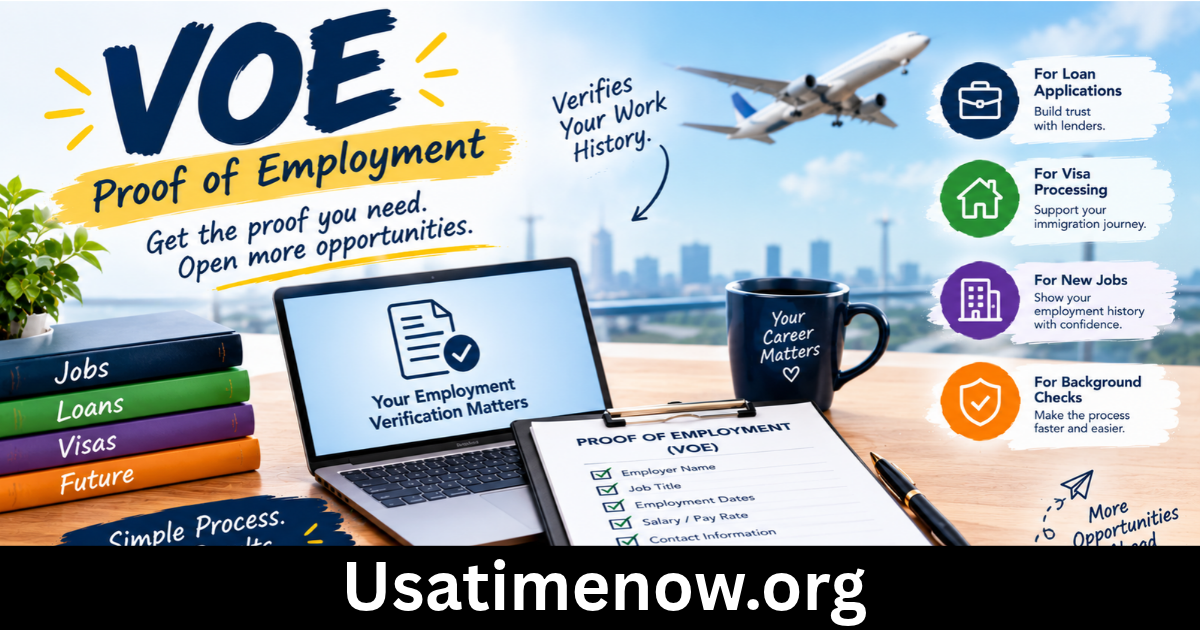
The term VOE can have different meanings depending on the industry, but one of its most common uses is Verification of Employment. This process helps organizations confirm a person’s employment status, job title, work history, and sometimes income. VOE is often used in mortgage applications, loan approvals, rental applications, and employment screening.
Understanding VOE can help employees, employers, and applicants prepare the correct documents and avoid unnecessary delays. In this guide, we explain what VOE means, how it works, why it matters, and what you should know before completing a verification request.
What Does VOE Mean?
VOE stands for Verification of Employment. It refers to a process used to confirm information about a person’s current or previous employment.
A company, financial institution, landlord, or authorized verification service may request this information when evaluating an application. The verification usually relies on employer records or an approved employment verification platform.
Depending on the purpose, may confirm the employee’s name, employer, position, employment dates, and current work status. Some requests also include salary information, although income verification may be handled separately.
Why Is Important?
Verification of Employment helps organizations check whether information provided by an applicant is accurate. It can support several important decisions.
1. Mortgage and Loan Applications
Mortgage lenders frequently verify employment as part of the application process. Employment information can help lenders evaluate an applicant’s financial circumstances and ability to meet loan obligations.
Lenders may also request income documentation, recent pay statements, or other financial records. The exact requirements depend on the loan program and lender.
2. Rental Applications
Landlords and property managers may request employment verification to assess whether a prospective tenant has a reliable source of income. This information may be considered alongside other application details, subject to applicable housing and privacy laws.
3. Employment Background Checks
Employers may use employment verification to confirm details about a candidate’s previous jobs. This can help identify inconsistencies in employment history and support appropriate hiring decisions.
4. Administrative and Financial Records
Some organizations require employment verification for benefits, financial services, or other administrative procedures. Accurate employment records can help prevent errors and make application reviews more efficient.
What Information Is Included in a VOE?
A Verification of Employment request may include several types of information, depending on the purpose of the verification.
Common details include:
- Employee’s full name
- Employer’s name
- Current or previous job title
- Employment start date
- Employment end date, if applicable
- Current employment status
- Full-time, part-time, or contract status
- Salary or wage details, when requested and authorized
- Employer or HR department contact information
Not every VOE contains all these details. The requesting organization should specify what information is needed and explain any required authorization.
How Does the Process Work?
The VOE process typically follows a few straightforward steps.
Step 1: The Organization Requests Verification
A lender, landlord, employer, or other authorized party submits a request to verify employment details. This may involve a form, an official letter, a phone call, or a digital verification service.
Step 2: The Applicant Provides Information
The individual may need to provide their employer’s name, employment history, or consent for the release of information. The requirements depend on the type of verification and applicable rules.
Step 3: Employment Records Are Checked
The employer’s HR or payroll department, or an authorized verification provider, checks the available records. The information is compared with the details in the request.
Step 4: The Results Are Shared
The verified information is returned to the requesting organization through an approved communication method. The organization uses the results to help evaluate the application.
Step 5: Additional Information Is Requested if Needed
If records are incomplete or inconsistent, the requester may ask for clarification or supporting documents. Providing accurate information and responding promptly can help prevent avoidable delays.
Different Types
Verification of Employment can be completed through several methods.
Written VOE
A written VOE uses a form or official letter to confirm employment information. An employer may complete the document and return it directly to the authorized requester.
Verbal
A verbal VOE involves confirming employment details by phone with an authorized representative. The requester may record the verification details according to its procedures.
Electronic
An electronic VOE uses a digital system or approved third-party service to verify employment records. This method can reduce paperwork and speed up information processing when the necessary data is available.
VOE for Mortgage Applications
Mortgage-related employment verification helps lenders confirm an applicant’s employment status as part of assessing a home loan application. Depending on the lender’s requirements, verification may occur at different stages of the application process.
What Is the Difference Between VOE and VOI?
VOE and VOI are closely related but serve different purposes.
VOE (Verification of Employment) confirms employment information, such as the employer’s name, job title, and employment status.
VOI (Verification of Income) confirms earnings, such as salary, wages, or other qualifying income.
A lender may request both when reviewing a loan application. Employment verification alone does not necessarily prove how much a person earns, and income documentation may not independently confirm current employment status.
How to Prepare for a Request
Preparing in advance can help make the verification process smoother.
Keep Your Employment Details Accurate
Check that the information on your application matches your employment records. Confirm job titles, employer names, and employment dates before submitting documents.
Contact Your HR Department
If you need an employment verification letter, ask your HR or payroll department about the company’s process. Some employers handle requests internally, while others use an external service.
Gather Supporting Documents
Depending on the request, you may need an employment letter, pay statements, or other relevant documents. Follow the requester’s instructions rather than submitting unnecessary personal information.
Use Secure Submission Methods
Employment records can contain sensitive details. Verify the identity of the requesting organization and submit information through an official portal or other trusted channel.
Follow Up on Delays
If verification takes longer than expected, contact the organization managing your application. Ask whether it needs additional information or whether the request is still being processed.
Common Reasons for Delays
VOE requests can be delayed for several reasons, including incorrect employer contact details, incomplete forms, missing authorization, or discrepancies in employment records.
Some employers may also require additional time to process requests, especially when they rely on external verification providers.
To reduce delays, provide accurate information, follow the requested procedure, and respond quickly to follow-up questions. Processing times vary by employer and organization, so there is no single timeframe that applies to every VOE request.
Frequently Asked Questions
1. What does VOE stand for?
VOE commonly stands for Verification of Employment. It is a process used to confirm a person’s employment details, including job status, employer, and employment dates.
2. Who can request?
Mortgage lenders, financial institutions, landlords, prospective employers, and authorized screening providers may request employment verification when it is relevant to their process.
3. Is the same as proof of income?
No. VOE verifies employment information, while proof of income confirms earnings. Some verification processes include both types of information.
4. How long does take?
The timeframe depends on the employer, the verification method, and whether the request contains all necessary information. Electronic verification may be faster in some cases, while manual requests can take longer.
5. Can I get a VOE letter from my employer?
Yes. Many employers provide employment verification letters or complete VOE forms. Contact HR or payroll to learn which information can be provided and how to submit a request.
6. Is VOE required for a mortgage?
Mortgage lenders commonly verify employment as part of assessing a home loan application. Specific requirements vary by lender, loan program, and stage of the application.
7. Does a VOE include salary information?
Sometimes. A VOE may include salary or wage details when requested and permitted, but some forms only confirm employment status and dates.
8. What should I do if my VOE is incorrect?
Contact your employer’s HR or payroll department to check the records. If the incorrect information affects an active application, notify the requesting organization and ask how to provide corrected documentation.
Conclusion
VOE, or Verification of Employment, is a useful process for confirming employment details in mortgage lending, rental applications, hiring, and other administrative situations. It helps organizations assess information accurately while giving applicants a clear way to demonstrate their employment history. By keeping employment records updated, preparing the required documents, and using secure communication methods, you can make the VOE process more straightforward. Whether you are an employee, employer, or applicant, understanding Verification of Employment can help you manage requests efficiently and avoid unnecessary complications.