






Table of Contents
Calculating overtime pay correctly is essential for employees, employers, and payroll professionals. When employees work beyond their regular schedules, they may qualify for additional compensation depending on their employment agreement and applicable labor laws. how to calculate overtime pay Understanding how to calculate overtime pay helps businesses maintain accurate payroll records, manage labor costs, and improve productivity time. With a simple formula and reliable time tracking, calculating overtime becomes much easier.
What Is Overtime Pay?
Overtime pay is the additional compensation an eligible employee receives for working beyond a specified number of regular working hours. how to calculate overtime pay In the United States, the Fair Labor Standards Act (FLSA) generally requires covered, nonexempt employees to receive at least one and a half times their regular rate of pay for hours worked over 40 in a workweek.
However, overtime rules differ by country, state, and employment category. Some workers may be exempt from federal overtime requirements, while state laws can provide additional protections. Employees should always check the rules that apply to their location and job.
How to Calculate Overtime Pay Step by Step
Calculating overtime pay involves identifying regular hours, determining the employee’s hourly rate, calculating the overtime rate, and multiplying that rate by the overtime hours worked.
Step 1: Determine the Regular Hourly Rate
Start by identifying how much an employee earns per hour. For hourly employees, this is usually the standard hourly wage. how to calculate overtime pay For a salaried employee, the regular hourly rate may need to be calculated using the salary and the number of hours the salary is intended to cover.
For example, an employee earning $20 per hour has a regular hourly rate of $20.
Step 2: Calculate the Overtime Rate
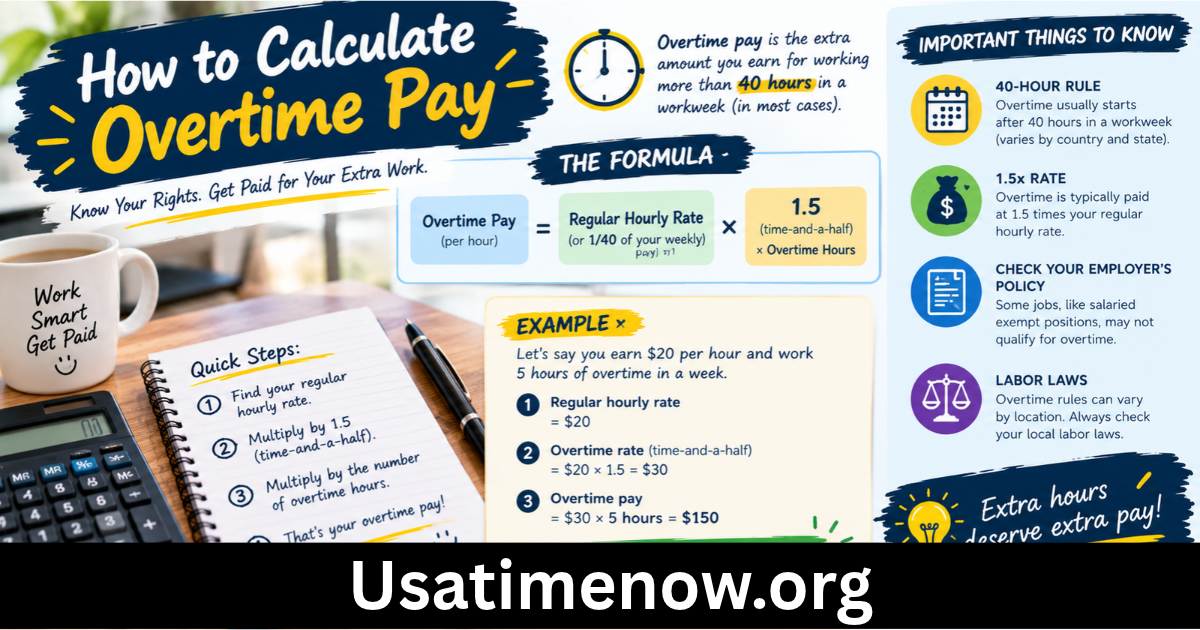
For an eligible employee receiving time-and-a-half overtime, multiply the regular hourly rate by 1.5.
Formula:
Overtime Rate = Regular Hourly Rate × 1.5
Using the example above:
$20 × 1.5 = $30 per overtime hour.
This means the employee earns $30 for each qualifying overtime hour, assuming the applicable rules require time-and-a-half compensation.
Step 3: Determine the Number of Overtime Hours
Next, review the employee’s time records to determine how many hours qualify as overtime. Under the general federal FLSA rule, eligible employees earn overtime after working more than 40 hours in a workweek.
For example, if an employee works 46 hours in one week, the calculation is:
- Total hours worked: 46
- Regular hours: 40
- Overtime hours: 6
Remember that federal overtime is generally calculated by workweek, not by averaging hours across two weeks.
Step 4: Calculate Total Overtime Earnings
Multiply the overtime rate by the number of overtime hours.
Formula:
Overtime Pay = Overtime Rate × Overtime Hours
For an employee earning $20 per hour who works six overtime hours:
$30 × 6 = $180 in overtime pay.
This amount represents the overtime portion of earnings for those six hours.
Step 5: Calculate Total Weekly Pay
To determine the employee’s total weekly wages, add regular earnings and overtime earnings.
Regular Pay = 40 × $20 = $800
Overtime Pay = 6 × $30 = $180
Total Weekly Pay = $800 + $180 = $980
This example assumes a straightforward hourly wage with no additional compensation affecting the regular rate. Certain bonuses, commissions, how to calculate overtime pay and other earnings may need to be included when calculating the legally required overtime rate.
Overtime Pay Calculation Example
The following table shows how overtime earnings change at different hourly rates when an employee works five overtime hours at time-and-a-half.
| Regular Hourly Rate | Overtime Rate | Overtime Hours | Overtime Pay |
|---|---|---|---|
| $15 | $22.50 | 5 | $112.50 |
| $18 | $27.00 | 5 | $135.00 |
| $20 | $30.00 | 5 | $150.00 |
| $25 | $37.50 | 5 | $187.50 |
| $30 | $45.00 | 5 | $225.00 |
These examples show the overtime premium for the listed hours. Actual payroll calculations may require adjustments based on applicable laws and the employee’s compensation structure.
How Productivity Time Tracking Helps Calculate Overtime
Productivity time tracking allows employers and employees to monitor working hours, identify extra time spent on tasks, and maintain reliable attendance records. Accurate time tracking is especially important when employees have flexible schedules, remote working arrangements, or changing workloads.
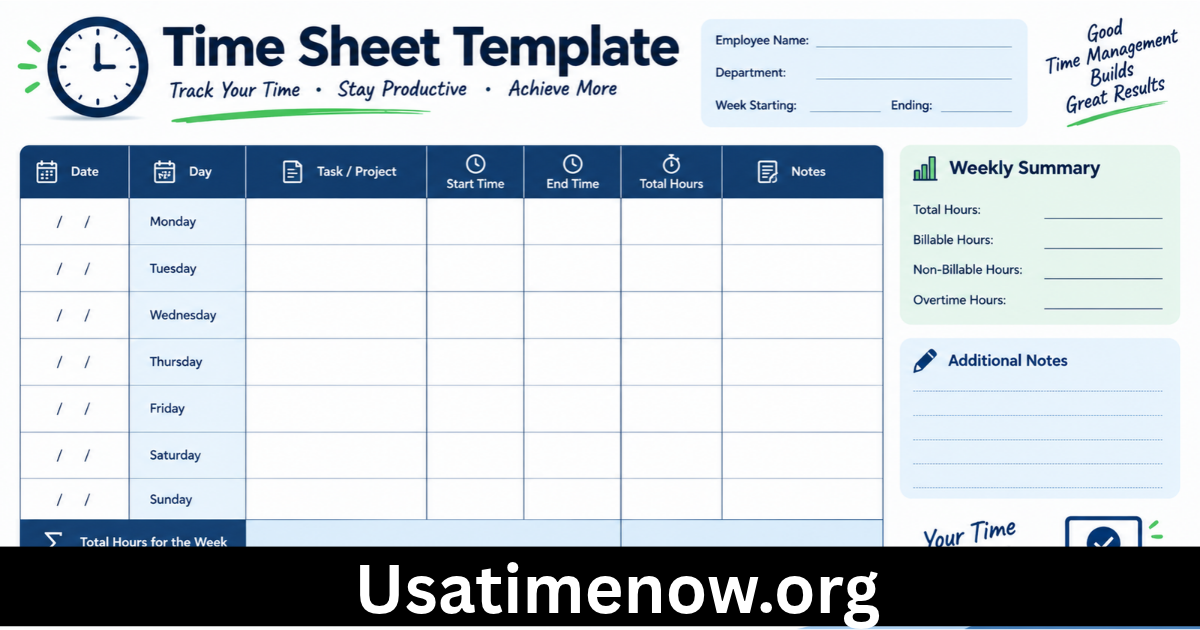
Digital time clocks, timesheets, payroll software, and productivity tools can help record starting times, finishing times, breaks, and total hours worked. These records make it easier to identify overtime hours and reduce payroll errors.
Employers should also distinguish between hours worked and unpaid meal breaks. Under applicable US federal rules, short rest breaks are generally compensable, how to calculate overtime pay while bona fide meal periods can be unpaid when the employee is completely relieved of duties. State laws may impose different or additional requirements.
Tracking productivity time should support accurate compensation rather than encourage employees to work excessive hours. Effective scheduling, realistic deadlines, how to calculate overtime pay and balanced workloads can help organizations control overtime while maintaining employee well-being.
Common Mistakes When Calculating Overtime Pay
Several mistakes can cause inaccurate overtime payments.
Ignoring applicable labor laws: Overtime rules differ depending on the employee’s location, classification, and work arrangement.
Using the wrong hourly rate: Bonuses, commissions, and other compensation may affect the regular rate used for overtime calculations.
Forgetting overtime hours: Incomplete timesheets or inaccurate time records can result in underpayment.
Averaging hours incorrectly: Under the general FLSA rule, employers cannot average hours across multiple workweeks to avoid overtime obligations.
Confusing gross pay with take-home pay: Gross earnings are calculated before deductions such as taxes and insurance. Net pay is the amount an employee receives after applicable deductions.
By reviewing time records regularly and using consistent payroll procedures, employers can reduce these errors and improve payroll accuracy.
Frequently Asked Questions
1. What is the basic formula for calculating overtime pay?
The basic time-and-a-half formula is regular hourly rate multiplied by 1.5, then multiplied by the number of qualifying overtime hours. how to calculate overtime pay The applicable law determines whether this rate applies.
2. How do I calculate overtime pay for $20 an hour?
At a time-and-a-half rate, multiply $20 by 1.5 to get $30 per overtime hour. If the employee works five qualifying overtime hours, the overtime portion equals $150.
3. Is overtime calculated daily or weekly?
Under the general US federal FLSA rule, overtime is calculated based on hours worked beyond 40 in a workweek. Some state laws also require overtime in certain daily or other circumstances.
4. Do salaried employees receive overtime pay?
Some salaried employees qualify for overtime, while others are exempt. Salary alone does not automatically make an employee exempt; applicable duties tests and compensation requirements must also be considered.
5. Does overtime pay include bonuses?
Certain nondiscretionary bonuses and other forms of compensation must be included in the regular rate for overtime calculations under applicable US federal rules. The treatment depends on the type of payment and relevant law.
6. Can a calculator determine overtime pay automatically?
Yes. An overtime pay calculator can estimate earnings when you enter the regular hourly rate and qualifying overtime hours. how to calculate overtime pay For accurate payroll, you may also need to account for bonuses, special pay arrangements, and local labor requirements.
7. How can employers reduce overtime costs?
Employers can monitor productivity time, improve scheduling, distribute workloads fairly, and plan staffing around busy periods. how to calculate overtime pay They must still pay all overtime wages legally owed.
Conclusion
Learning how to calculate overtime pay helps employees understand their earnings and enables employers to maintain accurate payroll records. The basic process involves determining the regular hourly rate, calculating the applicable overtime rate, identifying qualifying overtime hours, and adding the resulting earnings to regular pay. how to calculate overtime pay Reliable productivity time tracking makes these calculations easier and helps prevent errors. By combining accurate records with a clear understanding of applicable labor laws, businesses can manage labor costs responsibly while ensuring eligible employees receive the compensation they are owed.