



Table of Contents
Remote work has become an increasingly popular way for people to perform their jobs outside a traditional office. With the help of internet access, digital communication tools, and cloud-based software, employees can complete many professional tasks from home or other locations. But what does remote work mean, and how can it affect productivity time?
Remote work refers to a working arrangement in which employees perform their duties away from a central workplace, either full-time or on a flexible schedule. It can offer greater flexibility, reduce commuting, what does remote work mean and help businesses attract talent from different locations. Understanding how remote work operates can help employees and employers build productive, balanced, and effective working routines.
What Does Remote Work Mean?
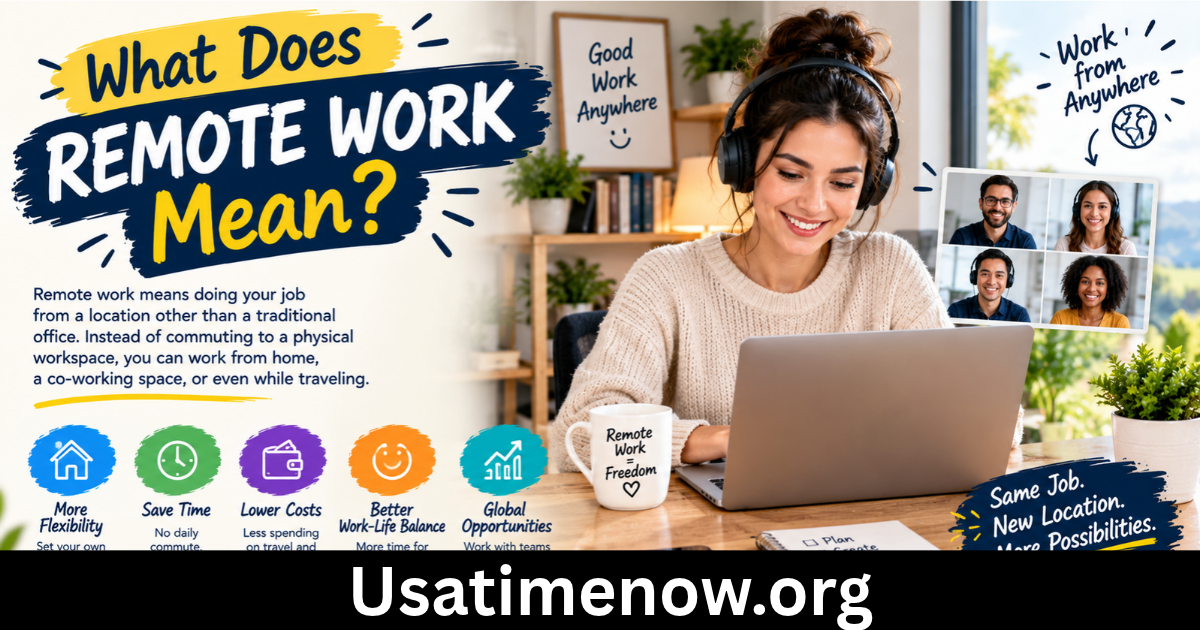
Remote work means completing job responsibilities without regularly working from an employer’s physical office. Employees may work from home, a coworking space, a shared office, or another suitable location, depending on company policies and the nature of their role.
Remote employees use tools such as email, video conferencing, project management platforms, messaging applications, what does remote work mean and cloud storage to communicate with colleagues and complete assignments. Some work independently, while others collaborate with teams across different cities or countries.
Remote work does not necessarily mean working whenever someone wants. Many organizations require employees to follow specific schedules, attend online meetings, meet deadlines, what does remote work mean and remain available during agreed working hours.
Types of Remote Work
Remote work can take several forms, depending on the employer’s policies and the employee’s responsibilities.
1. Fully Remote Work
Fully remote employees perform their jobs outside a traditional company office. They may work from home or another approved location and communicate with their teams digitally.
This arrangement can be useful for software developers, writers, designers, customer support representatives, consultants, and other professionals whose work can be completed online.
2. Hybrid Work
Hybrid work combines remote work with in-office attendance. Employees may work from home on certain days and visit the office for meetings, collaboration, or other responsibilities.
This model provides flexibility while preserving opportunities for face-to-face communication. However, employees need to coordinate schedules and plan their productivity time around both environments.
3. Flexible Remote Work
Flexible remote work allows employees some control over where or when they complete their work, within agreed limits. For example, an employee may adjust their working hours to accommodate personal responsibilities while still meeting deadlines and attending essential meetings.
Flexibility varies by employer, job requirements, and time zone expectations.
4. Remote Freelancing
Freelancers often work remotely for multiple clients instead of being employed by one organization. They may provide writing, graphic design, programming, marketing, consulting, what does remote work mean or administrative services.
Freelancers usually manage their own schedules, workload, and client communication, making time management especially important.
7 Powerful Benefits of Remote Work
1. Better Productivity Time Management
One of the most significant benefits of remote work is the opportunity to manage productivity time more effectively. Without a daily commute, employees may have more time for focused work, planning, and personal responsibilities.
Working in a suitable environment can also help employees organize their schedules around demanding tasks. However, productivity depends on individual habits, job requirements, and the quality of the working environment.
2. Reduced Commuting Stress
Traveling to and from an office can consume considerable time and energy. Remote work eliminates the daily commute for many employees, reducing transportation expenses and allowing more time for work or personal activities.
The time saved can be used for exercise, family responsibilities, professional development, or preparing for the workday. what does remote work mean This benefit may also help employees feel less rushed when beginning their tasks.
3. Greater Work-Life Balance
Remote work can make it easier to balance professional responsibilities with personal commitments. Employees may have greater flexibility to manage appointments, family needs, and household responsibilities around their working hours.
A healthy balance still requires boundaries. Without a clear finishing time, employees may continue working beyond their scheduled hours and struggle to disconnect from professional responsibilities.
4. Access to More Job Opportunities
Remote work allows people to apply for positions that are not limited to their immediate geographical area. Depending on eligibility, language requirements, time zones, what does remote work mean and employment laws, job seekers may find opportunities with organizations in other regions or countries.
Employers can also recruit skilled professionals from a wider talent pool instead of limiting recruitment to people who live near an office.
5. Potential Cost Savings
Working remotely may reduce commuting costs, parking expenses, and spending on meals or office clothing. Employers may also reduce some office-related expenses when fewer employees need permanent desks.
However, remote employees may have additional costs for internet service, electricity, equipment, and home office furniture. Actual savings depend on the arrangement and which expenses the employer covers.
6. Fewer Office Distractions
Some employees find it easier to concentrate at home because they experience fewer interruptions from office conversations or unexpected meetings.
A dedicated workspace, scheduled breaks, and clear communication rules can support deeper focus. On the other hand, household noise, caregiving responsibilities, and personal devices may create distractions if employees do not establish a suitable routine.
7. Improved Employee Satisfaction
Remote work can increase job satisfaction for employees who value flexibility and autonomy. Having more control over their work environment may help them feel trusted and better able to manage their responsibilities.
Employers can support this benefit by setting realistic expectations, recognizing achievements, offering regular feedback, what does remote work mean and ensuring remote workers have equal access to training and career development.
Common Challenges of Remote Work
Although remote work offers many advantages, it also creates challenges that employees and employers must address.
Communication difficulties: Online communication can cause misunderstandings or delays, especially when teams work across different time zones. Clear written updates and regular check-ins can help.
Isolation: Employees who rarely interact with colleagues in person may feel disconnected. Virtual team activities, mentoring, and optional in-person meetings can encourage stronger relationships.
Work-life boundaries: Working from home can blur the difference between professional and personal time. Setting fixed hours and taking regular breaks helps maintain balance.
Technology problems: Unreliable internet connections, outdated devices, and software issues can interrupt work. Reliable equipment and technical support are essential.
Time management: Without the structure of an office, some employees may struggle to prioritize tasks. Daily planning, task lists, and realistic deadlines can improve consistency.
How to Improve Productivity Time While Working Remotely
Remote employees can improve their productivity by creating a routine that supports concentration and accountability.
Start by establishing a dedicated workspace with comfortable seating, suitable lighting, and the equipment needed for daily tasks. A consistent workspace can help create a mental separation between work and personal activities.
Plan the day before beginning work. Identify the most important tasks, estimate how long each task will take, what does remote work mean and schedule demanding work during periods of strong concentration. Project management tools and digital calendars can help organize deadlines and meetings.
Reduce distractions by silencing unnecessary notifications and checking messages at planned intervals. Use focused work sessions with short breaks to maintain energy throughout the day.
Communication is equally important. Share progress updates, ask questions when requirements are unclear, and agree on response times with colleagues. At the end of the workday, review completed tasks and prepare priorities for the next day.
Finally, protect personal time. Take breaks, maintain reasonable working hours, and disconnect when the workday ends unless an urgent responsibility requires otherwise.
What Jobs Can Be Done Remotely?
Many jobs can be performed remotely when their responsibilities rely primarily on digital tools and online communication.
Common examples include:
- Software development and IT support
- Content writing and editing
- Graphic design and video editing
- Digital marketing and search engine optimization
- Customer service and virtual assistance
- Accounting and bookkeeping
- Online teaching and tutoring
- Project management and consulting
Not every position can be performed remotely. Healthcare services, manufacturing, construction, hospitality, and other hands-on occupations may require employees to be physically present, although some administrative tasks within these industries can be completed remotely.
Frequently Asked Questions About Remote Work
1. What does remote work mean in simple words?
Remote work means doing your job outside a traditional office, often from home, using digital tools to communicate and complete tasks.
2. Is remote work the same as working from home?
Not exactly. Working from home is one type of remote work. Remote employees may also work from coworking spaces or other approved locations.
3. Is remote work good for productivity?
Remote work can improve productivity for people who have a suitable workspace, clear goals, and effective time management habits. Results vary depending on the role, employee, and working conditions.
4. What is the difference between remote and hybrid work?
Fully remote work generally takes place outside the office, while hybrid work combines remote days with scheduled office attendance.
5. Do remote workers have fixed schedules?
Some remote workers follow fixed schedules, while others have flexible hours. Employers may still require availability during specific times for meetings, collaboration, or customer support.
6. What skills are important for remote work?
Communication, time management, organization, problem-solving, digital literacy, and self-discipline are valuable skills for remote employees.
7. How can remote workers avoid distractions?
They can create a dedicated workspace, plan daily tasks, limit unnecessary notifications, communicate household boundaries, and take regular breaks.
Conclusion
Understanding what remote work means helps employees and employers make informed decisions about modern working arrangements. what does remote work mean allows people to complete professional responsibilities outside a traditional office while offering potential benefits such as flexibility, reduced commuting, broader job opportunities, and better productivity time management.