




Table of Contents
Employee recognition ideas help businesses show appreciation for employees’ hard work, achievements, and contributions. employee recognition ideas Recognizing employees can improve workplace morale, strengthen team relationships, and encourage a positive company culture. When employees feel valued, they are more likely to stay engaged and motivated.
Employee recognition does not always require expensive rewards or elaborate celebrations. A sincere thank-you, public acknowledgment, professional development opportunity, or personalized gift can make a meaningful difference. The key is to recognize employees fairly, consistently, and in ways that reflect their preferences.
In this guide, discover 25 practical employee recognition ideas, along with tips for building an effective workplace recognition program.
What Is Employee Recognition?
Employee recognition is the practice of acknowledging and appreciating employees for their performance, effort, skills, teamwork, and positive contributions.
Recognition can come from managers, colleagues, senior leaders, or the organization as a whole. It may be formal, such as an employee of the month award, or informal, such as a personal thank-you message.
A successful employee recognition program focuses on meaningful contributions rather than simply rewarding employees for being busy. It helps reinforce the behaviors and values an organization wants to encourage.
Why Is Employee Recognition Important?
Recognizing employees can benefit both individuals and the organization.
1. Improves Employee Motivation
When employees receive appreciation for their contributions, they may feel encouraged to maintain strong performance and continue developing their skills.
2. Strengthens Workplace Relationships
Recognition helps create a culture where managers and coworkers notice one another’s efforts. This can encourage cooperation and stronger team connections.
3. Supports Employee Retention
Employees who feel appreciated may develop a stronger connection to their workplace. Meaningful recognition can contribute to job satisfaction and employee retention.
4. Encourages Positive Workplace Behavior
Recognizing teamwork, creativity, reliability, and problem-solving reinforces the behaviors that support organizational goals.
5. Builds a Positive Company Culture
Regular appreciation can make recognition part of everyday workplace communication instead of something that happens only during annual reviews.
25 Creative Employee Recognition Ideas
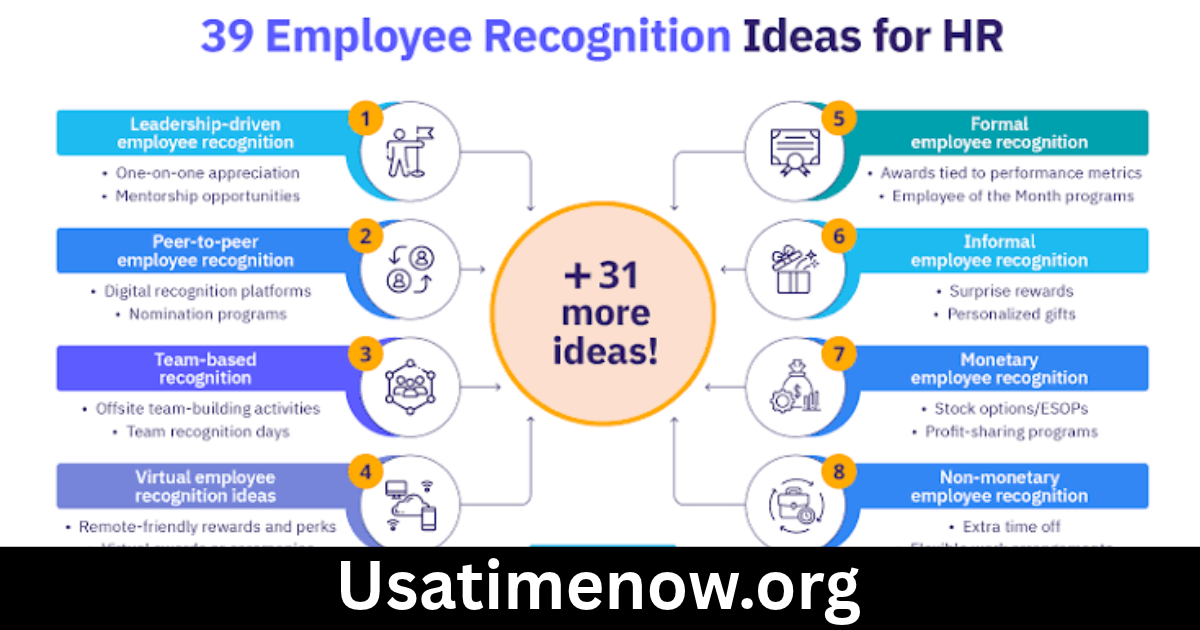
Here are practical employee appreciation ideas that businesses can use to celebrate individual achievements and team contributions.
1. Employee of the Month Award
Create a monthly recognition program that highlights an employee’s achievements, teamwork, or outstanding contribution. Explain the selection criteria to keep the process transparent and fair.
2. Personalized Thank-You Notes
A handwritten thank-you note from a manager can make an employee feel genuinely appreciated. Mention the specific contribution and explain why it mattered.
3. Public Recognition in Team Meetings
Take a few minutes during team meetings to recognize employees who have achieved important goals or helped colleagues.
4. Peer-to-Peer Recognition Program
Allow employees to nominate coworkers for helpfulness, collaboration, creativity, or excellent customer service. Peer recognition can strengthen relationships across departments.
5. Gift Cards and Shopping Vouchers
Offer gift cards for restaurants, online stores, entertainment, or other popular services. Giving employees a choice can make rewards more useful.
6. Extra Paid Time Off
Where business needs and applicable policies allow, provide additional paid time off as a reward for exceptional contributions or important milestones.
7. Professional Development Opportunities
Recognize employees by sponsoring relevant courses, certifications, workshops, or conference attendance. This rewards their achievements while supporting career growth.
8. Personalized Gifts
Choose thoughtful gifts based on employees’ interests, such as books, accessories, hobby supplies, or customized merchandise.
9. Celebrate Work Anniversaries
Recognize employee milestones such as one, five, or ten years of service. A personal message, certificate, or team celebration can make the occasion memorable.
10. Team Lunch or Celebration
Organize a team lunch to celebrate reaching a major target, completing a project, or overcoming a difficult challenge.
11. Recognition Wall
Create a physical or digital recognition wall where employees can share appreciation messages and highlight coworkers’ contributions.
12. Spotlight Employees in Company Newsletters
Feature employees in internal newsletters or company updates. Highlight their accomplishments, professional journey, or positive impact on the organization.
13. Flexible Work Arrangements
Offer eligible employees greater flexibility in their schedules or remote work arrangements when operational requirements permit.
14. Wellness Rewards
Provide wellness-related rewards such as fitness memberships, wellness allowances, or access to relaxation activities.
15. Surprise Appreciation Days
Organize occasional appreciation events with refreshments, small gifts, or fun activities to celebrate employees’ contributions.
16. Skills-Based Recognition
Recognize employees who demonstrate valuable skills such as leadership, communication, problem-solving, creativity, or mentoring.
17. Leadership Recognition Messages
Invite senior leaders to personally acknowledge employees who have made meaningful contributions to company goals.
18. Team Achievement Awards
Celebrate teams rather than focusing only on individual performance. Recognize successful collaboration, project delivery, and shared accomplishments.
19. Customized Certificates
Give employees certificates for specific achievements, such as excellent customer support, innovation, teamwork, or outstanding project contributions.
20. Lunch With Leadership
Offer employees an informal opportunity to have lunch with senior leaders. This can provide recognition while encouraging meaningful conversations.
21. Employee Choice Rewards
Allow employees to select from several reward options, such as gift cards, learning opportunities, extra leave, or company merchandise.
22. Celebrate Personal Milestones
With the employee’s permission, recognize occasions such as birthdays, graduations, or other important personal milestones.
23. Mentorship Recognition
Appreciate employees who support new hires, share knowledge, or help colleagues develop professionally.
24. Innovation Awards
Recognize employees who suggest practical improvements, develop creative solutions, or help make workplace processes more efficient.
25. Spontaneous Appreciation Messages
Encourage managers to recognize good work as it happens. A timely message or quick conversation can often be more meaningful than waiting for a formal award ceremony.
Employee Recognition Ideas on a Budget
Employee appreciation does not have to be expensive. Businesses with limited budgets can still create a culture of recognition through simple, thoughtful actions.
Consider these low-cost options:
- Send a personalized email thanking an employee.
- Give a public shout-out during a team meeting.
- Share employee achievements on an internal communication channel.
- Offer a certificate of appreciation.
- Create a peer-nomination program.
- Provide a preferred parking space for a limited period, where practical.
- Celebrate small team milestones with refreshments.
- Give employees opportunities to lead interesting projects.
Consistency and sincerity are often more important than the monetary value of a reward.
How to Create an Effective Employee Recognition Program
A structured recognition program helps organizations appreciate employees consistently and fairly.
Step 1: Define Recognition Goals
Decide what the program should encourage. Goals may include improving teamwork, celebrating innovation, supporting customer service, or recognizing leadership.
Step 2: Identify Recognition Criteria
Establish clear criteria for recognition. Examples include measurable achievements, collaboration, problem-solving, reliability, and contributions to company values.
Step 3: Offer Different Recognition Options
Employees have different preferences. Some appreciate public recognition, while others prefer private appreciation or practical rewards. Offer a variety of options.
Step 4: Make Recognition Inclusive
Ensure employees across departments, job levels, locations, and work arrangements have fair opportunities to be recognized.
Step 5: Encourage Manager and Peer Participation
Managers should lead by example, but coworkers should also have opportunities to recognize one another.
Step 6: Recognize Contributions Promptly
Appreciation is often more meaningful when it happens close to the achievement or positive behavior being recognized.
Step 7: Measure Program Effectiveness
Collect employee feedback and review participation, satisfaction, and retention trends. Use the results to improve the program.
Best Practices for Employee Appreciation
To make employee recognition meaningful and effective, organizations should follow several important practices:
- Be specific: Explain exactly what the employee did well.
- Be genuine: Avoid generic praise that feels automatic or insincere.
- Be timely: Recognize contributions soon after they happen.
- Be fair: Use consistent criteria and avoid favoritism.
- Respect preferences: Ask whether employees are comfortable with public recognition.
- Recognize different contributions: Appreciate teamwork, mentoring, improvement, and behind-the-scenes work.
- Connect recognition to company values: Explain how the achievement supports organizational goals.
Frequently Asked Questions (FAQs)
1. What are the best employee recognition ideas?
Popular employee recognition ideas include personalized thank-you notes, employee awards, gift cards, public appreciation, extra paid time off, professional development opportunities, and team celebrations.
2. How can managers recognize employees without spending money?
Managers can recognize employees through sincere appreciation messages, public acknowledgment, peer nominations, mentoring opportunities, and opportunities to lead meaningful projects.
3. Why is employee recognition important?
Employee recognition helps employees feel valued, encourages positive workplace behavior, supports morale, and can contribute to stronger employee engagement and retention.
4. How often should employees be recognized?
Recognition should happen regularly rather than only during annual reviews. Managers can acknowledge meaningful contributions whenever they occur while also using monthly or quarterly recognition programs.
5. What is a peer-to-peer recognition program?
A peer-to-peer recognition program allows employees to appreciate coworkers for their contributions, teamwork, support, or problem-solving. It encourages appreciation across the organization.
6. What should an employee recognition award be based on?
Recognition awards should be based on clear criteria, such as measurable achievements, collaboration, innovation, customer service, leadership, or contributions to company values.
7. How do you make employee recognition fair?
Use transparent criteria, provide equal opportunities across departments, recognize different types of contributions, and monitor the program for potential bias or favoritism.
Conclusion
Employee recognition ideas are valuable tools for creating a supportive, motivated, and productive workplace. employee recognition ideas From personalized thank-you notes and team celebrations to professional development opportunities and employee awards, businesses have many ways to appreciate their people. The most effective employee recognition programs are genuine, inclusive, timely, and consistent. By understanding what employees value and celebrating meaningful contributions, organizations can strengthen workplace relationships, improve employee satisfaction, and build a culture where people feel appreciated.