






Table of Contents
Understanding the meaning of gross wages is important for employees, employers, and anyone managing personal finances. gross wages meaning When you receive a paycheck, the amount you earn before deductions is usually different from the amount deposited into your bank account. This difference is largely explained by gross wages and net pay.
Gross wages represent the total earnings an employee receives before taxes, insurance premiums, retirement contributions, Gross Wages Meaning and other applicable deductions are taken out. Knowing how gross wages work can help employees understand their paychecks, calculate their earnings, and plan their budgets more effectively.
What Does Gross Wages Meaning Mean?
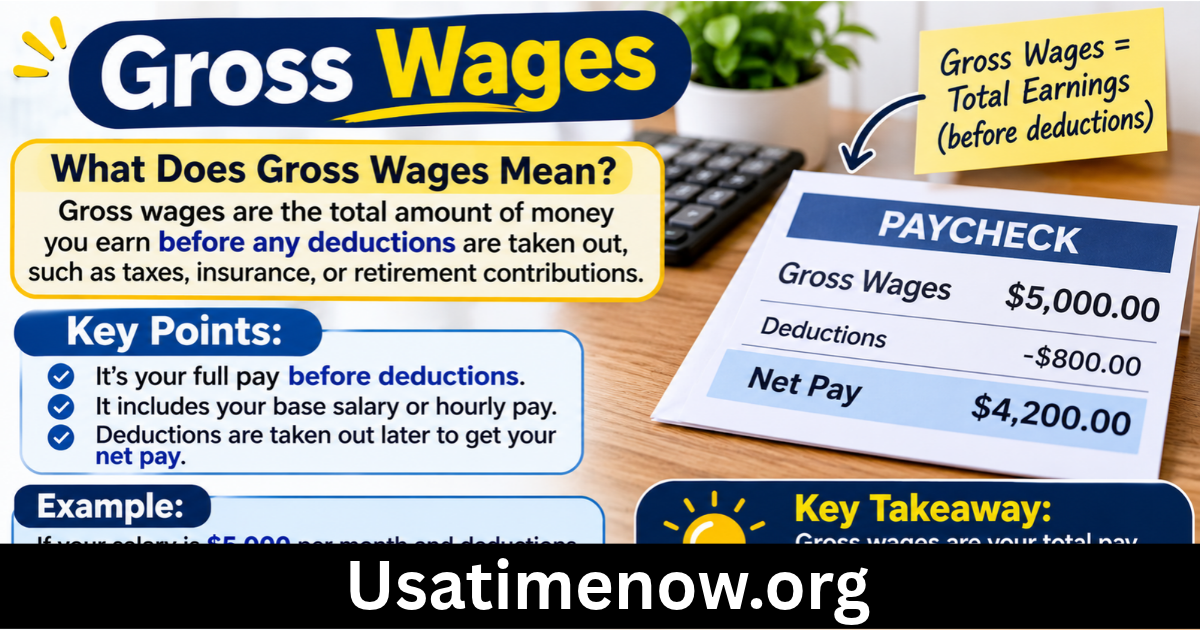
Gross wages are the total amount of money an employee earns from an employer before any deductions are removed. Gross Wages Meaning They include regular earnings and may also include additional compensation, such as overtime pay, commissions, bonuses, and certain allowances.
For example, if an employee earns $20 per hour and works 40 hours in one week, their regular gross wages are $800.
If the employee also receives $100 in overtime or other eligible earnings, their total gross wages may increase to $900.
Gross wages are an important part of payroll because employers use them as the starting point for calculating taxes, deductions, and final employee payments.
What Is Included in Gross Wages?
Gross wages can include different types of compensation depending on an employee’s job, contract, and payment arrangement.
1. Regular Salary or Hourly Earnings
Regular earnings are the basic compensation employees receive for performing their assigned duties.
For salaried employees, this is usually based on an agreed annual salary divided across the employer’s pay periods. Gross Wages Meaning Hourly employees earn wages according to the number of hours they work multiplied by their hourly rate.
2. Overtime Pay
Overtime pay is additional compensation for eligible hours worked beyond the standard working schedule. Gross Wages Meaning The applicable overtime rate depends on employment laws and the employee’s circumstances.
For example, an eligible employee earning $20 per hour who receives time-and-a-half overtime would earn $30 for each qualifying overtime hour.
3. Bonuses
Employers may provide bonuses to recognise performance, reward achievements, or meet business objectives. Gross Wages Meaning Depending on the arrangement, bonuses may form part of gross earnings.
Examples include annual performance bonuses, sales incentives, and productivity rewards.
4. Commissions
Employees working in sales or other commission-based positions may receive additional earnings based on completed sales, business performance, or agreed targets.
These payments are generally included in gross wages when they are earned and payable under the relevant compensation arrangement.
5. Allowances and Additional Payments
Some employers provide additional payments for expenses, travel, meals, or other work-related purposes. Whether an allowance is included in gross wages for payroll or tax purposes depends on its nature and the applicable rules.
Gross Wages vs. Net Pay: What Is the Difference?
Gross wages and net pay are two important payroll terms, but they describe different amounts.
Gross wages represent total earnings before deductions, while net pay is the amount an employee receives after applicable deductions have been taken out.
| Feature | Gross Wages | Net Pay |
|---|---|---|
| Meaning | Earnings before deductions | Earnings after deductions |
| Taxes | Not yet deducted | Applicable taxes deducted |
| Insurance | Usually before deductions | Relevant contributions deducted |
| Retirement contributions | Before applicable deductions | After applicable deductions |
| Paycheck amount | Higher starting figure | Actual take-home amount |
For example, an employee may earn $4,000 in gross monthly wages. After taxes, insurance, and retirement contributions, their net pay might be $3,100.
The exact amount depends on the employee’s location, tax circumstances, benefits, and payroll arrangements.
How to Calculate Gross Wages
Calculating gross wages is relatively straightforward once you know the employee’s pay rate and working hours.
Calculating Gross Wages for Hourly Employees
The basic formula is:
Gross Wages = Hourly Rate × Hours Worked
For example, suppose an employee earns $18 per hour and works 40 hours in one week.
$18 × 40 = $720
The employee’s gross weekly wages are $720 before deductions.
If the employee works additional eligible overtime hours, those earnings should be calculated separately and added to regular wages.
Calculating Gross Wages for Salaried Employees
For salaried employees, gross pay can be estimated by dividing the annual salary by the number of pay periods.
Example:
An employee earns an annual salary of $60,000 and receives biweekly payments over 26 pay periods.
$60,000 ÷ 26 = $2,307.69
The employee’s estimated gross biweekly wages are $2,307.69 before deductions.
Calculating Monthly Gross Wages
If an employee receives an annual salary of $48,000, their monthly gross wages can be calculated as follows:
$48,000 ÷ 12 = $4,000
The employee earns $4,000 in gross monthly wages before applicable deductions.
Why Are Gross Wages Important?
Understanding gross wages is useful for several reasons, particularly when reviewing employment compensation and managing finances.
Helps Employees Understand Paychecks
Gross wages show how much an employee has earned before deductions. Comparing gross wages with net pay helps employees understand why the amount deposited into their bank account may be lower than expected.
Supports Budget Planning
Knowing gross earnings provides a starting point for financial planning. Gross Wages Meaning However, employees should generally use their net pay when preparing a monthly household budget because it reflects the money they actually receive.
Important for Payroll Processing
Employers use gross wages to calculate payroll deductions and determine employee payments. Accurate gross wage calculations help maintain reliable payroll records.
Useful for Employment Negotiations
When comparing job offers, employees often look at annual gross salary or hourly gross wages. Understanding these figures helps candidates compare compensation packages more effectively.
Helps With Financial Applications
Some lenders, landlords, and financial institutions request gross income when reviewing applications. They may use it alongside other information to assess an applicant’s financial position.
Gross Wages vs. Gross Income
Gross wages and gross income are related, but they are not always identical.
Gross wages generally refer to compensation earned through employment. Gross income can have a broader meaning and may include earnings from several sources.
For example, an individual’s gross income may include:
- Employment wages or salary
- Business profits
- Freelance earnings
- Rental income
- Investment income
- Other taxable or reportable income
The exact definition depends on the financial or tax context in which the term is used.
Common Mistakes When Understanding Gross Wages
Employees sometimes misunderstand gross wages because payroll terminology can be confusing. Avoid these common mistakes:
- Confusing gross wages with take-home pay: Gross wages are calculated before deductions, not after them.
- Ignoring overtime earnings: Eligible overtime compensation may increase total gross wages.
- Forgetting bonuses and commissions: Additional compensation may form part of gross earnings.
- Using gross pay for monthly spending plans: Net pay is usually more appropriate for calculating available spending money.
- Assuming every allowance is treated identically: Payroll and tax treatment can vary depending on the payment and local regulations.
Frequently Asked Questions
1. What does gross wages mean in simple terms?
Gross wages mean the total money an employee earns before taxes, insurance contributions, retirement payments, Gross Wages Meaning and other applicable deductions are removed.
2. Are gross wages the same as gross salary?
The terms are closely related. Gross salary usually describes an employee’s fixed salary before deductions, while gross wages can refer more broadly to earnings that include hourly pay, overtime, bonuses, and commissions.
3. Is gross wages before or after taxes?
Gross wages are calculated before applicable income taxes and other payroll deductions are taken out.
4. How do I find my gross wages?
You can usually find your gross wages on your payslip or payroll statement. Look for a section labelled gross pay, gross earnings, or gross wages.
5. What is the difference between gross wages and net wages?
Gross wages represent earnings before deductions. Net wages represent the amount remaining after applicable deductions, Gross Wages Meaning which is generally the amount an employee receives.
6. Do bonuses count as gross wages?
Bonuses are generally included in gross employment earnings when they are paid or otherwise treated as earnings under the applicable payroll rules. Their tax and reporting treatment depends on local regulations.
7. Why are gross wages higher than my paycheck?
Your paycheck usually reflects net pay. Taxes, insurance premiums, retirement contributions, and other authorised deductions can reduce the amount you receive compared with your gross wages.
Conclusion
Gross wages represent the total compensation an employee earns before taxes and other applicable deductions. They may include regular salary, hourly earnings, overtime, commissions, bonuses, and certain additional payments. gross wages meaning Understanding the meaning of gross wages makes it easier to read payslips, compare job offers, calculate earnings, Gross Wages Meaning and manage personal finances. By knowing the difference between gross wages and net pay, employees can make more informed decisions about their income and financial responsibilities.