




Table of Contents
Flexible work arrangements are changing how businesses organize work and how employees manage their professional and personal responsibilities. flexible work arrangements Instead of requiring every employee to follow the same schedule and work from the same location, companies can introduce different working options that better suit their operational needs and employees’ circumstances.
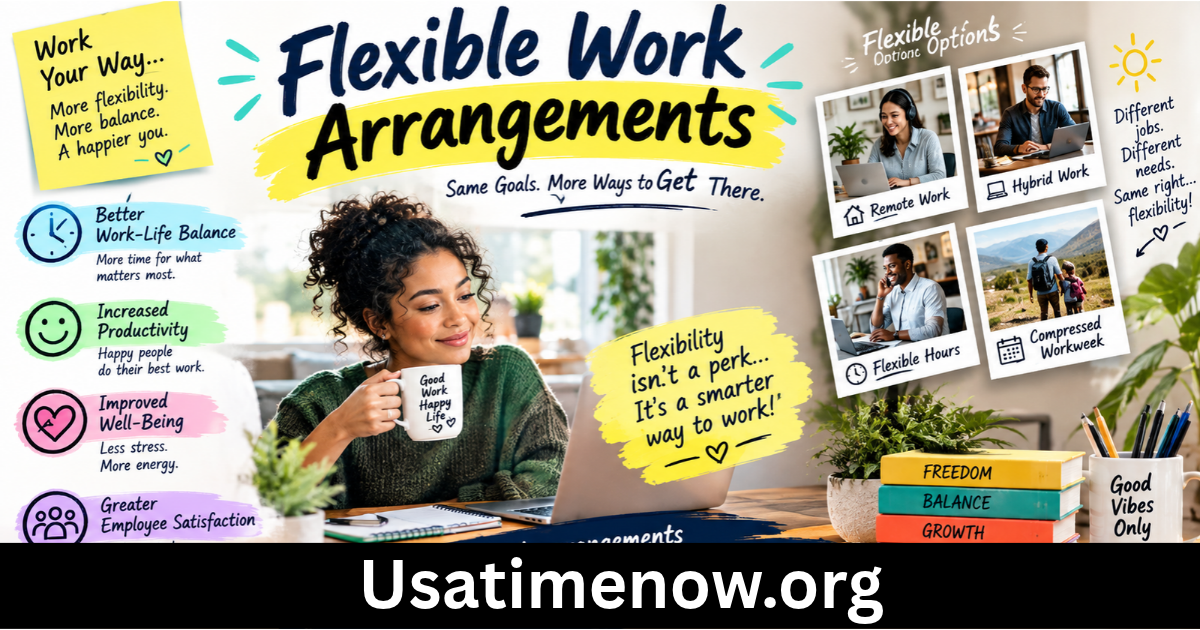
These arrangements may include flexible working hours, remote work, hybrid schedules, compressed workweeks, or part-time employment. When implemented effectively, flexible work arrangements can improve employee satisfaction, reduce commuting time, and help teams manage productivity time more efficiently. Understanding the available options allows employers and employees to create a working environment that supports performance, collaboration, and work-life balance.
What Are Flexible Work Arrangements?
Flexible work arrangements are working practices that give employees some choice over when, where, or how they complete their job responsibilities. The exact level of flexibility depends on the employer, role, employment agreement, and business requirements.
For example, an employee might begin work earlier and finish earlier, work from home several days each week, or complete the standard weekly hours across fewer working days. Another employee might work part-time or share a role with a colleague.
Flexible work does not necessarily mean employees can work whenever they want. Organizations may still require specific working hours, scheduled meetings, minimum office attendance, or availability during core business hours.
The main goal is to create a practical arrangement that supports both business performance and employees’ needs.
7 Common Types of Flexible Work Arrangements
1. Flexible Working Hours
Flexible working hours allow employees to adjust their start and finish times within agreed limits. For example, one employee might work from 7 a.m. to 3 p.m., while another works from 9 a.m. to 5 p.m.
This arrangement can help employees manage commuting, family responsibilities, appointments, and personal preferences. Employers may establish core hours during which everyone must be available for collaboration.
2. Remote Work
Remote work allows employees to perform their duties outside a traditional office, often from home. Digital communication tools, cloud-based software, and virtual meetings help employees remain connected with their teams.
Remote work can reduce commuting time and provide a quieter environment for certain tasks. However, it requires reliable technology, clear communication, and appropriate data security practices.
3. Hybrid Work
Hybrid work combines remote work with scheduled office attendance. Employees may work from home on selected days and visit the workplace for team meetings, training, or collaborative activities.
A successful hybrid arrangement requires clear expectations about office days, meeting schedules, and team availability. Without coordination, employees may struggle to collaborate when colleagues work in different locations.
4. Compressed Workweek
A compressed workweek allows employees to complete their agreed weekly hours over fewer days. For example, an employee might work four longer days instead of five standard days, depending on the organization’s policies and applicable working-time rules.
This arrangement can create an additional day away from work, but longer shifts may increase fatigue. Employers should consider workload, break requirements, and employee well-being before introducing compressed schedules.
5. Part-Time Work
Part-time employees work fewer hours than comparable full-time employees. Their schedules may involve shorter daily shifts, fewer working days, or a combination of both.
Part-time work can suit people who are studying, managing personal responsibilities, transitioning between careers, or seeking a reduced workload. Employers can also use part-time schedules to cover specific business needs.
6. Job Sharing
Job sharing occurs when two employees divide the responsibilities of one full-time position. Each person works an agreed schedule while coordinating tasks, communication, and handovers with the other employee.
This arrangement can provide greater flexibility without leaving a role unfilled. Clear documentation and consistent communication are essential to maintain continuity and avoid duplicated work.
7. Annualized or Variable Hours
Some flexible work arrangements allow working hours to vary according to business demand over an agreed period. Annualized-hours arrangements, for example, set a total number of hours to be worked over a year rather than requiring the same weekly schedule throughout.
These arrangements may suit industries with seasonal workloads or changing customer demand. Their terms should be clearly documented, including scheduling expectations, pay, rest periods, and applicable legal requirements.
7 Benefits of Flexible Work Arrangements
1. Better Productivity Time Management
Flexible schedules can help employees organize demanding tasks around their most productive hours. Someone who concentrates best in the morning may choose an earlier start, while another employee may perform better later in the day.
When employees have more control over their schedules, they may be able to reduce unnecessary interruptions and complete important tasks more efficiently.
However, flexibility alone does not guarantee higher productivity. Clear goals, suitable workloads, and consistent communication remain essential.
2. Improved Work-Life Balance
Flexible work arrangements can make it easier to coordinate professional duties with personal responsibilities. Employees may have more options for managing appointments, family needs, education, and other commitments.
A healthier balance can improve job satisfaction and make working schedules more sustainable. Employers should also encourage employees to disconnect outside agreed working hours when their roles do not require after-hours availability.
3. Reduced Commuting Time and Expenses
Remote and hybrid work can reduce the number of trips employees make to the office. Flexible start times may also help workers avoid the busiest commuting periods.
The time saved can be used for rest, exercise, family activities, or professional development. Employees may also spend less on transportation and meals away from home, although remote work can create additional household expenses.
4. Greater Employee Satisfaction
Employees often value having some control over how they organize their work. When flexibility matches their needs and responsibilities, it can contribute to a more positive employment experience.
Employers can support satisfaction by listening to employee feedback, applying policies consistently, and ensuring flexible workers receive fair access to training, promotions, and important projects.
5. Access to a Wider Talent Pool
Businesses that offer suitable remote or flexible options may attract candidates who cannot easily work a traditional office schedule.
This can include experienced professionals living farther from the workplace, people seeking part-time hours, and candidates who value flexible schedules.
Employers must still consider the requirements of each role and comply with relevant employment rules when hiring across different locations.
6. Better Employee Retention
Flexible working options may help employees remain with an organization when their personal circumstances change. Someone who becomes a caregiver, starts further education, or faces a longer commute may benefit from an adjusted schedule rather than leaving the job.
Retention also depends on compensation, management quality, career development, and workload. Flexibility is most effective when it forms part of a supportive workplace culture.
7. Improved Business Efficiency
Flexible arrangements can help organizations coordinate staffing with customer demand, project deadlines, and operational requirements.
For example, staggered schedules may extend customer service coverage without requiring every employee to work identical hours. Remote work may also reduce some office-related costs.
To achieve these benefits, managers need to plan staffing carefully and measure outcomes rather than assuming that a flexible policy will automatically improve efficiency.
Challenges of Flexible Work Arrangements
Although flexible work offers several advantages, it can create practical challenges.
Communication gaps: Teams working different schedules may find it harder to arrange meetings or receive quick answers. Shared calendars, documented decisions, and agreed response times can help.
Uneven workloads: Some employees may receive more responsibilities than others if schedules are poorly coordinated. Managers should review workloads and distribute tasks fairly.
Reduced team connection: Remote and staggered schedules may limit informal conversations. Regular team meetings, mentoring, and planned collaboration sessions can help maintain relationships.
Blurred work-life boundaries: Employees may feel pressured to remain available outside their normal hours. Clear policies should define working hours and expectations for urgent communication.
Scheduling complexity: Managers must coordinate employee availability, customer coverage, and project deadlines. Scheduling tools and clear procedures can reduce confusion.
How to Implement Flexible Work Arrangements Successfully
Businesses should begin by identifying which roles and tasks can support flexibility without reducing service quality or creating operational risks.
Next, establish a written policy covering eligibility, working hours, location requirements, communication expectations, performance measurement, and procedures for requesting changes. Managers should explain how employees can access flexibility and how requests will be evaluated.
Set clear performance goals based on results, quality, deadlines, and service standards rather than simply measuring the time an employee appears online. Use shared calendars and project management tools to coordinate work across different schedules.
It is also important to review the arrangement regularly. Gather employee feedback, assess productivity and customer outcomes, and adjust the policy when business needs change.
Finally, ensure that flexible workers have access to appropriate equipment, training, workplace support, and career opportunities. Consistent treatment helps make flexibility sustainable for both employees and employers.
How Employees Can Improve Productivity Time With Flexible Work
Employees can make flexible arrangements more effective by planning their schedules intentionally.
Start each week by identifying major deadlines, meetings, and personal commitments. Divide large projects into smaller tasks and reserve focused time for work that requires concentration.
Use a calendar to communicate availability and avoid unnecessary meeting conflicts. Take regular breaks, keep the workspace organized, and limit distractions during important tasks.
Employees should also discuss workload concerns with managers before deadlines become difficult to meet. Clear communication helps teams balance flexibility with accountability.
Most importantly, establish a reliable finishing time whenever possible. Flexible work should support sustainable performance rather than extend the working day indefinitely.
Frequently Asked Questions About Flexible Work Arrangements
1. What does flexible work arrangement mean?
A flexible work arrangement is an agreement that allows employees some choice over their working hours, location, schedule, or employment pattern.
2. What are the most common types of flexible work?
Common types include flexible working hours, remote work, hybrid work, compressed workweeks, part-time work, job sharing, and variable-hours arrangements.
3. Do flexible work arrangements improve productivity?
They can improve productivity when schedules match job requirements and employees have clear goals, appropriate tools, and effective communication. Results vary by role and organization.
4. Are flexible work arrangements available to every employee?
Not always. Availability depends on the nature of the role, staffing requirements, employer policies, and applicable laws. Some jobs require physical attendance or fixed coverage hours.
5. What is the difference between remote work and flexible work?
Remote work describes where work is performed, usually outside a traditional office. Flexible work is a broader term that can include changes to location, working hours, or schedule.
6. How can employers measure success?
Employers can evaluate task completion, work quality, customer satisfaction, employee retention, workload distribution, flexible work arrangements and agreed performance targets.
7. Can flexible work arrangements change over time?
Yes. Employers and employees may review or adjust arrangements as business needs, responsibilities, and personal circumstances change, subject to their agreements and applicable laws.
Conclusion
Flexible work arrangements provide different ways for employees and businesses to organize working hours, locations, and responsibilities. Options such as remote work, hybrid schedules, flexible hours, and compressed workweeks can support better productivity time management, work-life balance, and employee satisfaction.