







Table of Contents
Managing personal finances becomes easier when you understand how money moves between employers, banks, and employees. direct deposit slip One important document used in this process is a direct deposit slip. It provides essential banking information that allows employers and other organizations to transfer money directly into an individual’s bank account.
Whether you are starting a new job, setting up payroll, or managing your finances, understanding direct deposit slips can help you avoid payment delays and banking errors. This guide explains what a direct deposit slip is, how it works, what information it contains, and why it is useful.
What Is a Direct Deposit Slip?
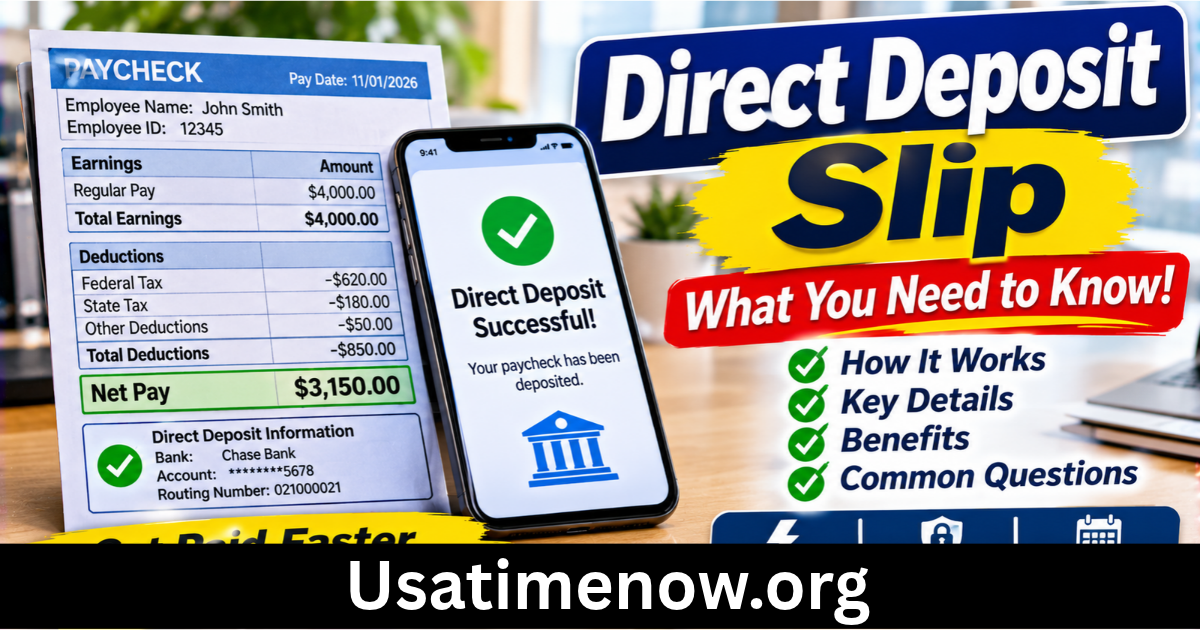
A direct deposit slip is a document or form containing the banking details needed to authorize electronic payments into a bank account. Employers commonly request this information when employees enroll in direct deposit for payroll.
Unlike traditional paper checks, direct deposits allow money to move electronically from the payer’s account into the recipient’s account. A direct deposit form generally includes the account holder’s name, bank name, account number, routing number where applicable, and account type.
Some banks provide a dedicated direct deposit form that customers can download, print, or access through online banking.
Why Is Important?
A direct deposit slip makes it easier for employers to collect accurate banking information and arrange electronic salary payments. It also helps reduce the administrative work associated with printing, distributing, and processing paper checks.
Here are some important benefits:
- Convenience: Employees receive payments directly into their bank accounts without visiting a bank.
- Faster access: Electronic payments are generally available according to the payer’s processing schedule and banking rules.
- Improved accuracy: Verified banking details help reduce payment errors.
- Less paperwork: Employers can manage payroll electronically.
- Better financial planning: Employees can plan monthly expenses around predictable payroll deposits.
Direct deposit is also useful for recurring payments such as pensions, government benefits, and certain insurance payments.
What Information Does Include?
A direct deposit slip usually contains several important details required to process electronic payments.
1. Account Holder’s Name
The form identifies the person who owns the bank account. The name should generally match the information recorded by the financial institution.
2. Bank Name
This identifies the financial institution where the employee maintains their account.
3. Bank Routing Number
In the United States, a routing number identifies the financial institution for certain domestic banking transactions. It is generally a nine-digit number.
4. Bank Account Number
The account number identifies the specific checking or savings account receiving the payment. Its length and format vary between financial institutions.
5. Account Type
Employees may need to identify whether their account is a checking or savings account, depending on the employer’s payroll requirements.
6. Authorization and Signature
Some direct deposit forms require the employee’s signature or electronic authorization to confirm permission for payments to be deposited into the specified account.
How to Get a Direct Deposit Slip
Getting a direct deposit slip is usually straightforward. Most banks offer several ways to access the required information.
Visit your bank: You can request a direct deposit form from a bank branch. Staff can help you locate the correct account details.
Use online banking: Many financial institutions provide downloadable direct deposit forms through their websites or mobile banking applications.
Contact customer support: If you cannot locate the form, your bank’s customer service team can explain how to obtain it.
Check your employer’s payroll portal: Some employers provide their own direct deposit enrollment forms where employees can enter their banking details.
Always use an official bank document or an employer-approved enrollment form to ensure the information is accurate.
How to Fill Out a Direct Deposit Slip
Completing a direct deposit form requires careful attention because incorrect banking information can delay payments.
Step 1: Enter Your Personal Information
Provide your full legal name and any other identifying details requested by your employer.
Step 2: Add Your Banking Information
Enter the bank name, routing number, account number, and account type as required.
Step 3: Attach Supporting Documentation
Some employers request a voided check or an official bank direct deposit form to verify account information.
Step 4: Review the Details
Double-check every number before submitting the document. A single incorrect digit may cause a transaction to be rejected or delayed.
Step 5: Provide Authorization
Sign the form or complete the electronic authorization process if required.
Step 6: Submit the Form Securely
Send the completed information through your employer’s approved payroll system or another secure method.
Direct Deposit Slip vs. Deposit Slip
Although the names sound similar, a direct deposit slip and a traditional bank deposit slip serve different purposes.
A traditional deposit slip is used when someone deposits cash or checks into a bank account, often at a branch or through another supported deposit method.
A direct deposit form provides banking information for electronic payments from an employer or another payer. It does not normally require the recipient to visit a bank or manually deposit a check.
Understanding this difference helps employees choose the correct document when completing payroll paperwork.
Is a Direct Deposit Slip Safe to Use?
A direct deposit slip contains sensitive financial information, so it should be handled carefully. Sharing account details with an authorized employer or trusted payment provider is a normal part of setting up payroll.
However, you should avoid sending banking information through unsecured websites, unknown email addresses, or suspicious messages.
Consider these safety practices:
- Submit forms through secure payroll portals whenever possible.
- Verify that the employer or organization requesting the information is legitimate.
- Never share your online banking password or PIN.
- Check your account regularly for unexpected transactions.
- Contact your bank immediately if you notice suspicious activity.
A direct deposit slip provides banking information, but it should never be treated as permission to share your account login credentials.
Common Mistakes to Avoid When Completing a Direct Deposit Slip
Several common mistakes can create unnecessary payroll problems.
Entering an incorrect routing number is one of the most frequent issues. Employees should obtain this number directly from their bank rather than relying on assumptions.
Another mistake is selecting the wrong account type. Make sure the checking or savings option matches the account receiving the payment.
Some employees also forget to sign the authorization section or submit the required supporting documents. Reviewing the complete form before submission can help prevent these issues.
Frequently Asked Questions (FAQs)
1. What is a direct deposit slip used for?
A direct deposit slip provides banking information that employers and other authorized payers use to arrange electronic payments directly into a bank account.
2. Is a direct deposit slip the same as a voided check?
No. A direct deposit slip is a banking information form, while a voided check is a physical check marked as void. Some employers accept either document to verify account details.
3. Can I get a direct deposit slip online?
Yes. Many banks allow customers to download direct deposit forms through online banking or mobile banking applications.
4. Do I need a direct deposit slip for every paycheck?
Usually not. Once your employer has successfully enrolled your bank account in payroll, the same banking details can be used for recurring payments unless you change your account information.
5. What happens if I enter the wrong account number?
An incorrect account number may cause a payment to be rejected, delayed, or potentially misdirected. Contact your employer’s payroll department and bank immediately if you discover an error.
6. Can I use a savings account for direct deposit?
Many financial institutions support direct deposits into eligible savings accounts. However, you should confirm the account’s eligibility and provide the correct information.
7. Is it safe to email a direct deposit slip?
Email may not always provide adequate protection for sensitive banking information. Whenever possible, use your employer’s secure payroll portal or another approved secure submission method.
Conclusion
A direct deposit slip is an important document for employees and employers who use electronic payroll payments. It provides the banking information necessary to transfer salaries and other eligible payments directly into an individual’s account. direct deposit slip By understanding the information required, completing the form accurately, and following basic security practices, employees can make payroll enrollment easier and reduce the risk of payment delays. Whether you are starting a new job or updating your banking details, knowing how direct deposit slips work can help you manage your finances more efficiently.