
Table of Contents
A well-written job description helps employers attract qualified candidates, communicate workplace expectations, job description template and define the responsibilities of a position. It gives job seekers a clear understanding of what a role involves, what skills are required, and how the position contributes to the organization.
Using a professional job description template makes it easier for HR teams and hiring managers to create consistent, informative, and effective job postings. Whether you are hiring for an entry-level position, management role, or specialized job, a structured template can save time and improve the recruitment process.
This guide explains what a job description should include, how to write one, and provides a customizable template with practical examples.
What Is a Job Description?
A job description is a formal document that outlines the purpose, responsibilities, qualifications, and expectations associated with a particular position. Employers use it to explain what an employee will do and what skills or experience are needed to perform the job successfully.
A typical job description includes:
- Job title
- Department and reporting manager
- Job summary
- Key responsibilities
- Required qualifications
- Skills and experience
- Working conditions
- Employment type and location
Job descriptions are useful for recruitment, employee performance management, workforce planning, and organizational development.
Why Is a Job Description Important?
A clear job description benefits both employers and employees. It establishes expectations before hiring and provides a reference point throughout the employment relationship.
1. Attracts Qualified Candidates
A detailed job description helps job seekers determine whether their qualifications and experience match the position.
2. Clarifies Job Responsibilities
Employees can understand their main duties, priorities, and expected outcomes.
3. Supports the Recruitment Process
Recruiters and hiring managers can use job descriptions to evaluate applications, prepare interview questions, and compare candidates consistently.
4. Improves Employee Performance
Clearly defined responsibilities make it easier for managers to establish performance goals and provide constructive feedback.
5. Supports HR Planning
Organizations can use job descriptions to identify skill requirements, plan training, review staffing needs, and develop career paths.
What Should a Job Description Include?
An effective job description should provide enough information for candidates and employees to understand the position.
1. Job Title
Use a clear and accurate title that reflects the actual position. Avoid confusing internal titles that job seekers may not recognize.
2. Company and Department Information
Identify the organization, department, and team where the employee will work.
3. Job Summary
Write a short paragraph explaining the purpose of the role and how it contributes to the company’s objectives.
4. Key Responsibilities
List the primary duties and tasks associated with the position. Use action words such as manage, develop, coordinate, analyze, prepare, and support.
5. Required Qualifications
Mention the education, certifications, licenses, or professional experience genuinely needed for the role.
6. Skills and Competencies
Include relevant technical and interpersonal skills, such as communication, problem-solving, leadership, organization, or software knowledge.
7. Reporting Structure
Explain who the employee reports to and whether the position supervises other team members.
8. Employment Details
Provide relevant information about:
- Full-time or part-time status
- Permanent or contract employment
- Workplace location
- Remote, hybrid, or on-site arrangements
- Working schedule
- Travel requirements, if applicable
9. Salary and Benefits
Where appropriate, include the salary range, benefits, and other employment details. Transparent compensation information can help candidates make informed decisions.
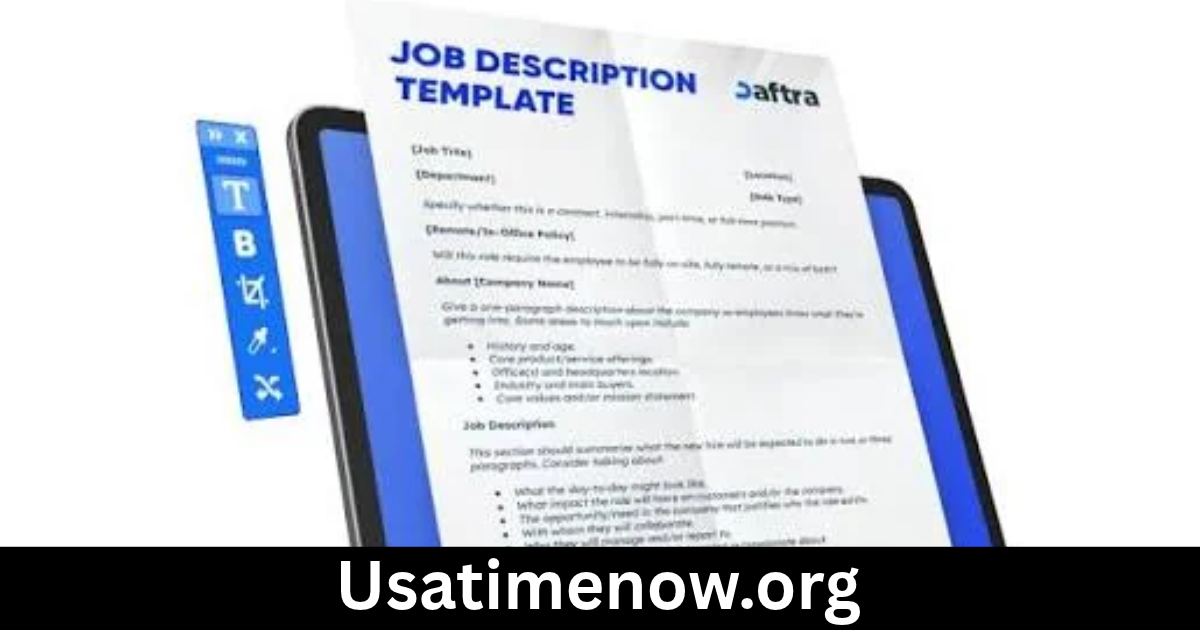
Free Job Description Template
Use the following job description template to create a professional document for almost any position. Customize the sections according to the role and your organization’s requirements.
Job Title: [Enter Job Title]
Department: [Enter Department]
Location: [Enter Work Location]
Employment Type: [Full-Time/Part-Time/Contract]
Reports To: [Manager or Department Head]
Job Summary
[Company Name] is seeking a qualified and motivated [Job Title] to join our team. The successful candidate will be responsible for [briefly describe the main purpose of the role]. This position requires strong [relevant skills] and the ability to contribute to organizational goals.
Key Responsibilities
- Perform daily tasks related to the position.
- Coordinate with team members and other departments.
- Complete assigned projects within established deadlines.
- Maintain accurate records and documentation.
- Follow company policies and workplace procedures.
- Identify opportunities to improve work processes.
- Communicate progress and report challenges to management.
- Perform additional relevant duties as assigned.
Required Qualifications
- [Required educational qualification]
- [Relevant work experience]
- [Professional certification, if necessary]
- Knowledge of relevant tools, systems, or processes.
Required Skills
- Strong communication skills.
- Problem-solving and analytical abilities.
- Time management and organizational skills.
- Ability to work independently and collaboratively.
- Attention to detail.
- Relevant technical or industry-specific knowledge.
Working Conditions
[Describe the work environment, schedule, location, travel expectations, or physical requirements that are genuinely relevant to the position.]
Salary and Benefits
[Include the salary range, benefits, and other compensation details where applicable.]
How to Apply
Interested candidates can submit their resumes and relevant documents to [Application Email or Recruitment Portal].
[Company Name] is an equal opportunity employer and welcomes qualified applicants in accordance with applicable employment laws.
Job Description Examples for Different Positions
A job description should reflect the specific responsibilities and qualifications of each role. Here are three examples.
1. Human Resources Manager Job Description
Job Summary:
The HR Manager oversees human resources operations, employee relations, recruitment, and workplace policies. This role supports organizational goals by developing effective people-management practices.
Key Responsibilities:
- Manage recruitment and selection activities.
- Develop and implement HR policies.
- Coordinate employee onboarding and training.
- Oversee performance management processes.
- Support employee relations and workplace concerns.
- Maintain HR records and ensure compliance with applicable requirements.
- Assist with workforce planning and employee retention initiatives.
Qualifications:
- Bachelor’s degree in human resources, business administration, or a related field.
- Relevant HR management experience.
- Knowledge of employment practices and HR processes.
- Strong leadership and communication skills.
2. Marketing Coordinator Job Description
Job Summary:
The Marketing Coordinator supports marketing campaigns, promotional activities, and brand communication. The role involves coordinating projects and helping the organization reach its target audience.
Key Responsibilities:
- Assist with marketing campaign planning.
- Create and schedule digital content.
- Coordinate social media activities.
- Monitor campaign performance.
- Conduct basic market research.
- Work with internal teams and external suppliers.
- Prepare marketing reports.
Qualifications:
- Degree or relevant experience in marketing or communications.
- Knowledge of digital marketing platforms.
- Strong writing and organizational skills.
- Familiarity with social media and marketing tools.
3. Administrative Assistant Job Description
Job Summary:
The Administrative Assistant provides organizational and administrative support to help daily business operations run efficiently.
Key Responsibilities:
- Manage emails and office correspondence.
- Schedule meetings and appointments.
- Maintain files and business records.
- Prepare reports and documents.
- Answer phone calls and direct inquiries.
- Support office supply and administrative activities.
- Assist managers with routine tasks.
Qualifications:
- High school diploma or relevant educational qualification.
- Administrative experience is an advantage.
- Basic computer and office software skills.
- Strong communication and time management abilities.
How to Write an Effective Job Description
Follow these steps to create a job description that is clear, accurate, and useful.
Step 1: Identify the Purpose of the Position
Understand why the role exists and how it supports the organization’s goals. Speak with the hiring manager to clarify the main responsibilities.
Step 2: List Essential Duties
Identify the most important tasks the employee will perform. Focus on regular responsibilities rather than every occasional activity.
Step 3: Define Required Qualifications
Separate essential qualifications from preferred qualifications. This helps avoid excluding capable candidates who may not need every listed skill.
Step 4: Use Clear and Inclusive Language
Write in straightforward language that candidates can easily understand. Avoid unnecessary jargon and discriminatory requirements.
Step 5: Include Measurable Expectations
Where appropriate, describe the expected outcomes of the role. For example, a sales position may involve revenue targets, while an administrative role may focus on accuracy and timely support.
Step 6: Review and Update Regularly
Job responsibilities can change as organizations grow. Review descriptions periodically to ensure they accurately reflect current duties, technology, and business requirements.
Common Job Description Mistakes to Avoid
Even a detailed job description can be ineffective if it contains unclear or unrealistic expectations.
Avoid these common mistakes:
- Using vague responsibilities: Explain what the employee will actually do.
- Adding unrealistic requirements: Include only qualifications relevant to the role.
- Writing excessively long descriptions: Prioritize the most important information.
- Ignoring salary details: Provide compensation information when possible and appropriate.
- Using outdated job titles: Choose titles that accurately represent the position.
- Mixing essential and preferred skills: Clearly distinguish between mandatory and desirable qualifications.
- Forgetting workplace details: Explain the location, schedule, and employment type.
Frequently Asked Questions (FAQs)
1. What is a job description template?
A job description template is a reusable document that helps employers organize information about a position, including its responsibilities, qualifications, skills, and working conditions.
2. What are the five main parts of a job description?
The five main parts are job title, job summary, key responsibilities, required qualifications, and skills. Many organizations also include reporting relationships, salary, benefits, and workplace details.
3. Who is responsible for writing job descriptions?
HR professionals and hiring managers usually work together to prepare job descriptions. Managers explain the role’s responsibilities, while HR ensures consistency and alignment with company policies.
4. How long should a job description be?
Most job descriptions should be concise enough for candidates to read quickly while providing all essential information. The ideal length depends on the complexity and seniority of the position.
5. What is the difference between a job description and a job specification?
A job description explains the duties and responsibilities of a position. A job specification outlines the qualifications, education, experience, and skills required from the candidate.
6. Should a job description include salary?
Including a salary range is generally helpful because it provides transparency and allows candidates to assess whether the opportunity meets their expectations. Disclosure requirements vary by location.
7. How often should job descriptions be updated?
Organizations should review job descriptions regularly, especially when responsibilities, reporting structures, technology, or business requirements change.
Conclusion
A professional job description template helps organizations define job responsibilities, attract suitable candidates, and establish clear workplace expectations. job description template By including an accurate job summary, essential duties, qualifications, skills, and employment details, HR teams can create useful descriptions for a wide range of positions. Regularly reviewing and updating job descriptions also helps organizations keep their recruitment processes aligned with changing business needs. A clear and well-structured job description is an important foundation for effective hiring, employee performance, and long-term workforce planning.