






Table of Contents
The payroll process is one of the most important administrative functions in any organization. It involves calculating employee wages, managing deductions, processing salary payments, and maintaining accurate payroll records. payroll process A well-organized payroll process ensures employees are paid correctly and on time while helping businesses manage labor costs and meet employment requirements.
Whether a company has five employees or several thousand, an effective payroll system supports smooth business operations. Understanding each stage of the payroll process can help HR professionals, business owners, and payroll administrators improve accuracy and efficiency.
What Is the Payroll Process?
The payroll process refers to the series of activities an organization performs to calculate and distribute employee compensation. It includes collecting employee information, tracking working hours, calculating gross pay, applying deductions, and issuing net salary payments.
The process may be managed by an internal HR or accounting department, an external payroll provider, or automated payroll software.
Common payroll activities include:
- Maintaining employee payroll information
- Tracking attendance and working hours
- Calculating salaries and hourly wages
- Processing overtime and bonuses
- Calculating taxes and deductions
- Preparing employee payslips
- Distributing salary payments
- Maintaining payroll documentation
The main objective is to ensure accurate compensation and consistent payroll administration.
Why Is the Payroll Process Important?
An efficient payroll process benefits employees and employers in several ways.
Ensures Timely Salary Payments
Employees depend on their wages to manage everyday expenses. A consistent payroll schedule helps ensure salaries are distributed according to agreed payment dates.
Improves Employee Satisfaction
Correct salary calculations and transparent payslips build trust between employees and employers. Repeated payroll mistakes can create frustration and reduce workplace morale.
Supports Legal Compliance
Organizations may have responsibilities involving minimum wages, overtime, tax withholding, social contributions, and payroll recordkeeping. Following applicable regulations helps businesses reduce compliance risks.
Helps Control Business Expenses
Payroll is a major operating expense for many organizations. Accurate payroll reports help managers understand salary costs, overtime expenses, and workforce spending.
Reduces Administrative Errors
Standardized payroll procedures and automated calculations can reduce manual work and help prevent common mistakes.
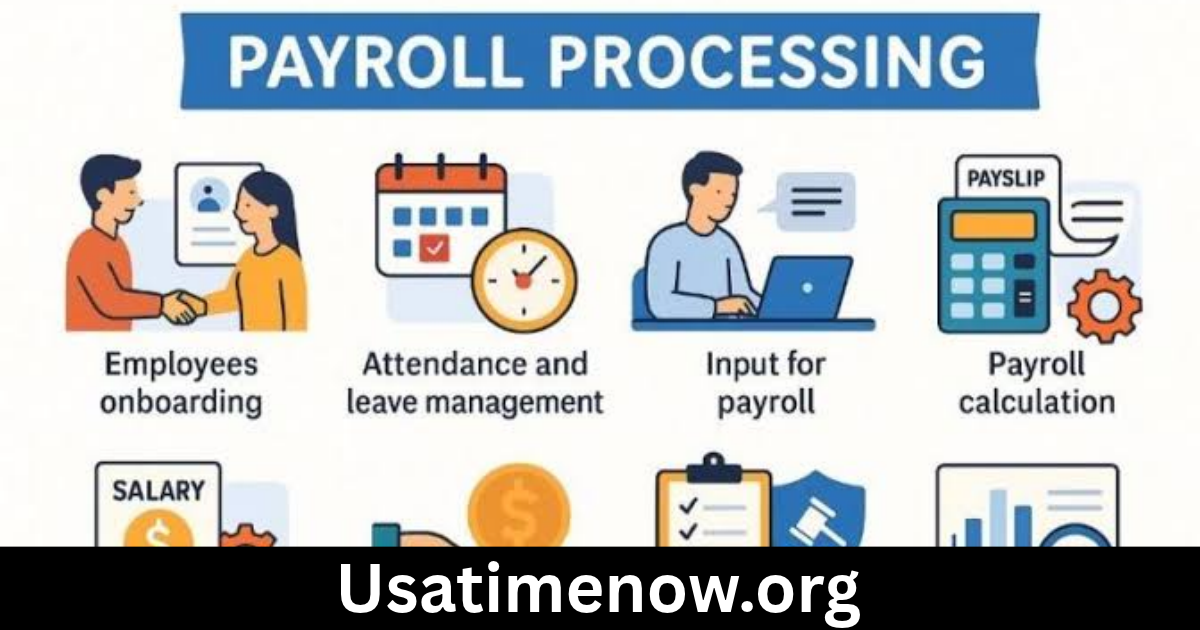
7 Essential Steps in the Payroll Process
Although payroll procedures vary between organizations, most businesses follow a similar sequence.
1. Collect Employee Information
The first step is gathering accurate employee information. Payroll teams need the details required to calculate compensation and process payments.
This may include:
- Employee name and identification details
- Job title and department
- Employment status
- Salary or hourly wage
- Bank account information
- Tax information, where applicable
- Benefit and deduction details
New employees should complete the necessary payroll documentation before their first payment is processed.
2. Track Attendance and Working Hours
Attendance information is especially important for hourly employees and workers who receive overtime compensation.
Organizations may use digital timesheets, attendance management systems, biometric devices, or employee time-tracking software.
Payroll teams use these records to calculate regular working hours, overtime, paid leave, and unpaid absences.
3. Calculate Gross Earnings
Gross pay is the total amount an employee earns before deductions.
It may include:
- Basic salary
- Hourly wages
- Overtime payments
- Bonuses
- Sales commissions
- Performance incentives
- Eligible allowances
For example, an employee earning $2,500 in basic monthly salary and $300 in approved additional earnings has gross pay of $2,800.
4. Calculate Taxes and Other Deductions
After determining gross earnings, payroll administrators calculate applicable deductions.
Depending on local regulations and employment agreements, deductions may include:
- Income tax withholding
- Social insurance contributions
- Retirement plan contributions
- Health insurance premiums
- Authorized loan repayments
- Other permitted deductions
Employers should verify that every deduction is properly authorized and permitted under applicable rules.
5. Calculate Net Pay
Net pay is the amount employees receive after applicable deductions are subtracted from gross earnings.
The basic formula is:
Net Pay = Gross Pay − Total Deductions
For example:
| Payroll component | Amount |
|---|---|
| Basic salary | $2,500 |
| Additional earnings | $300 |
| Gross pay | $2,800 |
| Total deductions | $400 |
| Net pay | $2,400 |
This is a simplified example. Actual payroll calculations depend on the employee’s circumstances and applicable tax and employment rules.
6. Review and Process Salary Payments
Before releasing payroll, authorized personnel should review employee earnings, deductions, bank details, and unusual changes.
Once approved, salaries are distributed through the organization’s selected payment method.
Common methods include:
- Direct deposit
- Bank transfers
- Paper checks
- Other approved electronic payment methods
Payments should follow the employer’s payroll schedule and applicable wage payment requirements.
7. Maintain Payroll Records and Reports
The final stage involves storing payroll documentation and preparing reports for accounting, management, and regulatory purposes.
Records may include payslips, payment confirmations, attendance data, tax documents, and deduction summaries.
Proper recordkeeping makes it easier to investigate payroll questions, prepare financial statements, and complete audits.
Different Types of Payroll Schedules
Companies choose payroll schedules based on their operations, workforce needs, and local requirements.
Weekly Payroll
Employees receive payments once every week. This schedule is common in some hourly and shift-based industries.
Biweekly Payroll
Employees are paid every two weeks, usually resulting in 26 pay periods in a typical year.
Semimonthly Payroll
Employees receive payments twice each month, often on fixed dates. This usually results in 24 pay periods annually.
Monthly Payroll
Employees receive one salary payment per month. This schedule is common for salaried positions in many organizations.
Employers should select a payment frequency that meets applicable legal requirements and clearly communicate it to employees.
Common Payroll Process Challenges
Payroll management can become complicated when employee information is incomplete, working hours are inaccurate, or regulations change.
Incorrect Employee Information
Outdated bank details or incorrect salary records can result in payment errors.
Solution: Review employee information regularly and establish a process for reporting changes.
Attendance and Overtime Errors
Missing timesheets or inaccurate attendance records can lead to incorrect wage calculations.
Solution: Use reliable timekeeping systems and require managers to approve working-hour records.
Complex Tax Calculations
Tax rules and contribution requirements can vary by location and employment arrangement.
Solution: Keep payroll procedures updated and consult qualified payroll or tax professionals when necessary.
Missed Payroll Deadlines
Late approvals or incomplete information can delay salary payments.
Solution: Create a payroll calendar with clear deadlines for data collection, review, approval, and payment.
Data Security Risks
Payroll systems contain confidential employee and financial information.
Solution: Use secure software, restrict access to authorized users, and maintain appropriate data protection procedures.
How Payroll Software Improves the Payroll Process
Payroll software helps organizations automate many repetitive payroll activities.
Automated Salary Calculations
Software can calculate wages, overtime, deductions, and net pay using configured payroll rules.
Faster Processing
Automated workflows reduce manual calculations and help payroll teams manage larger workforces efficiently.
Employee Self-Service
Some payroll platforms allow employees to access payslips, review payment information, and update permitted personal details.
Better Reporting
Payroll systems can generate reports covering salary expenses, deductions, overtime, and payroll trends.
Improved Recordkeeping
Digital systems help organize payroll documents and make information easier to retrieve. Employers should still review records and maintain suitable security controls.
Best Practices for an Efficient Payroll Process
Businesses can improve payroll accuracy and efficiency by following these practices:
- Maintain accurate employee records: Update salary details, bank information, and employment status whenever changes occur.
- Create a payroll calendar: Establish clear deadlines for every payroll activity.
- Automate repetitive tasks: Use reliable software for calculations, reporting, and record management.
- Review payroll before payment: Check unusual salary changes, deductions, overtime, and employee information.
- Separate payroll responsibilities: Where practical, assign preparation and approval to different authorized employees.
- Train payroll staff: Provide regular training on payroll procedures, software, and applicable regulations.
- Conduct payroll audits: Review records periodically to identify errors and improve internal controls.
- Communicate with employees: Explain payment schedules, payslips, and procedures for reporting payroll problems.
FAQs About the Payroll Process
1. What are the main steps in the payroll process?
The main steps include collecting employee information, tracking attendance, calculating gross earnings, applying deductions, determining net pay, distributing salaries, and maintaining payroll records.
2. Who handles the payroll process?
Payroll may be managed by HR departments, accounting teams, payroll specialists, business owners, or outsourced payroll service providers.
3. What is the difference between gross pay and net pay?
Gross pay is the total amount earned before deductions. Net pay is the amount remaining after applicable deductions and is generally the employee’s take-home salary.
4. How often should payroll be processed?
Payroll frequency depends on company policy and local regulations. Common schedules include weekly, biweekly, semimonthly, and monthly payments.
5. What documents are needed for payroll processing?
Common documents include employee information forms, employment agreements, attendance records, tax details, bank information, and approved deduction records.
6. Can payroll processing be automated?
Yes. Payroll software can automate wage calculations, deductions, payslips, payment records, and reporting. Human review is still important for accuracy and compliance.
7. How can a company prevent payroll errors?
Businesses can reduce errors through accurate recordkeeping, reliable time tracking, automated calculations, regular payroll reviews, and periodic audits.
Conclusion
The payroll process is essential for managing employee compensation and maintaining efficient business operations. payroll process From collecting employee information and calculating wages to processing deductions and distributing salaries, every stage requires accuracy and proper organization. By creating standardized procedures, using reliable payroll software, and reviewing records regularly, businesses can reduce errors, improve employee satisfaction, and manage payroll expenses more effectively. A well-managed payroll process supports both workforce productivity and long-term organizational success.