

Table of Contents
A structured interview is a recruitment method in which every candidate is asked the same set of predetermined questions in a consistent order. what is a structured interview Employers use this approach to evaluate applicants fairly and compare their qualifications, skills, and experience against specific job-related criteria. Unlike informal interviews, structured interviews follow a planned format that helps reduce personal bias and improve the consistency of hiring decisions.
Whether you are preparing for a job interview or developing a recruitment process, understanding what a structured interview is can help you make better decisions. what is a structured interview This guide explains how structured interviews work, their main benefits, common question types, and practical preparation tips.
What Is a Structured Interview?
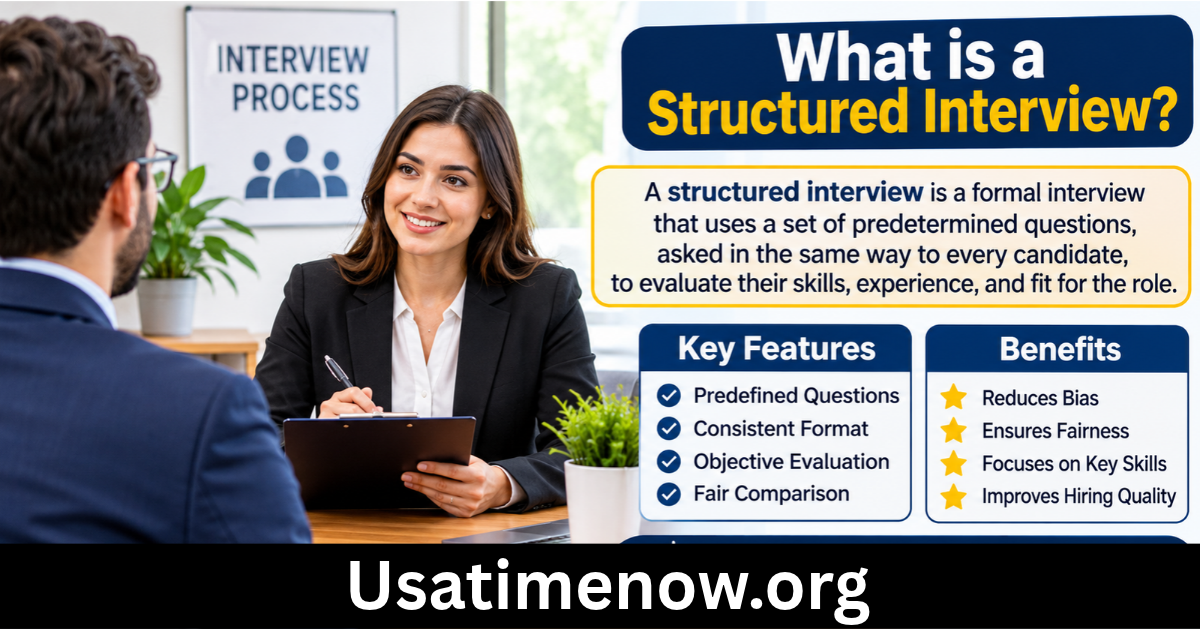
A structured interview is a standardised method of assessing job candidates through a predetermined list of questions and an established evaluation process. what is a structured interview Each applicant for the same position receives the same core questions, and interviewers assess responses using consistent criteria.
For example, a company hiring a customer service representative might ask every candidate how they would handle an unhappy customer. what is a structured interview then evaluate each response based on communication, problem-solving, professionalism, and customer service skills.
Structured interviews are commonly used by businesses, government organisations, educational institutions, what is a structured interview and other employers that want a consistent approach to candidate evaluation.
How Does a Structured Interview Work?
A structured interview follows a planned process, allowing employers to assess candidates using the same general standards.
1. Define the Job Requirements
Before conducting interviews, employers identify the skills, qualifications, and responsibilities required for the position. These requirements form the foundation of the interview questions.
For example, a project management role may require leadership, organisation, communication, and problem-solving abilities.
2. Prepare Standardised Questions
The hiring team creates a list of questions related to the job requirements. Questions are designed to evaluate specific competencies and are generally asked in the same order for each candidate.
3. Establish an Evaluation System
Employers develop a scoring guide or rating scale to assess responses. This may include criteria such as relevance, clarity, technical knowledge, what is a structured interview and practical decision-making.
A rating scale can help interviewers apply consistent standards instead of relying entirely on personal impressions.
4. Conduct the Interviews
Interviewers ask each candidate the same core questions and provide similar opportunities to respond. They may take notes and record scores based on the established evaluation criteria.
5. Compare Candidate Responses
After the interviews, the hiring team reviews the scores and supporting notes. Candidates are compared against the job-related requirements to help identify the strongest match.
Types of Structured Interview Questions
Structured interviews can include different question formats depending on the role and the skills employers want to assess.
Behavioural Interview Questions
Behavioural questions ask candidates to describe how they handled situations in the past. what is a structured interview They are based on the idea that previous behaviour can provide useful insight into how someone may approach similar workplace challenges.
Examples include:
- Tell me about a time you worked under pressure.
- Describe a situation where you resolved a disagreement with a colleague.
- Give an example of a challenging project you completed.
- Tell me about a time you received constructive feedback.
Candidates can organise their answers using the STAR method: Situation, Task, Action, and Result.
Situational Interview Questions
Situational questions present hypothetical workplace scenarios and ask candidates how they would respond.
Examples include:
- What would you do if two important tasks had the same deadline?
- How would you handle an unhappy customer?
- What would you do if a team member repeatedly missed deadlines?
- How would you respond if you received conflicting instructions?
These questions help employers understand a candidate’s judgement, reasoning, and approach to workplace situations.
Technical Interview Questions
Technical questions evaluate job-specific knowledge and practical abilities. They are particularly useful for positions in areas such as software development, engineering, finance, healthcare, what is a structured interview and IT support.
For example, a software developer might be asked to explain how they would troubleshoot a particular coding problem, what is a structured interview while an accountant might be asked about financial reporting procedures.
Experience-Based Questions
These questions explore a candidate’s professional background, qualifications, and previous responsibilities.
Examples include:
- What experience do you have with project management?
- Which tools have you used in your previous roles?
- What was your main responsibility in your last position?
- Which professional achievement are you most proud of?
Benefits of a Structured Interview
Structured interviews offer several advantages for organisations and candidates.
Promotes Fairness and Consistency
Asking candidates the same core questions helps create a more consistent interview experience. It gives applicants comparable opportunities to demonstrate their abilities and reduces the influence of unrelated personal impressions.
Makes Candidate Comparison Easier
When interviewers use the same questions and scoring criteria, comparing applicants becomes more organised. what is a structured interview Hiring teams can evaluate responses against specific job requirements rather than relying only on general impressions.
Helps Reduce Interviewer Bias
A planned interview format can limit some forms of unconscious bias by keeping discussions focused on job-related competencies. what is a structured interview However, structured interviews do not automatically eliminate bias. Employers should also use relevant questions, consistent scoring, and appropriate interviewer training.
Improves Hiring Decisions
Structured interviews encourage employers to assess candidates against clearly defined requirements. This can help organisations identify applicants whose skills and experience match the responsibilities of the position.
Saves Time During Recruitment
Preparing questions and evaluation criteria in advance can make interviews more efficient. Interviewers spend less time deciding what to ask and can focus on understanding each candidate’s responses.
Structured Interview vs. Unstructured Interview
The main difference between structured and unstructured interviews is how questions and evaluations are organised.
| Feature | Structured Interview | Unstructured Interview |
|---|---|---|
| Questions | Predetermined core questions | Flexible and informal |
| Question order | Generally consistent | May change between candidates |
| Evaluation | Uses established criteria | Often relies on general judgement |
| Candidate comparison | More standardised | Can be more difficult |
| Flexibility | Limited but may allow planned follow-ups | Highly flexible |
| Main focus | Consistent job-related assessment | Open-ended discussion |
A structured interview is useful when employers need a consistent assessment process. An unstructured interview may encourage a more conversational discussion, but differences in questions can make direct candidate comparisons harder.
Some employers use a semi-structured interview, which combines predetermined questions with limited follow-up questions to explore relevant answers in more detail.
How to Prepare for a Structured Interview
Candidates can improve their interview performance by understanding the role and preparing examples that demonstrate relevant skills.
Research the Position
Review the job description and identify the main responsibilities, qualifications, and skills required. Prepare examples that connect your experience with these expectations.
Practise Common Questions
Think about questions related to teamwork, communication, leadership, problem-solving, and time management. Practising your responses can help you communicate more clearly.
Use the STAR Method
For behavioural questions, use the STAR method to organise your answers:
- Situation: Explain the background.
- Task: Describe your responsibility.
- Action: Explain what you personally did.
- Result: Share the outcome and what you learned.
This structure helps you provide specific examples instead of relying on general statements.
Keep Your Answers Relevant
Answer the question directly and avoid unnecessary details. Explain your contribution clearly, especially when discussing team projects or shared achievements.
Prepare Questions for the Employer
Although structured interviews follow a planned format, employers may provide time for candidates to ask questions. You can ask about the role’s responsibilities, team structure, training opportunities, or performance expectations.
Tips for Employers Conducting Structured Interviews
Employers can improve the quality of their structured interview process by following a few practical guidelines.
- Focus on job-related competencies: Questions should reflect the actual responsibilities of the position.
- Use clear wording: Avoid confusing or unnecessarily complicated questions.
- Create a scoring guide: Define what strong, average, and weak responses look like.
- Train interviewers: Help hiring teams understand the evaluation criteria and apply them consistently.
- Take detailed notes: Record relevant evidence instead of relying on memory.
- Review the process: Evaluate whether interview questions and scoring methods are useful and appropriate for the role.
- Provide reasonable accommodations: Ensure the interview process is accessible and complies with applicable employment laws.
Frequently Asked Questions
1. What is the main purpose of a structured interview?
The main purpose is to evaluate job candidates consistently using predetermined questions and standardised assessment criteria. This helps employers compare applicants based on relevant skills and qualifications.
2. Are structured interviews better than unstructured interviews?
Structured interviews are generally more consistent and easier to evaluate. However, the best approach depends on the organisation’s recruitment goals and the role being filled.
3. How many questions are asked in a structured interview?
There is no fixed number. The number depends on the job, interview duration, and competencies being assessed. Employers should include enough questions to evaluate important requirements without making the interview unnecessarily long.
4. What are examples of structured interview questions?
Examples include “Tell me about a time you solved a difficult problem,” “How would you handle competing deadlines?” and “Describe a situation where you worked successfully with a team.”
5. Can structured interviews include follow-up questions?
Yes. Employers may allow planned or relevant follow-up questions to clarify an answer. However, they should apply similar opportunities across candidates to maintain consistency.
6. What is a semi-structured interview?
A semi-structured interview combines prepared questions with flexible follow-up discussions. It offers more conversational freedom than a fully structured interview while maintaining an organised framework.
7. How can candidates succeed in a structured interview?
Candidates should research the position, practise common questions, prepare real examples, and organise behavioural answers using the STAR method. Clear and relevant responses can help demonstrate their suitability for the role.
Conclusion
A structured interview is an organised recruitment method that uses predetermined questions and consistent evaluation criteria to assess job candidates. It helps employers compare applicants more fairly, focus on job-related skills, and make informed hiring decisions. what is a structured interview For candidates, understanding the structured interview process makes preparation easier. By researching the position, practising relevant questions, and providing specific examples, applicants can communicate their strengths with greater confidence. When designed carefully and applied consistently, structured interviews can support a more effective and transparent recruitment process.