




Table of Contents
Learning how to be more productive can help you manage your time, achieve your goals, and reduce unnecessary stress. Whether you are a student, employee, entrepreneur, how to be more productive or freelancer, improving productivity allows you to focus on important responsibilities without feeling overwhelmed by a long list of tasks.
Being productive does not mean working continuously or sacrificing your personal life. Instead, it means using your time, energy, and resources wisely. By developing better habits, organizing your schedule, and minimizing distractions, you can accomplish meaningful work and create a healthier balance between professional responsibilities and personal activities.
What Does It Mean to Be More Productive?
Productivity means achieving valuable results with the time and resources available to you. It involves planning effectively, prioritizing important tasks, maintaining concentration, and finding practical ways to work efficiently.
For example, completing an important project in two focused hours may be more productive than spending an entire afternoon switching between emails, messages, and unrelated activities.
Understanding this difference helps you measure success by the quality of your results rather than the number of hours you spend working. The goal is to make consistent progress while protecting your energy and well-being.
12 Effective Ways to Be More Productive
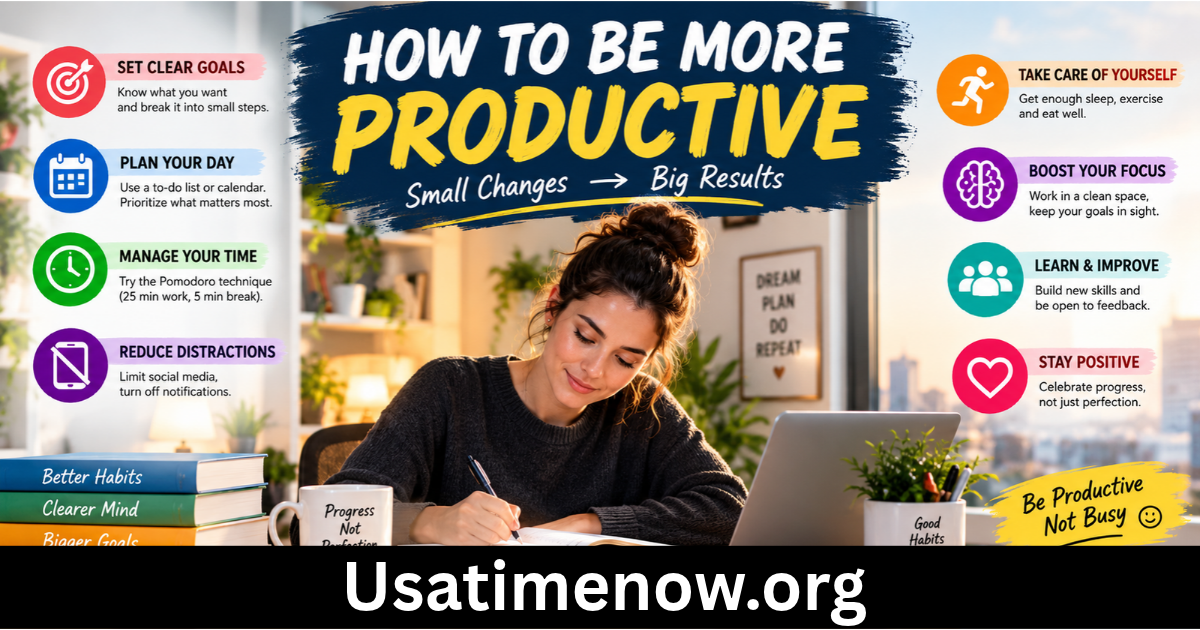
1. Set Clear and Realistic Goals
One of the easiest ways to improve productivity is to identify exactly what you want to accomplish. Without clear goals, how to be more productive you may spend time on activities that do not contribute to your priorities.
Start by creating daily, weekly, and monthly objectives. Break large projects into smaller tasks so that each step feels manageable.
For example, instead of setting a general goal to improve your writing, decide to write 500 words each morning or complete one article draft by Friday.
Clear goals provide direction, make progress easier to measure, and help you stay motivated throughout the day.
2. Prioritize Your Most Important Tasks
A long to-do list can make even a simple day feel stressful. Rather than attempting to complete everything at once, identify the tasks that will have the greatest impact.
Choose your three most important tasks each morning. Complete these priorities before spending too much time on minor activities, how to be more productive unnecessary meetings, or routine messages.
The Eisenhower Matrix is another useful method. It separates responsibilities into four categories based on urgency and importance. This approach helps you decide what to do immediately, schedule for later, delegate, or eliminate.
Prioritization ensures that your limited time is spent on work that genuinely matters.
3. Create a Daily Schedule
A realistic daily schedule gives structure to your work and reduces the time spent deciding what to do next.
At the beginning of each day, review your responsibilities and assign specific time blocks to important activities. Include meetings, breaks, meals, how to be more productive and personal commitments.
For example, you might reserve the morning for demanding work, the afternoon for collaboration, and the final part of the day for reviewing progress and preparing tomorrow’s priorities.
Avoid filling every available minute. Leaving some flexibility makes it easier to handle unexpected tasks without disrupting your entire schedule.
4. Eliminate Common Distractions
Distractions are among the biggest obstacles to productivity. Smartphone notifications, social media, background noise, and frequent interruptions can break concentration and make tasks take longer.
To improve focus, silence nonessential notifications and keep unrelated browser tabs closed. If possible, create a dedicated workspace where you can concentrate comfortably.
You can also establish specific times for checking emails and messages instead of responding immediately to every notification.
Reducing interruptions helps you maintain attention, complete work more efficiently, and avoid the mental effort required to repeatedly switch between tasks.
5. Use the Pomodoro Technique
The Pomodoro Technique is a time-management method that divides work into focused sessions separated by short breaks.
A common approach is to work for 25 minutes, take a five-minute break, and repeat the process. After several sessions, take a longer break.
This method can make difficult tasks feel less overwhelming because you only need to concentrate for a limited period before resting.
However, the technique is flexible. Some people prefer longer sessions for writing, studying, or complex projects. how to be more productive Experiment with different intervals to discover what works best for your concentration and workload.
6. Avoid Multitasking
Trying to perform several demanding activities simultaneously may feel efficient, but frequently switching between tasks can reduce concentration and increase mistakes.
Instead, practice single-tasking by giving one important activity your full attention. Finish a manageable section before moving to the next responsibility.
If you have several similar tasks, such as answering emails or updating documents, group them into one scheduled session. how to be more productive This reduces unnecessary switching and helps you maintain a smoother workflow.
Focusing on one task at a time can improve the quality of your work and make progress easier to track.
7. Keep Your Workspace Organized
A cluttered workspace can make it harder to find documents, tools, and information when you need them. Spending a few minutes organizing your environment can save time throughout the day.
Keep essential items within reach, remove unnecessary objects, and organize digital files into clearly labeled folders.
You do not need an expensive office or elaborate organization system. A clean desk, comfortable chair, reliable equipment, and a simple filing method can be enough to support productive work.
At the end of each day, spend five minutes preparing your workspace for tomorrow.
8. Use Productivity Tools Wisely
Digital tools can help you manage schedules, organize projects, record ideas, and track deadlines. Calendar applications are useful for appointments, while task managers can help you monitor responsibilities.
Automation tools can also reduce repetitive work, such as sending routine reminders or organizing recurring tasks.
However, using too many applications can become counterproductive. Choose tools that solve specific problems and avoid switching between multiple platforms unnecessarily.
The most effective productivity system is simple, reliable, and easy to maintain.
9. Learn to Say No
Accepting every request can leave you with too many responsibilities and too little time for important work.
Before agreeing to a new task, consider its urgency, importance, and effect on your existing commitments. how to be more productive If necessary, explain your current workload and suggest a more suitable deadline.
Saying no does not mean refusing to cooperate. It means setting realistic boundaries so that you can deliver quality work without constantly feeling overwhelmed.
Protecting your time helps you focus on priorities and maintain a manageable schedule.
10. Take Regular Breaks
Working for long periods without resting can lead to mental fatigue, reduced attention, and declining performance.
Short breaks allow you to stretch, move around, drink water, or relax your eyes. After completing a demanding task, how to be more productive a brief change of activity may help you return with renewed concentration.
Regular breaks are particularly useful when working on complex assignments that require sustained attention.
Remember that productivity is about maintaining effective performance, not maximizing the amount of time you spend sitting at your desk.
11. Build Healthy Daily Habits
Your physical and mental well-being directly influence your ability to concentrate and manage responsibilities.
Aim for sufficient sleep, regular physical activity, balanced meals, and adequate hydration. These habits support the energy and attention needed for productive work.
A consistent morning routine can also make your day easier to manage. You might review your priorities, prepare your workspace, how to be more productive and begin with one important task before checking social media.
Small habits become valuable when practiced consistently. Start with manageable changes and build on them gradually.
12. Review Your Progress Every Day
A short daily review helps you identify what worked, what caused delays, and what needs improvement.
At the end of the day, check your completed tasks and note any unfinished responsibilities. Decide which activities should receive attention tomorrow.
Ask yourself three simple questions:
- What did I accomplish today?
- What distracted me or wasted my time?
- What can I do differently tomorrow?
This process helps you learn from experience instead of repeating unhelpful habits. Over time, regular reviews can make your productivity routine more effective and realistic.
Common Productivity Mistakes to Avoid
Even people with good intentions can struggle with productivity because of habits that waste time and energy.
Common mistakes include setting unrealistic goals, procrastinating on difficult assignments, checking notifications constantly, how to be more productive and spending too much time planning without taking action.
Perfectionism can also delay progress when you repeatedly revise work that already meets the required standard. Focus on producing quality results within a reasonable timeframe.
Another mistake is comparing your routine with someone else’s. Different people have different responsibilities, energy levels, and working conditions. Choose strategies that suit your own circumstances and measure improvement against your previous performance.
Frequently Asked Questions About Productivity
1. How can I become more productive every day?
Start by identifying your top priorities, creating a realistic schedule, and reducing distractions. Complete important tasks first, take regular breaks, how to be more productive and review your progress at the end of the day.
2. What is the best way to stop procrastinating?
Break large tasks into smaller steps and begin with the easiest meaningful action. Set a short work session and remove distractions before starting. Taking action often makes a difficult task feel more manageable.
3. Does waking up early make you more productive?
Waking up early can help some people establish a consistent routine, but it is not essential for productivity. Choose a schedule that supports sufficient sleep and matches the times when you work best.
4. Which productivity technique works best?
Time-blocking, the Pomodoro Technique, single-tasking, and the Eisenhower Matrix are popular options. The best method depends on your responsibilities, preferences, and ability to maintain the routine.
5. How can I stay focused while working?
Turn off unnecessary notifications, work in a comfortable environment, and focus on one task at a time. Schedule regular breaks and keep your goals visible to remind yourself what matters most.
6. Can productivity apps improve time management?
Yes. Calendar applications, task managers, and note-taking tools can improve organization and help you track deadlines. how to be more productive Choose a few useful tools rather than adding unnecessary complexity to your routine.
7. How can I be productive without feeling stressed?
Set realistic expectations, prioritize important tasks, take breaks, and avoid overcommitting. Maintain healthy routines and allow enough time for personal responsibilities and relaxation.
Conclusion
Learning how to be more productive starts with making small, intentional changes to your daily routine. Setting clear goals, prioritizing important tasks, reducing distractions, how to be more productive and managing your time effectively can help you achieve better results without unnecessary pressure.